Ballistic Missile Defense Systems Ranked by Range, 2026
Israel's Arrow 3 has the longest engagement range in our database at 2,400 km for exo-atmospheric intercepts, ahead of Russia's claimed S-500.
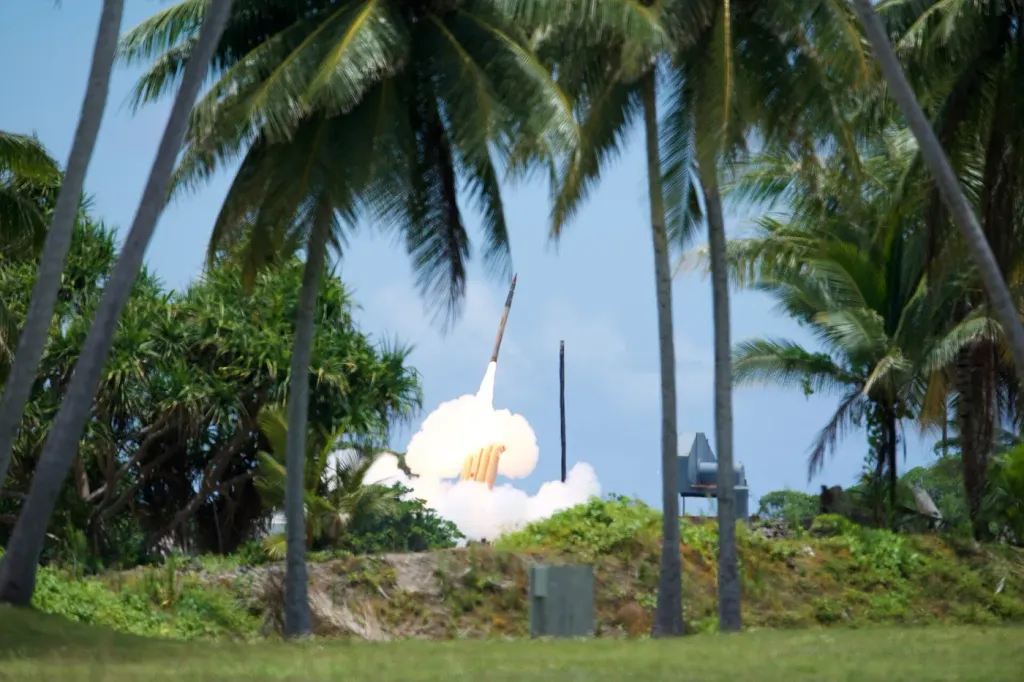
Lockheed Martin, official product image, background removed
Arrow 3 tops this list at a reported 2,400 km engagement range, four times the next entry on the list, but that number describes an exo-atmospheric intercept envelope, not a longer-range version of the same job every other system on this list is doing. Rank these seven interceptors by range alone and the spread runs from Arrow 3’s 2,400 km down to Patriot PAC-3’s 60 km, a 40x difference from top to bottom. That spread says almost nothing about which system is the most capable at stopping an incoming missile. It says these systems are built to intercept threats at completely different points in their flight path, using different physics, against different engagement geometries. Range is one column in a spec sheet, not a verdict.
What do the numbers actually say?
| Rank | System | Country | Engagement range |
|---|---|---|---|
| 1 | Arrow 3 | Israel | 2,400 km |
| 2 | S-500 Prometheus | Russia | 600 km |
| 3 | THAAD | United States | 200 km |
| 4 | Patriot PAC-2 | United States | 160 km |
| 5 | Patriot GEM-T | United States | 150 km |
| 6 | Arrow 2 | Israel | 90 km |
| 7 | Patriot PAC-3 | United States | 60 km |
Look at that chart and the first instinct is to read the short bars as the weak systems. That instinct is wrong, and the Patriot family sitting at the bottom of its own ranking is the clearest illustration of why.
Why does Patriot PAC-3 rank last despite being the newest Patriot variant?
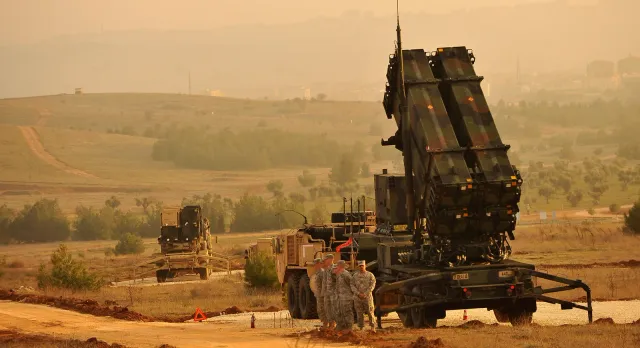
Because PAC-3 was never designed to win a range contest. Patriot PAC-2 uses a proximity-fused fragmentation warhead, it detonates near the incoming target and relies on a shrapnel pattern to destroy or disable it. That approach tolerates some guidance imprecision and can engage at greater distance, which is part of why PAC-2 posts 160 km against PAC-3’s 60 km. PAC-3 throws out the fragmentation warhead entirely in favor of hit-to-kill guidance: the interceptor has to physically collide with the incoming missile, no explosion, no shrapnel cone, just a direct hit at closing speeds that make that collision itself the kill mechanism.
Hit-to-kill is a much harder engineering problem, and it comes with a geometric cost. Precise terminal guidance against a physical intercept generally means closing the distance rather than reaching further out, and PAC-3’s shorter range is the direct consequence of that design choice. In exchange, PAC-3 is built to be dramatically more reliable against maneuvering or higher-speed threats than a fragmentation warhead that only needs to get close. Range and precision are, in this case, opposing design goals, and PAC-3 chose precision on purpose.
What does Arrow 3’s 2,400 km figure actually describe?
Not a lateral reach in the way you’d read range on a cruise missile spec sheet. Arrow 3 engages ballistic missiles exo-atmospherically, in space, during the missile’s midcourse phase, at extreme altitude. The 2,400 km figure reflects that engagement envelope rather than how far sideways the interceptor can fly to hit something at ground level. That’s the same caveat that applies elsewhere on this site whenever Arrow 3’s range comes up: the number is real, but it describes a fundamentally different intercept geometry than anything else on this list except, arguably, the S-500’s claimed exo-atmospheric ambitions.
Every other system here, THAAD included, works within or at the edge of the atmosphere, engaging threats in their terminal or late-midcourse phase at much lower altitude. Comparing Arrow 3’s 2,400 km directly against Patriot PAC-2’s 160 km as if they’re measuring the same thing overstates the practical difference between the two systems’ operational footprints. They’re not fighting the same fight.
How much should you trust the S-500’s claimed 600 km range?
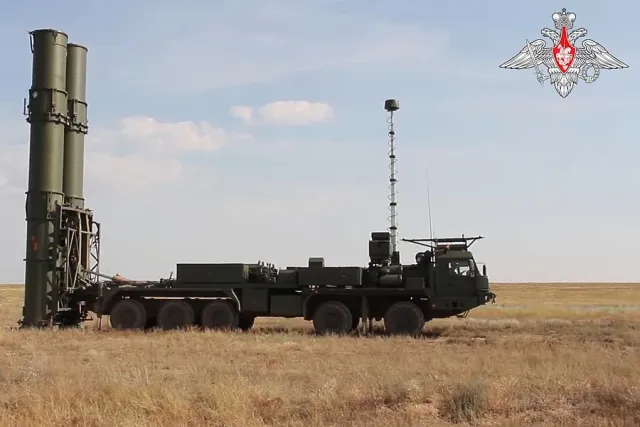
Less than the Patriot and THAAD figures on this same list, and that gap matters. The 600 km number comes from Russian state and manufacturer sources, and the S-500 has a very limited public testing record to back it up. There’s no confirmed combat deployment and no independent third-party verification of its stated performance envelope. Compare that to Patriot, which has been combat-proven since the 1991 Gulf War and used continuously since, including in Ukraine’s air defense, or THAAD, which has a documented U.S. testing program and operational deployments with reported intercepts. The S-500 sits second on this ranking by range alone, but it sits in a much weaker position on verifiability, and that distinction should travel with the number every time it’s cited.
Does a longer engagement range mean a better missile defense system?
No, and this list is a useful demonstration of exactly why not. Range answers one question: how far out can this system start engaging a threat. It says nothing about hit reliability, performance against a maneuvering warhead, how many simultaneous threats it can track, or whether the system has ever been tested against a real attack rather than a scripted trial. PAC-3 ranks last here at 60 km and is, by design intent, the most precise interceptor on the list. The S-500 ranks second at a claimed 600 km and has essentially no independently verified combat or test record to stand behind that number. Arrow 3 tops the list at 2,400 km by engaging an entirely different phase of flight than the systems it’s nominally being ranked against. Treat this table as what it is, a sort by one column, and read the rest of the picture, verifiability, combat history, intercept method, before drawing any conclusion about which system you’d actually want defending something.
Compare these systems yourself
Run any two of these interceptors head-to-head in the Compare tool, browse the full air-defense category to see where they sit against other systems, or run your own threat priorities through the Advisor if range alone isn’t telling you what you need to know. More procurement-focused breakdowns like this one are in the WeaponSpecs articles section.
Systems in this comparison
Every system covered above, with its photo and, where available, a video. Tap a card to open the full spec sheet.
Compare these side by side →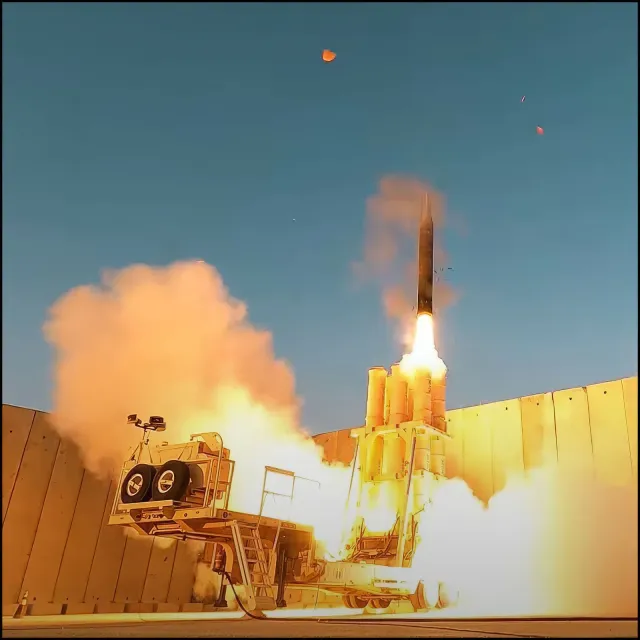
Air defense system
S-500 Prometheus
Air defense system
Patriot PAC-2 Air defense system
Patriot GEM-T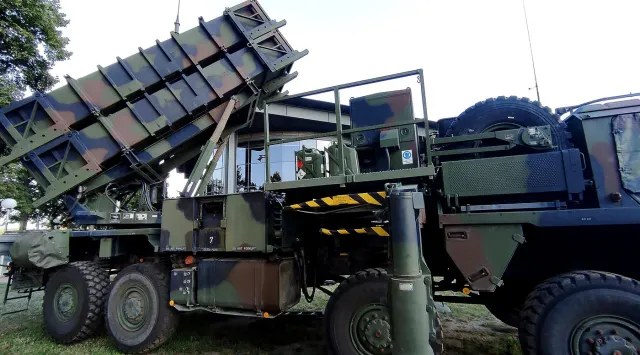
Air defense system
Patriot PAC-3Frequently asked questions
Why does Patriot PAC-3 have a shorter range than the older PAC-2, if it's the newer system? +
Because PAC-3 was never built to out-range PAC-2, it was built to out-hit it. PAC-2 uses a proximity-fused fragmentation warhead that explodes near the target, which tolerates some aiming error and works at greater distance. PAC-3 abandons that approach for hit-to-kill guidance, physically colliding with the incoming warhead. That requires closing to a shorter range with much finer terminal guidance, and it trades the older system's reach for a kill method that's far more reliable against maneuvering or higher-speed threats. Shorter range here is a deliberate design consequence, not a step backward.
What's the difference between exo-atmospheric and endo-atmospheric intercept? +
Exo-atmospheric intercept happens outside the atmosphere, in space, typically during a ballistic missile's midcourse phase at extreme altitude. Endo-atmospheric intercept happens inside the atmosphere, usually in the terminal phase as the missile descends toward its target. Arrow 3's reported 2,400 km figure describes an exo-atmospheric engagement envelope, not a lateral reach comparable to a cruise missile. Systems like Patriot PAC-2 and PAC-3 operate entirely endo-atmospheric, at much shorter range and lower altitude, against the terminal phase of a threat.
Is engagement range the right way to judge which missile defense system is best? +
No, and this ranking should be read as exactly what it is: a sort by one number, not a capability ranking. Range tells you how far out a system can start an engagement, not how reliably it destroys what it's shooting at, how it handles a maneuvering warhead, how many threats it can track at once, or how it has performed in actual combat. PAC-3 sits last on this list at 60 km precisely because its design philosophy trades range for precision. A shorter-range system with a proven hit-to-kill track record can be a better operational bet than a longer-range one that has never been combat-tested.
How verifiable is Russia's claimed 600 km range for the S-500 Prometheus? +
Treat it as an unverified state and manufacturer claim, not an audited figure. The S-500 has a very limited public testing record, no confirmed combat deployment, and no independent third-party verification of its performance envelope. That puts it in a different evidentiary category from Patriot and THAAD, both of which have extensive documented testing histories and, in Patriot's case, decades of real-world combat use. A 600 km figure from Russian state sources should sit in the ranking, but with the same skepticism applied to any single-source military claim.
Have any of these systems actually been used in combat? +
Patriot, in its PAC-2 and PAC-3 variants, has the deepest combat record on this list, going back to the 1991 Gulf War and continuing through recent conflicts including Ukraine's air defense since 2023. THAAD has been operationally deployed, including intercepts reported during recent regional conflicts, though its combat sample size remains smaller than Patriot's. Arrow 2 and Arrow 3 have documented operational intercepts as part of Israel's layered air defense. The S-500 has no confirmed combat record at all, its entire performance profile rests on Russian testing claims that have not been independently corroborated.
Related reading