NATO Explained: Founding, Funding, and Who Really Pays
NATO's mutual-defense clause has been invoked exactly once in 76 years, for the United States. Here's the founding, funding, and cost breakdown.
Master Sgt. Patrick O'Reilly, Public domain
NATO’s mutual-defense clause, the one line in the founding treaty that everything else exists to back up, has been invoked exactly once in 76 years. Not for a Baltic state under Russian pressure, not for Turkey on its southern flank, but for the United States itself, after the September 11 attacks. That single fact does more to explain what NATO actually is, and isn’t, than most of the political shorthand thrown around it. This piece walks through how the alliance was actually founded, how its funding mechanics work (which are widely misunderstood, including by people who talk about it for a living), who spends what as a share of their own economy, what the US actually gets out of the arrangement, and what is and isn’t documented about foreign efforts to undermine the alliance’s public standing.
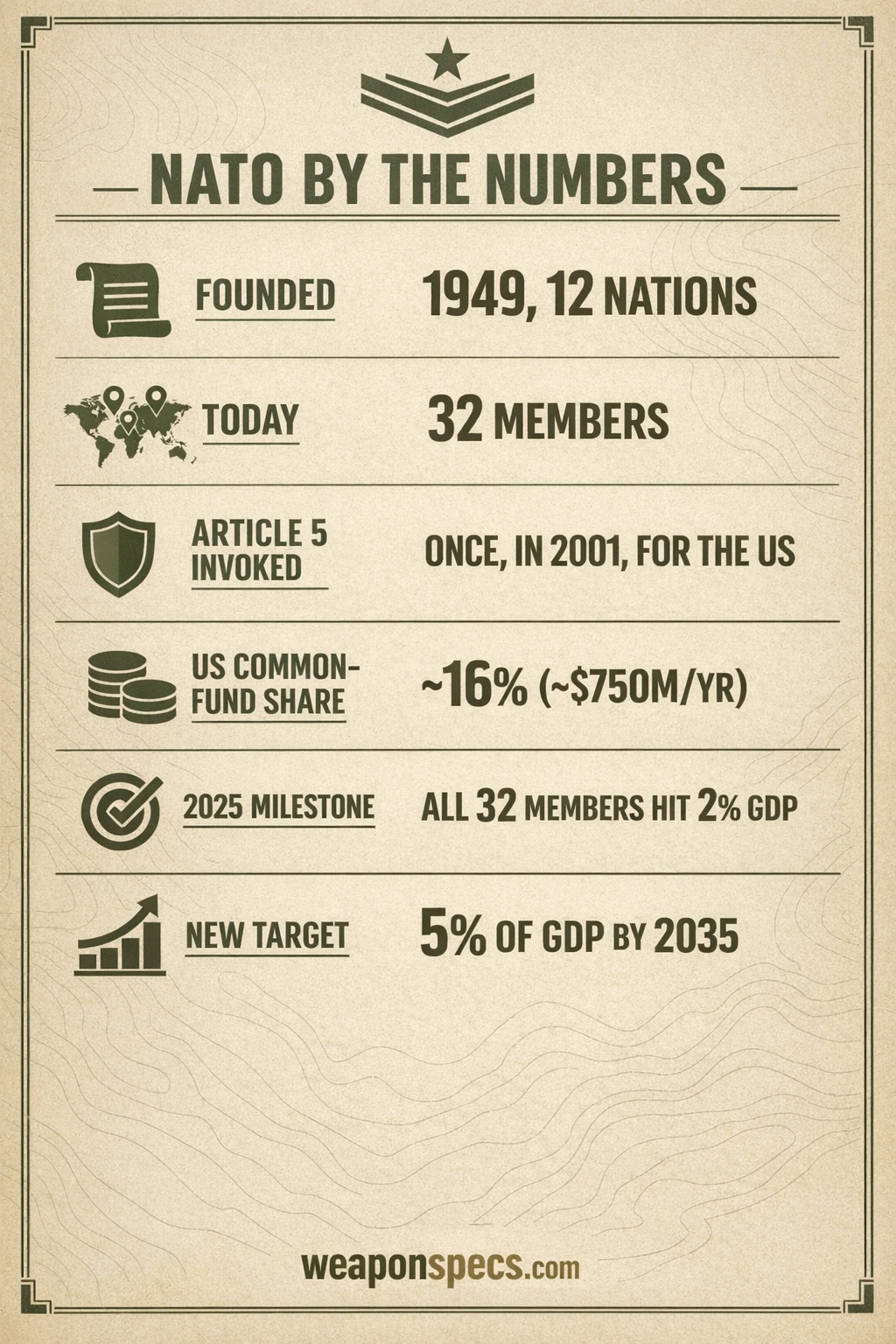
How was NATO actually founded, and why?
Twelve countries signed the North Atlantic Treaty in Washington, D.C. on 4 April 1949: Belgium, Canada, Denmark, France, Iceland, Italy, Luxembourg, the Netherlands, Norway, Portugal, the United Kingdom, and the United States. The context was a Europe four years out from the most destructive war in its history, facing a Soviet Union that had already absorbed most of Eastern Europe into its sphere and showed no sign of stopping. The treaty’s core commitment is Article 5: an armed attack against one or more members “shall be considered an attack against them all,” after which each ally takes “such action as it deems necessary, including the use of armed force.” That is deliberately elastic language. It commits members to respond, not to a specific, automatic military reaction, which is part of why the clause has been invoked so rarely.
The treaty itself was the product of nearly a year of quiet negotiation, driven by events that made the abstract Soviet threat concrete: the 1948 Communist coup in Czechoslovakia, and the Berlin Blockade that began that same year, in which Soviet forces cut off Western access to Berlin by land and the Western allies responded with a sustained airlift rather than force. Those two events convinced Washington and Western European capitals that a peacetime, permanent, binding military alliance, something the United States had never entered before in its history outside wartime, was necessary rather than optional. That’s part of why the treaty’s language on Article 5 stops short of an automatic war declaration: American negotiators, mindful of Congress’s constitutional war powers, insisted on “such action as it deems necessary” rather than a guaranteed military response, a compromise that has shaped how every subsequent Article 5-adjacent debate has played out.
The strategic logic behind the founding is often summarized by a line widely attributed to NATO’s first Secretary General, Lord Ismay: that the alliance existed “to keep the Russians out, the Americans in, and the Germans down.” It’s a tidy way to describe containment, an American security guarantee, and postwar reconciliation with West Germany all at once, and it gets quoted constantly for exactly that reason. It’s worth being precise about its status, though. A detailed historiographical review in Small Wars Journal found the quote has never been reliably traced to a specific document Ismay wrote or a recorded remark he made. It’s the kind of line that survives because it captures something true about NATO’s original design, not because anyone has actually pinned down where or when Ismay said it. Treat it the way this site treats any widely repeated but loosely sourced attribution: useful shorthand, not a verified quotation.
NATO’s growth, 1949 to today
The alliance has grown in ten distinct rounds since 1949. Greece and Turkey joined in 1952 (14 total), West Germany in 1955 (15), Spain in 1982 (16). The post-Cold War era brought the largest expansions: Czechia, Hungary, and Poland in 1999 (19), then the biggest single round in 2004, when Bulgaria, Estonia, Latvia, Lithuania, Romania, Slovakia, and Slovenia joined together, taking the alliance to 26 members. Albania and Croatia followed in 2009 (28), Montenegro in 2017 (29), North Macedonia in 2020 (30), and most recently Finland in 2023 (31) and Sweden in 2024, becoming the 32nd and current member. Every round required unanimous consent from existing members and a demonstrated commitment to democratic governance and civilian control of the military, which is why the process has taken decades rather than happening all at once.
The 1999 and 2004 rounds are the ones that get argued over most today, since they brought the alliance’s borders directly against Russia’s own and are frequently cited in Moscow’s own justification for its actions in Ukraine. It’s worth separating the historical record from the argument built on top of it: the 1999 and 2004 enlargements were requested by the joining countries themselves, each of which had recently exited Soviet or Warsaw Pact control and pursued NATO membership as a sovereign choice, not something imposed on them externally. Whether that expansion was strategically wise in retrospect is a legitimate, ongoing debate among historians and policymakers. Whether it was voluntary on the part of the countries that joined is not seriously disputed in the historical record, and the two questions shouldn’t be collapsed into one.
The most recent two accessions are also the fastest in NATO history. Finland and Sweden had spent decades as militarily non-aligned states, a stance that shaped their entire defense postures. Russia’s full-scale invasion of Ukraine in February 2022 reversed both countries’ domestic politics on the question within months, and both completed ratification faster than any previous applicants, Finland in under a year, Sweden in about two, delayed mainly by Turkish and Hungarian ratification holdups rather than any substantive objection to the applications themselves.
What is NATO actually for, and has it ever been used?
NATO’s founding purpose is collective defense and deterrence: make an attack on any one member costly enough, by guaranteeing a combined response, that no adversary rationally attempts it. That’s a purpose that succeeds by not being tested. For most of the Cold War and the three and a half decades since, the entire point of Article 5 was that it never had to be invoked, because the credible threat of collective response was the deterrent itself.
It has been invoked exactly once, and the circumstance surprises people who assume it exists mainly to protect Europe from Russia. On 2 October 2001, less than a month after the September 11 attacks, NATO’s North Atlantic Council determined the attacks qualified as an armed attack under Article 5, activating the clause at the United States’ own request. In the operation that followed, known as Eagle Assist, seven NATO AWACS surveillance aircraft, crewed by personnel from multiple allied nations, patrolled American skies from October 2001 through May 2002, freeing up US aircraft for operations elsewhere. The one time in NATO’s history that “an attack on one is an attack on all” has actually been triggered, it was triggered for America, not by America on someone else’s behalf. That’s worth sitting with before any conversation about who benefits from the alliance and who is doing the protecting.
What has NATO actually done since 1949?
The enlargement chart above tracks how many members joined and when. It doesn’t capture NATO’s actual operational history, the moments the alliance moved from a standing deterrent to an active military actor, and those moments follow a different timeline entirely. Here’s the compact version, then the fuller sequence.
That’s the six-point version. The fuller sequence includes the operations the chart above skips past, most of them peacekeeping and stabilization missions run under a UN or coalition mandate rather than Article 5 itself:
-
1
1949: Washington Treaty signedTwelve founding members sign the North Atlantic Treaty in Washington, D.C., establishing the collective-defense commitment in Article 5.
-
2
1995-1996: IFOR deployed to BosniaNATO's first-ever military operation, enforcing the Dayton peace accords that ended the Bosnian war under a UN mandate. See NATO's own account of its Bosnia and Herzegovina operations.
-
3
1999: KFOR deployed to KosovoA ground peacekeeping force following NATO's air campaign, still active today as the alliance's longest-running operation. See NATO's own page on its role in Kosovo.
-
4
2001: Article 5 invoked, onceNATO determines the September 11 attacks on the United States qualify as an armed attack on all members, at Washington's own request.
-
5
2003: NATO takes command of ISAF in AfghanistanThe alliance's largest-ever operation, eventually reaching over 130,000 troops from roughly 50 contributing nations before winding down in 2014. See NATO's own account of ISAF's mission in Afghanistan.
-
6
2011: Operation Unified Protector over LibyaA NATO-led air and naval campaign enforcing UN Security Council Resolution 1973, running from February to October 2011. See NATO's own account of the Libya operation.
-
7
2014: Response to Russia's annexation of CrimeaNATO launches the Readiness Action Plan, the first step toward the enhanced Forward Presence battlegroups later stationed in the Baltic states and Poland. See NATO's own page on strengthening its eastern flank.
-
8
2022: Response to Russia's full-scale invasion of UkraineNATO reinforces its eastern flank in the largest collective-defense buildup since the Cold War and ramps up member-state support for Ukraine. See NATO's own page on its support for Ukraine.
-
9
2023: Finland joins as the 31st memberFinland completes accession on 4 April 2023, ending decades of military non-alignment following Russia's 2022 invasion of Ukraine.
-
10
2024: Sweden joins as the 32nd memberSweden completes accession on 7 March 2024, the faster of the two Nordic accessions, becoming NATO's current 32nd member.
-
11
2025: The Hague Summit's 5 percent pledgeMembers commit to 5 percent of GDP on defense and security-related spending by 2035, the alliance's most ambitious spending target yet.
Most of that list is peacekeeping and coalition operations run under UN or ad hoc mandates, not Article 5 itself, which is exactly the distinction worth holding onto: NATO has been operationally active for most of its history, but its one binding mutual-defense guarantee has been invoked exactly once, and it was invoked for the country that’s usually described as the alliance’s guarantor rather than its beneficiary.
Does the US pay for NATO? How the funding actually works
This is where public debate about NATO gets tangled, usually because two entirely separate pools of money get treated as one. The first is NATO’s own common-funded budgets: a civil budget that covers the headquarters and civilian staff, a military budget that covers the integrated command structure, and the NATO Security Investment Programme that funds shared infrastructure like airbases and pipelines. The second is each member country’s own national defense budget, the one measured against the familiar 2 percent (and now 5 percent) of GDP guideline.
These are not the same thing, and the guideline is not a bill sent to NATO headquarters. When a country is described as spending “2 percent of GDP on NATO,” what’s actually being measured is that country’s own military spending on its own armed forces, its own equipment, its own personnel. None of that money goes to NATO as an institution. It stays inside each country’s own defense ministry.
The common-funded budgets are the actual pool of money that flows to NATO itself, and they’re proportionally tiny by comparison, and split three ways. The civil budget pays for the roughly 2,000-person International Staff and civilian operations at NATO Headquarters in Brussels. The military budget funds the integrated command structure, the officers and staff who plan and run alliance-wide exercises and operations rather than any single country’s forces. The NATO Security Investment Programme, NSIP, funds shared physical infrastructure: airbases capable of hosting allied aircraft, fuel pipelines, communications systems, and similar assets that no single member would build alone but that benefit the whole alliance. All three together add up to a few billion dollars a year, split among all 32 members by an agreed cost-share formula loosely tied to each country’s relative economic size.
The United States covers roughly 16 percent of that common fund, about $753 million in 2024, a cost-share that was actually renegotiated downward from a higher historical US percentage, effective through 2024, with a further reduction from 2026. Set that $753 million against the US’s own total defense budget: the Pentagon’s FY2025 request was $849.8 billion, and its FY2026 request came in at $961.6 billion, or roughly $1.05 trillion counting broader defense-related discretionary spending. Run the math and the US common-fund contribution to NATO is roughly 0.08 percent of what the US spends on its own military in a single year. It is a rounding error, not a line item anyone should describe as “funding the alliance” in any meaningful budgetary sense.
That distinction matters because political rhetoric routinely blurs the two pools together, in both directions. When a US official describes European allies as needing to “pay their fair share,” they are almost always talking about those countries’ own national defense budgets, money that stays in Berlin, Warsaw, or Rome and buys German, Polish, or Italian equipment and personnel, not a transfer to Washington or to NATO’s Brussels headquarters. And when the common-fund cost-share gets cited as evidence the US is uniquely subsidizing European security, the actual dollar figure involved, a few hundred million a year, is a rounding error against the US’s own defense budget, not the multi-billion-dollar subsidy the framing implies. Both misreadings are common enough that a plain restatement of the two-pool structure is itself worth publishing.
Who actually spends what, as a share of GDP?
Poland leads the alliance by a wide margin at 4.48 percent of GDP in 2025, followed by Lithuania at 4.00 percent and Latvia at 3.73 percent, all three Baltic-flank or near-Baltic states with an obvious geographic reason to lead. The United States sits at 3.22 percent, in the tan group along with the UK (2.40 percent), France (2.05 percent), Italy (2.01 percent), and Spain (2.00 percent), meaning the country most often accused of shouldering NATO’s burden alone does not itself clear the alliance’s own new 3.5 percent core-defense target, agreed at the 2025 Hague summit as part of a broader 5 percent of GDP commitment by 2035 (3.5 percent core defense plus up to 1.5 percent broader security-related spending). Only Poland, Lithuania, and Latvia currently clear that new bar. Several members, including Luxembourg, Portugal, Czechia, and North Macedonia, sit right at the 2.00 percent floor.
The genuinely new development for 2025 is that all 32 members reported meeting or exceeding that 2 percent floor for the first time in NATO’s history, with an alliance-wide average of 2.76 percent. The burden-sharing debate that’s dominated transatlantic politics for a decade hasn’t disappeared, it’s shifted: the fight now is over whether 2 percent was ever the right bar, and who’s actually moving toward 3.5 percent versus who’s treating it as a distant aspiration. That’s a genuine, live policy argument, not a settled question, and it runs in both directions: European allies note the US’s own common-fund cost-share has been falling, while American officials note most of the continent still spent below 2 percent for most of the post-Cold War era.
Does NATO membership actually benefit the US economically?
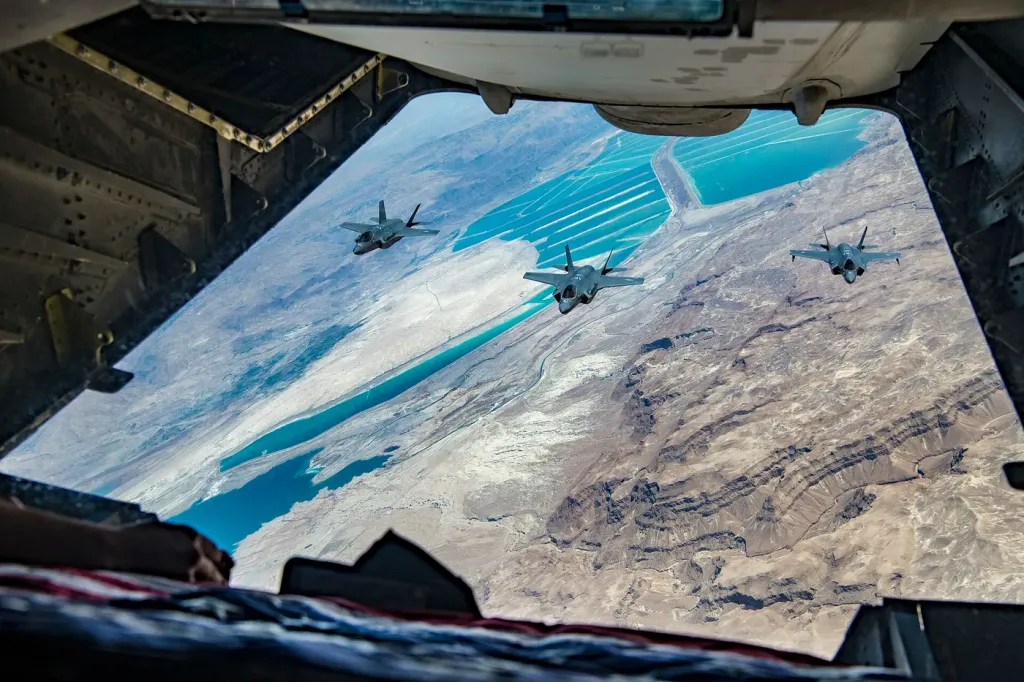
The F-35 program is the clearest, most concrete answer. More than a dozen European NATO members now operate or have placed firm orders for the US-built F-35, including Belgium, Denmark, Finland, Germany, Italy, the Netherlands, Norway, and Poland, alongside the UK’s F-35B fleet. Counting the US itself, that’s 13 NATO members inside a single American fighter program, which is a recurring revenue stream, a shared parts and maintenance ecosystem, and an interoperability standard that US industry effectively wrote for the rest of the alliance. Our own F-35A Lightning II system page and the broader fighter aircraft category show how deep that adoption runs relative to any competing Western design.
That benefit isn’t one-directional. The alliance’s standardization habit runs through American systems like the F-35A and the Patriot PAC-3 air-defense battery, but also through European-made platforms fielded across multiple allied militaries, like Germany’s Leopard 2A7 main battle tank and the multinational Eurofighter Typhoon. The industrial relationship inside NATO is a two-way market, not simply Washington selling to everyone else, even where the F-35 program tilts the ledger heavily toward American manufacturers.
The interoperability piece is worth dwelling on, because it’s easy to undersell as a soft benefit when it’s actually a hard economic one. NATO’s Standardization Agreements (STANAGs) set common specifications for everything from ammunition calibers to radio encryption to aerial refueling fittings, largely written and maintained with heavy American input given the scale of the US defense-industrial base. That means American ammunition, spare parts, and support contracts have a built-in market across 31 other militaries that have agreed, as a condition of interoperability, to buy compatible equipment rather than building fully independent parallel systems. It’s a standing export advantage that has nothing to do with any single arms sale and everything to do with the alliance itself functioning as a shared technical baseline that American industry helped design.
There’s a second, less quantifiable benefit worth naming without inventing a number for it: forward basing. Facilities like Ramstein Air Base in Germany give the US power-projection reach across Europe, the Middle East, and beyond that it would otherwise have to build and maintain unilaterally, at a cost this piece won’t put a figure on because no reliably sourced one exists. The qualitative point stands on its own: alliance membership buys the US basing access and logistics depth that would be extraordinarily expensive to replicate from scratch, and it does so on the territory of allied, not merely rented, host nations, which is a materially different security arrangement than a purely transactional basing lease would be.
What is documented about Russian and Chinese efforts to undermine NATO?
Two things are actually documented here, and it’s worth being precise about exactly what each one is, because this is exactly the kind of claim this site treats skeptically no matter which government is making it.
The first is Doppelganger, a real, named Russian disinformation campaign run by the Social Design Agency (SDA), established in 2022. It has spoofed the domains and branding of real outlets, including Le Monde, The Guardian, and Der Spiegel, along with public institution websites, including NATO’s own site, to spread content designed to erode Western public support for Ukraine and undermine alliance cohesion. It was still active and expanding as of 2023 and 2024 monitoring, and European Union researchers tracked it as part of Foreign Information Manipulation and Interference (FIMI) monitoring around the 2024 European Parliament elections. That’s a specific, well-documented, named operation, not a vague allegation.
The second is different in kind: it’s public rhetoric, not a covert campaign. Chinese state media and Foreign Ministry officials have consistently characterized NATO as a “Cold War relic” and described its outreach into the Indo-Pacific as evidence of a persistent “Cold War mentality.” When NATO’s 2024 summit declaration referenced China, Beijing’s Foreign Ministry publicly called it “a load of biases, smears and provocations.” That’s real, and it’s documented, but it’s officials and state media saying things on the record, not an information operation in the Doppelganger sense.
Both facts can be true at once without stretching either one further than its source supports: Russia runs a documented, named influence campaign that has specifically spoofed NATO’s own web presence, and separately, Chinese officials have a consistent, openly stated interest in framing the alliance as obsolete and its expansion as provocative. Neither fact licenses a claim about some broader, coordinated, secret effort to manufacture the burden-sharing debate inside NATO countries. Most of that debate, the argument over whether 2 percent was ever enough, over who’s actually moving toward 3.5 percent, is ordinary domestic politics playing out in democracies that disagree about defense priorities, the same way this site treats every unverified capability claim: name exactly what’s documented, and no more.
What is documented about NATO’s official public messaging?
Worth watching as exactly what it is: the alliance’s own institutional framing of itself, not an independent account. Compare it against everything above and the gaps between NATO’s self-description and the messier funding and burden-sharing reality become easy to spot on your own.
None of this settles which allied fighter, tank, or air-defense system is actually the better buy inside that alliance structure, that’s a spec question, not a funding one. Run the F-35A against the aircraft it flies alongside in allied air forces using the Compare tool, or work through a threat profile of your own in the Advisor to see how the systems discussed here actually stack up on the numbers.
Systems in this comparison
Every system covered above, with its photo and, where available, a video. Tap a card to open the full spec sheet.
Compare these side by side →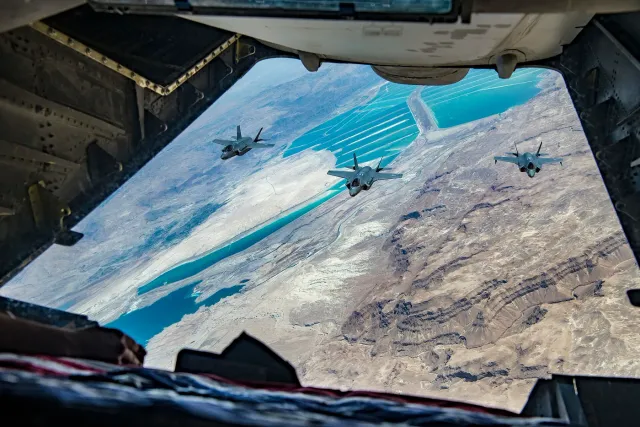
Fighter aircraft
F-35A Lightning II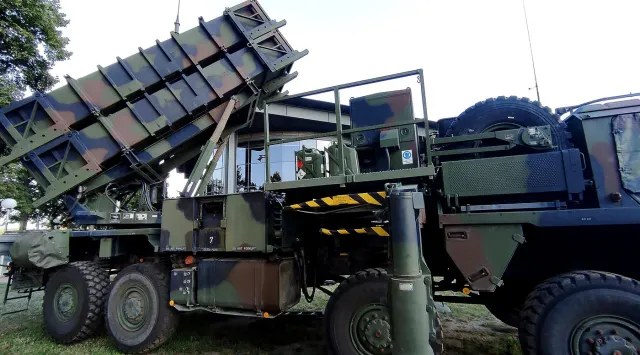
Air defense system
Patriot PAC-3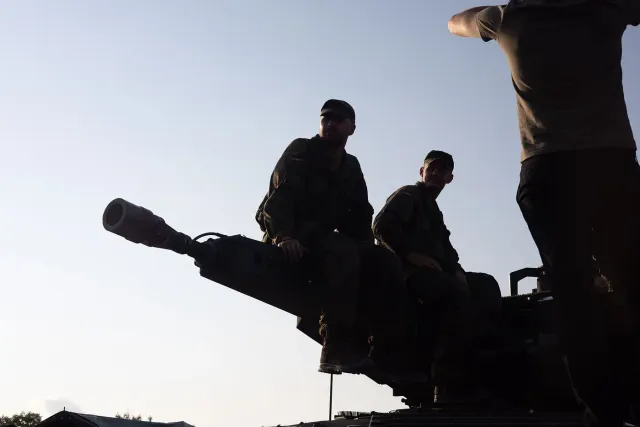
Main battle tank
Leopard 2A7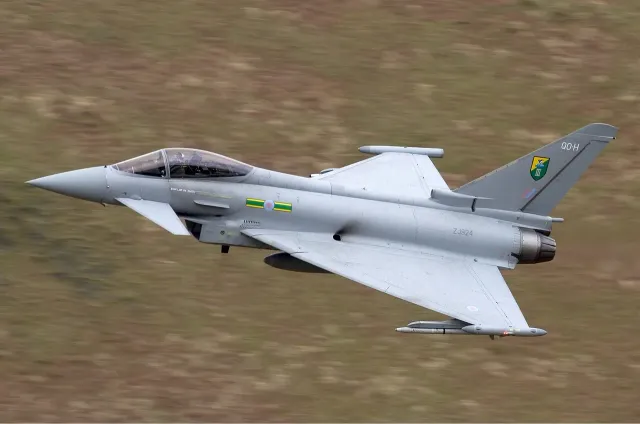
Fighter aircraft
Eurofighter TyphoonFrequently asked questions
When was NATO founded, and why? +
NATO was founded on 4 April 1949, when 12 countries signed the North Atlantic Treaty in Washington, D.C.: Belgium, Canada, Denmark, France, Iceland, Italy, Luxembourg, the Netherlands, Norway, Portugal, the United Kingdom, and the United States. The context was early Cold War containment: deterring Soviet expansion into Western Europe and binding North America and Europe into a single collective-defense framework rather than the shifting, failed alliance systems that preceded both world wars. See NATO's own short history at nato.int.
Has NATO's Article 5 mutual-defense clause ever actually been used? +
Yes, exactly once. On 2 October 2001, NATO's North Atlantic Council determined that the September 11 attacks on the United States were covered by Article 5, at Washington's own request. That is the only invocation of Article 5 in the alliance's 76-year history. Sources: the Bush Presidential Center and nato.int's own Article 5 explainer.
Does the United States pay for NATO? +
Not in the way the question usually implies. NATO has a small common-funded budget (civil budget, military budget, and infrastructure program) that the US covers roughly 16 percent of, about $753 million in 2024. That is entirely separate from each member's own national defense budget, which is what the 2 percent (soon 5 percent) of GDP guideline actually measures. The US common-fund share works out to roughly 0.08 percent of its own roughly $850-960 billion annual defense budget. Sources: SIPRI's NATO funding backgrounder and nato.int's funding overview.
Which NATO countries spend the most and least on defense as a share of GDP? +
Poland spent the most in 2025 at 4.48 percent of GDP, followed by Lithuania at 4.00 percent and Latvia at 3.73 percent. Several members, including Luxembourg, Portugal, and Czechia, sit at the 2.00 percent floor. For the first time in NATO's history, all 32 members met or exceeded that floor in 2025. Only Poland, Lithuania, and Latvia currently clear the new 3.5 percent core-defense target agreed at the 2025 Hague summit; the United States itself, at 3.22 percent, does not yet clear it either. Sources: World Population Review's compiled NATO spending table and nato.int's 5 percent commitment page.
Does NATO membership benefit the US economically? +
Yes, in concrete, documented ways. More than a dozen European NATO members now operate or have ordered the US-built F-35, a major recurring revenue stream and interoperability standard for American industry. NATO membership also gives Washington forward-basing access across Europe, which extends its power-projection reach without building that infrastructure unilaterally. The relationship runs both directions, since European-made systems like the Leopard 2A7 or Eurofighter Typhoon are fielded across the alliance too, but the F-35 program alone is a clear example of an American industrial benefit from the alliance structure.
Is there real disinformation targeting NATO from Russia or China? +
Yes, in specific, named, documented cases, though the scope should not be overstated. Doppelganger is a real Russian disinformation campaign, run by the Social Design Agency since 2022, that has spoofed the websites of major outlets and institutions, including NATO's own site, to spread content undermining Western support for Ukraine and alliance cohesion. Separately, Chinese officials and state media have repeatedly and publicly called NATO a 'Cold War relic' and criticized its expansion into the Indo-Pacific, most recently over NATO's 2024 summit declaration. Both are documented; neither should be stretched into a claim of some broader, unproven coordinated effort. Sources: the Wikipedia entry on the Doppelganger campaign and The Diplomat's analysis of Chinese rhetoric on NATO.
Related reading