Tube Howitzers vs Rocket Artillery: The Real Range Gap
The longest tube howitzer in our database claims 70 km, unverified. The longest rocket system reaches 350 km, a genuinely different weapon.
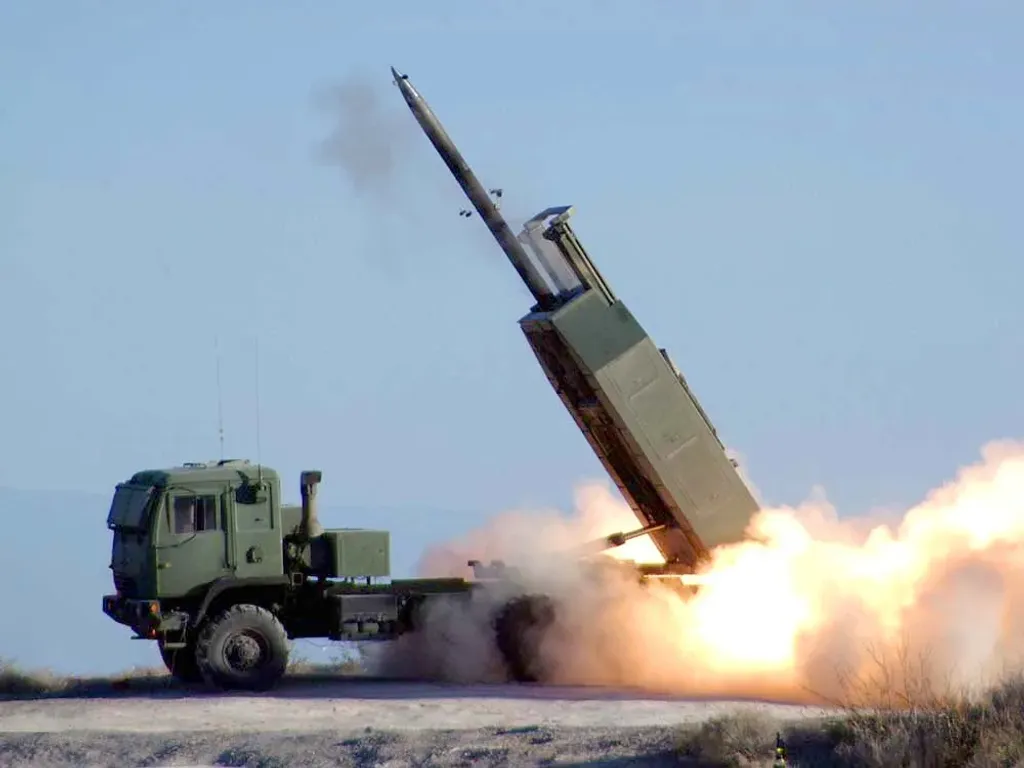
Via Wikipedia, M142 HIMARS (shown for identification)
China’s PHL-16 rocket artillery system claims a 350 km maximum firing range, the longest of any system in the 49 artillery entries in the WeaponSpecs database. The longest gun-tube howitzer in that same set, Russia’s 2S35 Koalitsiya-SV, claims 70 km, and even that figure is unverified. That is not a small gap. It is a 5x difference between the two branches of the same weapon category, and it holds up across the entire dataset, not just at the extremes.
The gap is not one side being better engineered than the other. It is physics. A gun tube spends its entire propellant charge in milliseconds inside a barrel of fixed length, a hard ceiling on how fast the shell can leave and how far it can fly. A rocket motor keeps burning, and keeps accelerating the projectile, for several seconds after it has already left the launcher. Two different ways of getting a payload downrange, with two very different range ceilings baked into the physics before either country’s engineers ever touch a design.
Which artillery system actually reaches the farthest?
Sorted by claimed maximum firing range, the rocket systems in the database occupy every slot above 90 km, and the gun-tube howitzers occupy every slot at 70 km and below. There is no overlap.
| System | Type | Country | Max firing range (km) | Status of figure |
|---|---|---|---|---|
| PHL-16 (AR3) | Rocket (MLRS) | China | 350 | Manufacturer/state claim |
| M142 HIMARS | Rocket (with ATACMS/PrSM) | United States | 300 | Published (missile-dependent) |
| M270A2 MLRS | Rocket (with ATACMS) | United States | 300 | Published (missile-dependent) |
| PULS | Rocket (MLRS) | Israel | 300 | Published |
| K239 Chunmoo | Rocket (MLRS) | South Korea | 290 | Published |
| Tornado-S | Rocket (MLRS) | Russia | 120 | Manufacturer/state claim |
| TRG-300 Kaplan | Rocket (MLRS) | Turkey | 120 | Published |
| Pinaka | Rocket (MLRS) | India | 90 | Published |
| BM-30 Smerch | Rocket (MLRS) | Russia | 90 | Manufacturer/state claim |
| ASTROS II | Rocket (MLRS) | Brazil | 90 | Published |
| 2S35 Koalitsiya-SV | Tube (self-propelled howitzer) | Russia | 70 | Manufacturer/state claim, limited-rate production |
| TRG-230 | Rocket (MLRS) | Turkey | 70 | Published |
| Archer | Tube (self-propelled howitzer) | Sweden | 60 | Published |
| K9 Thunder | Tube (self-propelled howitzer) | South Korea | 54 | Published |
| PLZ-05 | Tube (self-propelled howitzer) | China | 53 | Manufacturer/state claim |
| PCL-181 | Tube (self-propelled howitzer) | China | 53 | Manufacturer/state claim |
| G6 Rhino | Tube (self-propelled howitzer) | South Africa | 50 | Published |
| CAESAR | Tube (gun-truck howitzer) | France | 42 | Published |
Green bars are rocket and multiple-launch systems, tan bars are gun-tube self-propelled howitzers. The color split alone shows the category boundary, no rocket system sits below 90 km and no tube howitzer sits above 70 km.
Why can rocket artillery outrange tube howitzers by up to 6 times?
The reason is not exotic. A tube howitzer fires a shell that gets one push. The propellant charge ignites, burns through in a few milliseconds while the shell is still inside the barrel, and once the shell clears the muzzle, that is the entire energy budget it will ever get. The barrel’s length is the only thing that determines how long that push can act, and barrels can only get so long before the gun becomes unwieldy to tow, mount, or reload in the field. That is the hard ceiling on tube-gun range, and it explains why every gun-tube howitzer in the database tops out well under 100 km regardless of country or budget.
A rocket motor does not work that way. It keeps burning, and keeps adding thrust, for several seconds after the round has already left the launch tube. The projectile is still accelerating long after a shell from a comparable-caliber gun would already be decelerating under drag. That is the entire reason a rocket, even an unguided one, routinely out-ranges the best gun-tube howitzer by a factor of two to six.
The clearest illustration of this in the dataset is the M142 HIMARS, whose 300 km database range often gets read as “the rocket’s range.” It is not. Per Lockheed Martin and US Army figures cited on Wikipedia’s Guided Multiple Launch Rocket System page, the standard M30/M31 GMLRS guided rocket that HIMARS and the M270 were built around has a documented range of “greater than 43 miles (70 km),” generally cited around 92 km. An extended-range GMLRS variant reached 150 km in a September 2023 test and was subsequently approved for production. The 300 km figure recorded for HIMARS and the M270A2 in the WeaponSpecs database reflects a different munition entirely, the ATACMS or PrSM ballistic missile, which the same wheeled launcher can fire in place of a rocket pod. Same truck, same launcher rails, a completely different weapon riding on top, and a range figure that belongs to the missile, not the rocket most people picture when they hear the word HIMARS.
How do self-propelled howitzers actually rank?
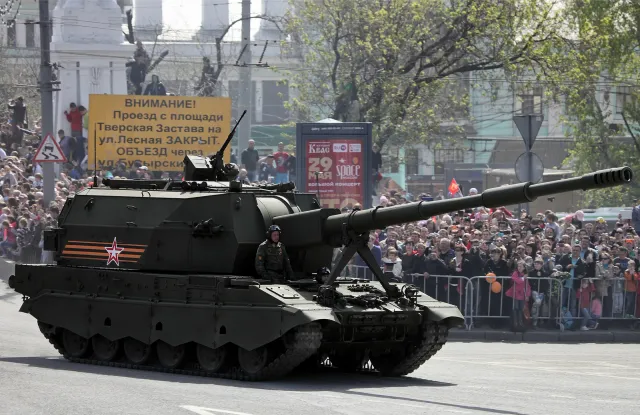
Within the tube-gun subset, Russia’s 2S35 Koalitsiya-SV claims the longest range at 70 km, a figure that would put it ahead of every Western tube howitzer in the database if taken at face value. It should not be taken at face value. Seven years after its 2019 introduction, the system remains in what its own listed commercial status describes as limited-rate production, hardly the track record of a weapon whose headline figure has been proven out at scale.
Among figures published by NATO-aligned manufacturers, Sweden’s Archer leads the tube-gun category at 60 km. South Korea’s K9 Thunder follows at 54 km, and it is worth noting that a shorter range has not stopped the K9 from becoming the most widely exported self-propelled howitzer in service today, fielded by 11 operators with roughly 1,900 units built. China’s PLZ-05 and PCL-181 both claim 53 km, matching the K9’s figure almost exactly, but both numbers come from Chinese state or manufacturer sources and carry the same caveat as every other Chinese and Russian figure in this piece.
Are these numbers combat-tested or still on paper?
Every Chinese and Russian range figure in this dataset is a manufacturer or state claim, not an independently verified result, and WeaponSpecs treats them accordingly.
- PHL-16, 350 km (China/Norinco): entered service in 2019, exported as the AR3, with only one listed operator and no public independent test data behind the figure.
- Tornado-S, 120 km (Russia): a state-sourced upgrade figure for an MLRS family with no independent range confirmation.
- BM-30 Smerch, 90 km (Russia): an older Soviet-era design that is widely fielded, but its claimed maximum range has never been independently tested to confirmation.
- 2S35 Koalitsiya-SV, 70 km (Russia): the standout tube-gun claim in this entire piece, and the one still sitting in limited-rate production.
None of this means the systems are ineffective. It means the specific range figures attached to them should be read as claims, the same standard WeaponSpecs applies to every Russian and Chinese system in the database.
Does rate of fire matter more than maximum range?
For most real fire missions, yes. A maximum range figure gets used rarely; sustained rate of fire, automated loading, and how fast a battery can displace after firing to dodge counter-battery radar are what decide whether an artillery system is actually effective in the field. The 2S35 Koalitsiya-SV’s autoloader is rated for a 16 round-per-minute burst rate, a genuine advance over older Russian tube guns regardless of what its range claim turns out to be worth. Older saturation rocket systems like the BM-21 Grad can put out 40 rounds per minute across a full load, trading precision for sheer volume on target. Shoot-and-scoot systems like Archer and CAESAR are built to fire and displace within roughly 30 seconds specifically to survive counter-battery fire, a survivability trait that matters more operationally than a few extra kilometers of listed range.
What does the thin cost data say?
Only a handful of the 49 artillery systems in the database publish a real unit cost, which limits what can be said with confidence here. South Korea’s K9 Thunder lists an approximate $3 million unit cost against Germany’s PzH 2000 at roughly $17 million, a striking gap for a system with less range than the K9 (40 km versus 54 km). Two data points prove nothing about which is the better buy on their own, procurement decisions weigh maintenance cost, ammunition logistics, and industrial-base considerations that a single unit-cost figure cannot capture. Readers who want the fuller picture on how little unit-cost data the defense industry actually publishes should see our weapon price transparency gap piece.
The buyer’s actual decision
Rocket artillery and tube howitzers are not competing for the same job. Rocket systems exist for deep, saturating, or precision-guided long-range strikes; tube howitzers exist for sustained, cheaper-per-round direct fire support closer to the front line. Ranking the two categories on a single range chart is directionally useful, and it makes plain just how large the physical gap actually is, but it is never the whole procurement picture.
Explore the full category on the artillery systems type page, model a long-range strike scenario with the Scenario Scorer’s range preset, or go straight to the head-to-head K9 Thunder vs PzH 2000 breakdown for the two most-exported Western-aligned tube howitzers in the database.
Systems in this comparison
Every system covered above, with its photo and, where available, a video. Tap a card to open the full spec sheet.
Compare these side by side →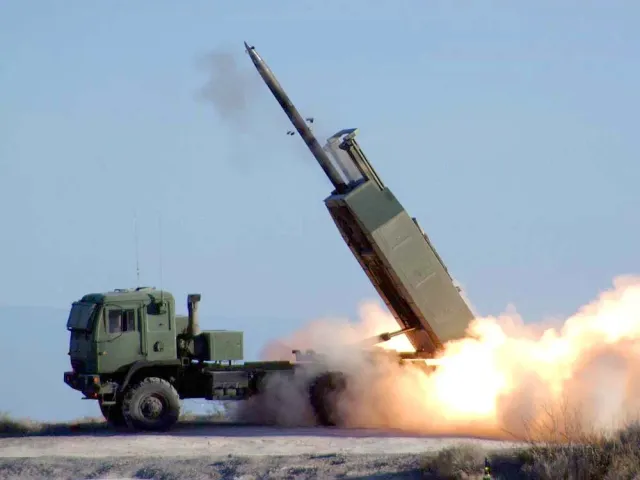
Artillery & MLRS
M142 HIMARS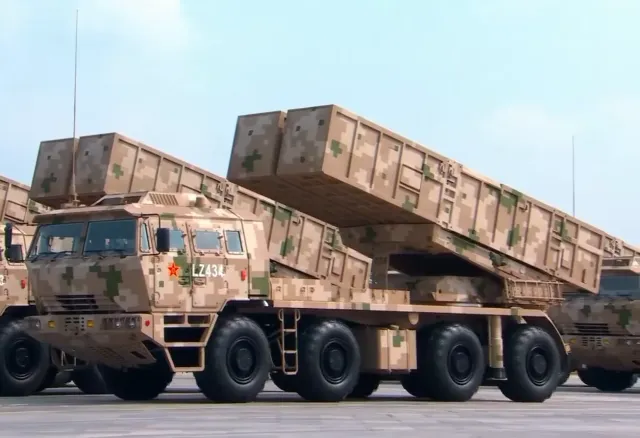
Artillery & MLRS
2S35 Koalitsiya-SV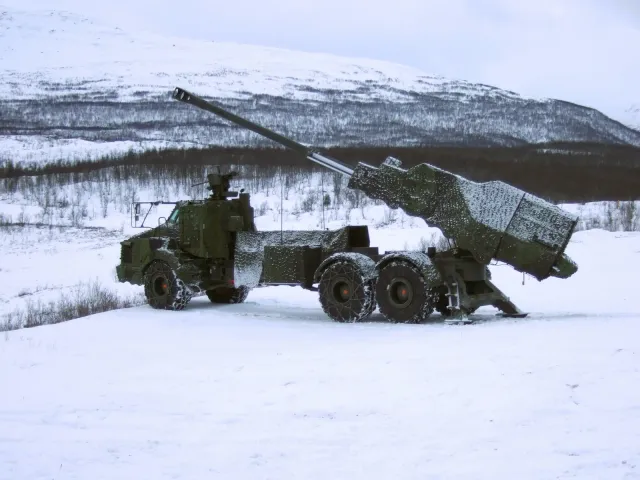
Artillery & MLRS
Archer Artillery System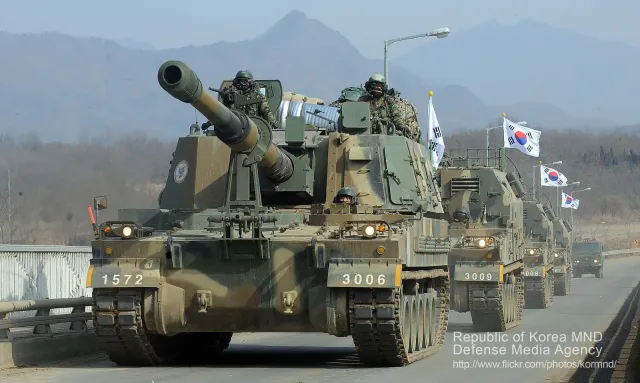
Artillery & MLRS
K9 Thunder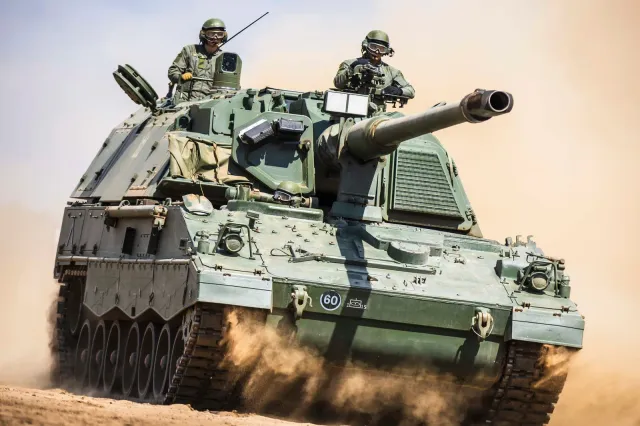
Frequently asked questions
Why can rocket artillery outrange tube howitzers by so much? +
A gun tube has to deliver all of a shell's kinetic energy from a single propellant charge inside a fixed barrel length, which caps muzzle velocity and range regardless of how the shell is refined. A rocket motor keeps burning and accelerating the projectile for several seconds after it leaves the launcher, which is why even an unguided multiple-launch rocket system can out-range the best gun-tube howitzer by 2 to 6 times.
What is the longest-range self-propelled howitzer in the WeaponSpecs database? +
By claimed figures, Russia's 2S35 Koalitsiya-SV tops the tube-gun category at 70 km, but it remains in limited-rate production and that range has not been independently verified. Among figures published by NATO-aligned manufacturers, Sweden's Archer leads at 60 km, followed by South Korea's K9 Thunder at 54 km.
How far can the M142 HIMARS actually fire? +
It depends on the munition, not just the launcher. The standard M30/M31 GMLRS guided rocket that HIMARS was built around has a documented range of about 92 km, per Lockheed Martin and US Army figures. The 300 km range recorded for HIMARS reflects its option to fire the ATACMS or PrSM ballistic missile instead, a completely different munition riding the same truck chassis.
Are Chinese and Russian artillery range figures reliable? +
Treat them as manufacturer or state claims rather than independently verified results. China's PHL-16 (350 km), PLZ-05 and PCL-181 (53 km each), and Russia's Tornado-S (120 km), BM-30 Smerch (90 km), and 2S35 Koalitsiya-SV (70 km) are all figures from their own manufacturers or state media, with no public independent test data behind them.
Does rate of fire matter more than maximum range for artillery? +
For most fire missions, yes. Sustained rate of fire, automated loading, and how fast a system can displace after firing to dodge counter-battery radar usually decide battlefield effectiveness more than a maximum range that's rarely used. Autoloading systems built for burst fire, and saturation rocket systems firing dozens of rounds per minute, are optimized for that reality rather than for headline range.
Related reading