UAV Endurance Compared: 60 Hours vs 15 Minutes
Across 52 UAVs in our database, endurance spans 60 hours to 15 minutes, a 240x gap that separates loitering ISR platforms from one-way weapons.
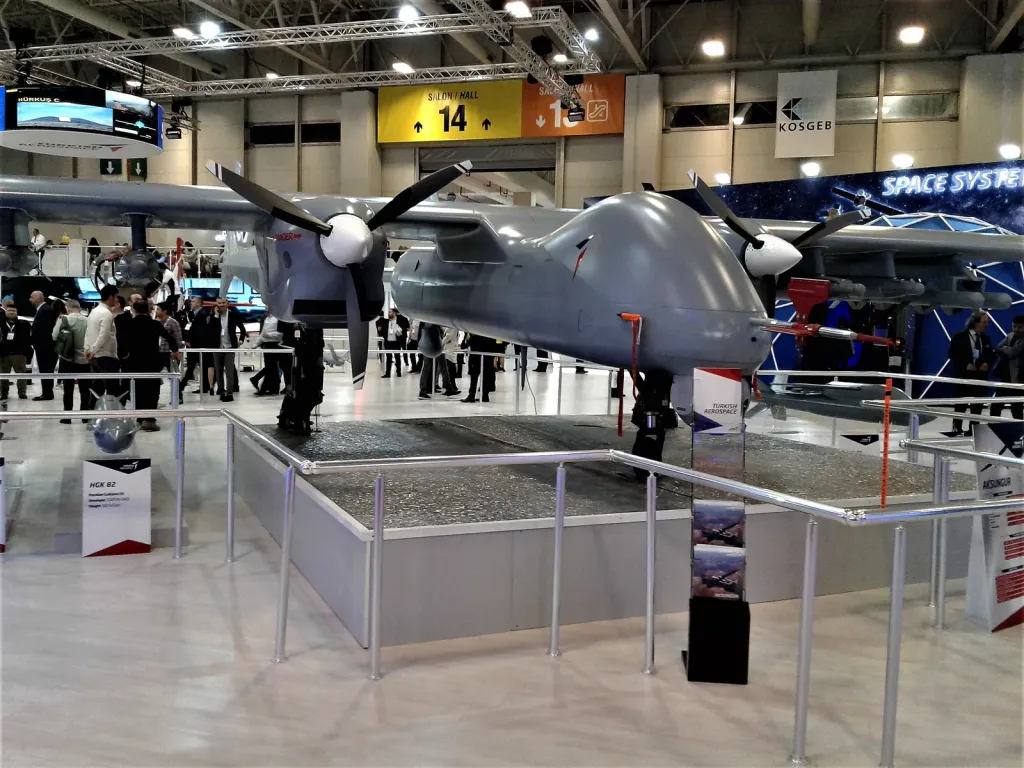
Via Wikipedia, TAI Aksungur (shown for identification)
Fifty-two UAVs in the WeaponSpecs database publish a flight endurance figure, and those figures span 60 hours down to 15 minutes, a 240x gap. That spread isn’t noise or inconsistent reporting. It’s a sign that “drone” is a category label covering two aircraft with almost nothing in common: a long-endurance platform built to loiter for a day or more, and an expendable munition built to find one target and end its flight there. An endurance number on a spec sheet only means something once you know which of those two jobs the airframe was built for.
Which UAV flies longest, and which flies shortest?
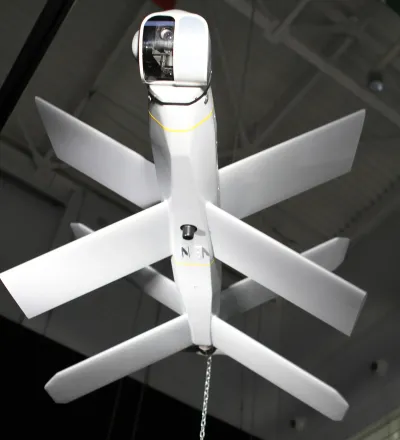
China’s CASC CH-5 (Rainbow) tops the database at 60 hours, the longest disclosed endurance of any of the 52 systems with a published figure. That number comes from CASC, the Chinese state aerospace contractor, and like other Chinese-sourced specifications in this database, it’s a manufacturer claim, not a figure independently verified by outside flight testing or export documentation. At the opposite end, Turkey’s Alpagu and the American Switchblade 300 both publish 0.25 hours, 15 minutes, of endurance. Neither is a defective drone. Both are loitering munitions, single-use weapons that fly to a target area and detonate, so 15 minutes is the fuel and battery life needed to complete that one mission, not a shortfall against a MALE platform’s loiter time.
That 240x range is really a tale of three tiers. Of the 52 UAVs with disclosed endurance, 24 (46%) fly more than 20 hours, 14 (27%) fly between 2 and 20 hours, and 14 (27%) fly under 2 hours.
What separates the 24 systems that fly more than 20 hours?
This top tier is dominated by medium-altitude long-endurance and high-altitude long-endurance airframes, MALE and HALE for short, aircraft purpose-built to stay aloft for ISR or strike missions rather than sprint to a target.
| Rank | System | Origin | Endurance (h) | Range (km) | Weapons payload (kg) |
|---|---|---|---|---|---|
| 1 | CH-5 (Caihong-5) | China | 60 | 6,000 | 1,000 |
| 2 | Aksungur | Turkey | 49 | 6,000 | 750 |
| 3 | Heron 1 | Israel | 45 | 350 | n/a |
| 4 | Super Heron | Israel | 45 | 350 | n/a |
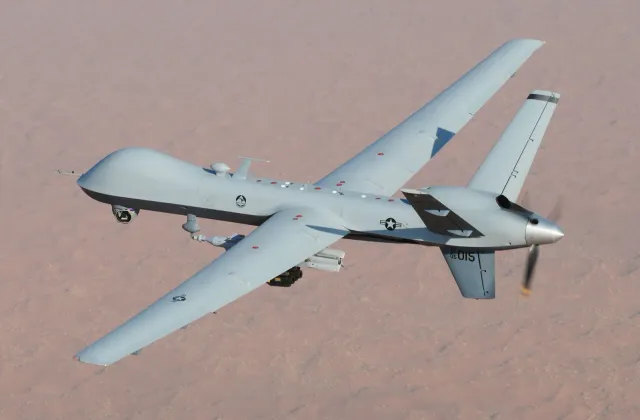
| 5 | MQ-9B SkyGuardian | United States | 40 | 6,000 | 2,155 |
| 6 | Hermes 900 | Israel | 36 | 1,000 | 300 |
| 7 | RQ-4 Global Hawk | United States | 34 | 22,780 | 0 (ISR only) |
| 8 | CH-4 (Caihong-4) | China | 30 | 3,500 | 345 |
| 9 | Heron TP | Israel | 30 | 7,400 | 2,700 |
| 10 | Bayraktar TB2 | Turkey | 27 | 150 | 150 |
| 11 | Bayraktar TB2S | Turkey | 27 | n/a | 150 |
| 12 | MQ-9A Reaper | United States | 27 | 1,850 | 1,700 |
| 13 | MQ-1C Gray Eagle | United States | 25 | 400 | 488 |
| 14 | ANKA-S | Turkey | 24 | 200 | 200 |
| 15 | Bayraktar Akinci | Turkey | 24 | 6,000 | 1,500 |
The CH-4’s 30-hour figure, like the CH-5’s, comes from CASC and should be read the same way: a Chinese manufacturer claim, plausible but not independently corroborated.
Similar endurance doesn’t mean similar mission. The RQ-4 Global Hawk carries no weapons at all, 0 kg, a pure reconnaissance airframe, while the Heron TP two rows below it on this table carries 2,700 kg, the heaviest payload in the entire database. Turkey’s Aksungur sits second on the list at 49 hours, within striking distance of the CH-5’s lead, but with a far more modest 750 kg payload. Endurance in the 30-to-50-hour range tells you these platforms can stay up roughly the same length of time. It tells you nothing about whether they’re watching or striking, or how much they’re carrying while they do it.
Why do a third of the database’s drones measure endurance in minutes, not hours?
Fourteen systems in the database, 27% of the 52 with disclosed endurance, fly under two hours. Nearly all of them are loitering munitions or small hand-launched tactical systems, not degraded versions of a MALE platform:
- RQ-11 Raven (US), 1.25h (75 min), hand-launched tactical ISR
- Warmate (Poland), 1.17h (70 min), loitering munition
- Hero-120 (Israel/UVision), 1h (60 min), loitering munition
- DJI Mavic 3 (China), 0.77h (46 min), commercial/ISR quadcopter
- Lancet-3 (Russia/ZALA Aero), 0.75h (45 min), loitering munition, a Russian manufacturer claim, not independently verified
- Switchblade 600 (US/AeroVironment), 0.67h (40 min), loitering munition
- Kargu-2 (Turkey/STM), 0.5h (30 min), loitering munition
- Kub-BLA (Russia/ZALA Aero), 0.5h (30 min), loitering munition, a Russian manufacturer claim, not independently verified
- Alpagu (Turkey/STM), 0.25h (15 min), loitering munition
- Switchblade 300 (US/AeroVironment), 0.25h (15 min), loitering munition
Treat the Kargu-2’s 30 minutes and the Switchblade 300’s 15 minutes as the design target, not a limitation: this class of system is expendable by design, meant to find and strike a single target on its first and only flight. Its “endurance” is battery or fuel life for that one mission, the same underlying metric as a MALE drone’s loiter time, but measuring a completely different kind of job. A loitering munition that flew for 20 hours would be solving a problem nobody asked it to solve, and would cost, weigh, and price accordingly.
Does more endurance mean more range or more payload?
No, and the database makes that easy to demonstrate with three systems that each lead on a different axis. The RQ-4 Global Hawk has by far the longest range of any UAV in the database, 22,780 km, yet ranks only 7th in endurance at 34 hours. It’s a fast, far-flying HALE platform built to reach distant reconnaissance orbits quickly, not to loiter slowly nearby, and it carries no weapons payload at all. The MQ-9B SkyGuardian sits differently: a top-5 endurance figure, 40 hours, paired with the largest weapons payload in the dataset, 2,155 kg. And the CH-5, the endurance leader at 60 hours, carries a middling 1,000 kg payload and a 6,000 km range, well short of the Global Hawk’s reach.
Endurance, range, and payload are three independent variables on a UAV spec sheet, not three readings of the same underlying quality. A platform can lead on one, trail on another, and sit in the middle on the third, and knowing only its endurance number tells you almost nothing about where it falls on the other two.
What should a buyer take from an endurance number on a spec sheet?
An endurance figure by itself doesn’t tell you what mission a platform is built for. It tells you how long the airframe stays airborne, full stop. The number only becomes useful once you match it to a role: a 20-plus-hour figure signals a persistent ISR or strike platform meant to hold an orbit over a target area for a shift or a day, while a sub-two-hour figure signals a one-way weapon meant to find a target and end its flight there. Buying against the wrong tier, expecting a loitering munition to patrol or a MALE drone to be cheap and expendable, is a procurement mismatch that a spec sheet alone won’t warn you about.
The other standing caution applies here as everywhere in this database: any figure sourced to a Chinese, Russian, or Iranian state manufacturer, including the CH-5’s 60-hour claim and the Lancet-3 and Kub-BLA endurance figures above, is a claim until it shows up corroborated in independent OSINT reporting, export documentation, or observed operational use. That doesn’t make the numbers false. It means they carry a different evidentiary weight than a figure with a decade of allied flight-test and combat history behind it, and a buyer comparing platforms should weigh them accordingly.
For payload-focused comparisons of the strike-capable end of this field, see our ranking of the best armed combat drones of 2026. To browse full specifications, including endurance, range, and payload, for every one of the 71 UAVs in this database, visit the UAV type index.
Systems in this comparison
Every system covered above, with its photo and, where available, a video. Tap a card to open the full spec sheet.
Compare these side by side →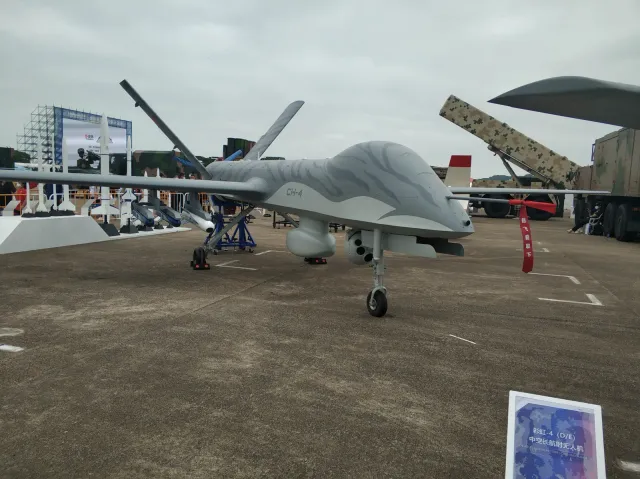
UAV / drone
CH-5 (Caihong-5)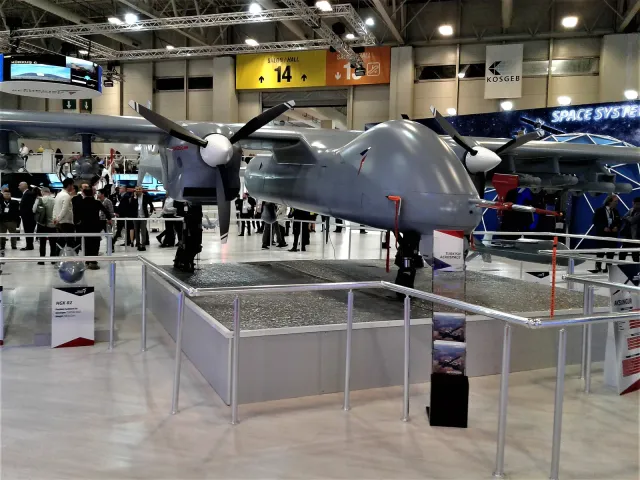
UAV / drone
MQ-9B SkyGuardian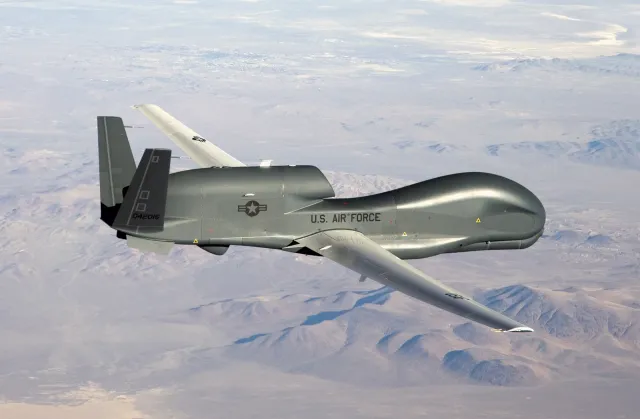
UAV / drone
RQ-4 Global Hawk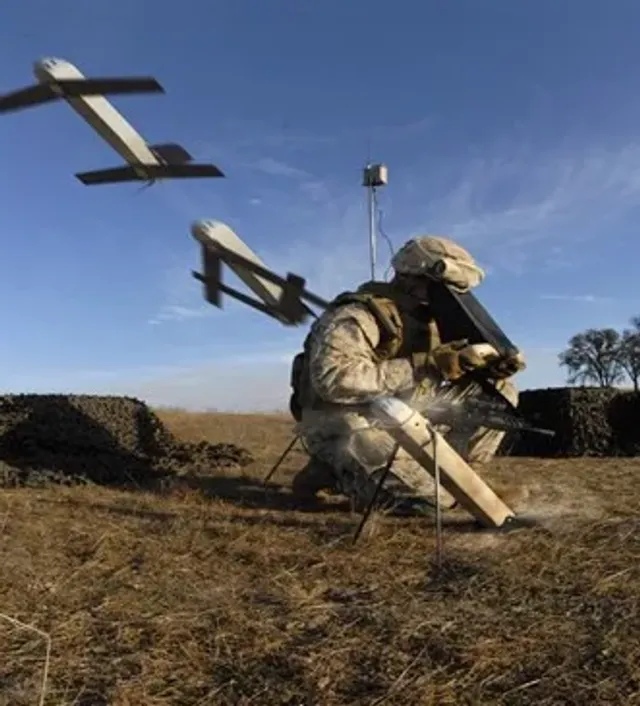
UAV / drone
Switchblade 300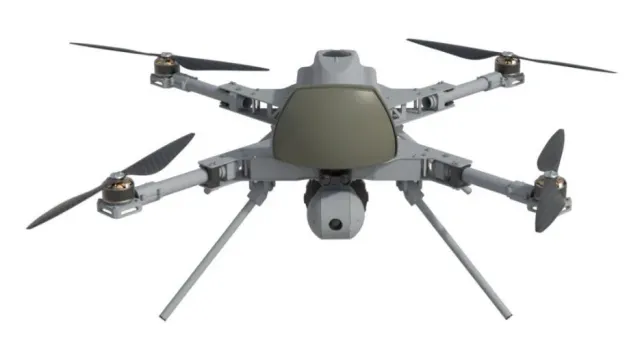
Frequently asked questions
Which UAV has the longest flight endurance in the WeaponSpecs database? +
The CASC CH-5 (Rainbow), a Chinese medium-altitude long-endurance drone, publishes a 60-hour endurance figure, the longest of the 52 UAVs in the database with disclosed data. It is a Chinese manufacturer claim without independent verification.
Why does drone endurance range from 60 hours to 15 minutes? +
"Drone" covers two unrelated aircraft classes. Medium- and high-altitude long-endurance (MALE/HALE) platforms are built to loiter for ISR or strike missions over hours or days. Loitering munitions and small tactical systems are expendable one-way weapons built to find a target within minutes, not patrol for days.
What is a MALE drone? +
Medium-altitude long-endurance describes an unmanned aircraft designed to operate for 20-plus hours at a time, typically for persistent intelligence, surveillance, and reconnaissance. Examples in the database include the Aksungur, MQ-9B SkyGuardian, and Heron TP.
Does higher endurance mean longer range or a bigger payload? +
Not consistently. The RQ-4 Global Hawk has the longest range in the database, 22,780 km, but ranks only 7th in endurance at 34 hours, because it flies fast and far rather than slow and long, and carries no weapons payload. The MQ-9B SkyGuardian instead combines a top-5 endurance figure, 40 hours, with the largest weapons payload of any UAV in the dataset, 2,155 kg.
Do loitering munitions need long flight endurance? +
No. Loitering munitions like the Switchblade 300 or Alpagu are single-use weapons that fly to a target area and then strike or self-destruct, so their 15 to 30 minute endurance figures measure battery or fuel life for a one-way mission, not a patrol requirement, a fundamentally different design goal than an ISR platform's multi-hour loiter time.
Related reading