Hypersonic Missiles Explained: Hype vs Reality
Hypersonic missiles: what Mach 5+ actually means, why maneuver matters more than speed, and what's marketing vs fact.
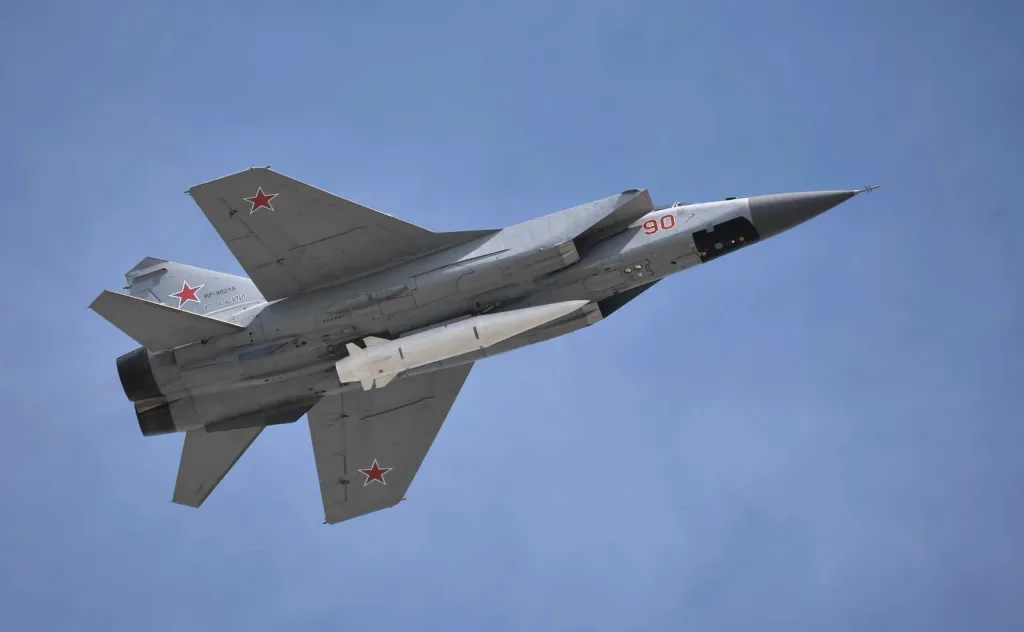
Via Wikipedia, Kh-47M2 Kinzhal (shown for identification)
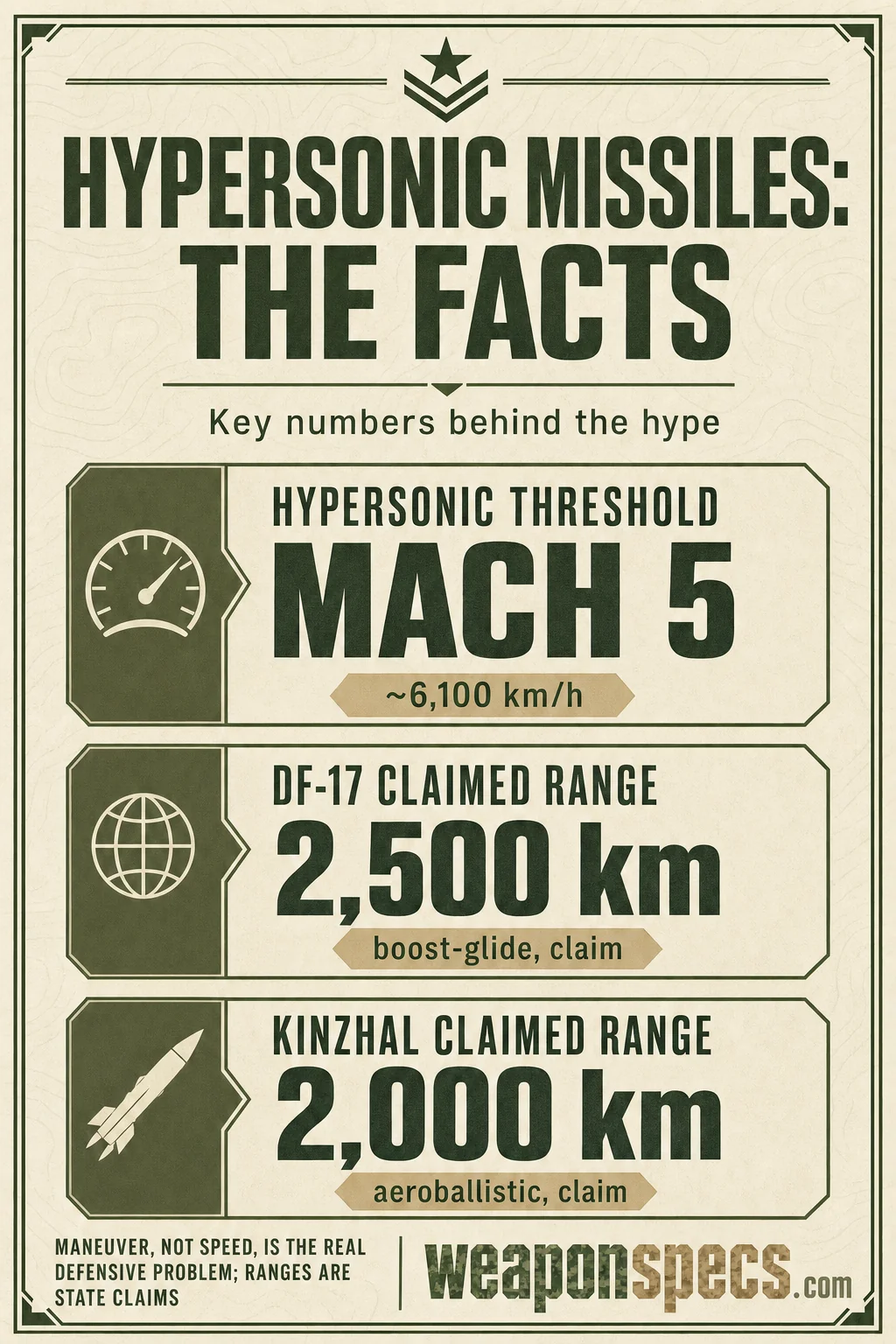
Strip away the press releases and “hypersonic” means one specific thing: sustained flight at Mach 5 or faster, five times the speed of sound, roughly 3,800 mph or 6,100 km/h at sea level. That’s it. It is not a synonym for “unstoppable,” “revolutionary,” or “game-changing,” even though those words show up in nearly every state media rollout of a new system. ICBM reentry vehicles have hit Mach 20+ on their way down since the 1960s, and nobody called that a hypersonic weapons revolution. What actually changed in the last decade is maneuverability, missiles that fly at hypersonic speed while changing course mid-flight, which is a genuinely harder problem for missile defense than raw velocity ever was. Separating that real engineering shift from the marketing noise is the point of this piece.
The three classes, and why they get lumped together
“Hypersonic missile” gets used as a catch-all for three distinct designs with different flight profiles, propulsion, and defensive challenges. Conflating them is where most of the confusion, and a lot of the hype, comes from.
Hypersonic glide vehicles (HGVs), launched via boost-glide. A rocket booster lofts the vehicle to the edge of space, then releases it to glide, unpowered, through the upper atmosphere toward the target, skipping and maneuvering along the way like a stone across water. China’s DF-17 and the U.S. Common Hypersonic Glide Body programs fall in this category. No engine means no sustained thrust after separation, but also no easily trackable exhaust plume for most of the flight.
Hypersonic cruise missiles, powered the whole way by an air-breathing engine, typically a scramjet, which needs to already be moving at high speed to compress incoming air for combustion. Russia’s 3M22 Zircon is marketed in this class, sustaining powered hypersonic flight at lower altitude than a glide vehicle, in principle allowing continuous course correction for the full flight.
Aeroballistic missiles, which follow a mostly ballistic arc, like a traditional short-range ballistic missile, but retain some maneuvering capability during flight, often launched from an aircraft to add the platform’s own speed to the missile’s own boost. Russia’s Kh-47M2 Kinzhal, an air-launched derivative of the Iskander ballistic missile, is the best-known example. This is also the class where the gap between claimed performance and demonstrated combat performance is most visible.
Weapon comparison
| Weapon | Type | Claimed Speed | Claimed Range | Origin |
|---|---|---|---|---|
| Kh-47M2 Kinzhal | Aeroballistic | Mach 10+ | ~2,000 km | Russia |
| 3M22 Zircon | Hypersonic cruise | Mach 8–9 | ~1,000 km | Russia |
| DF-17 | Boost-glide | Mach 5–10 | ~1,800–2,500 km | China |
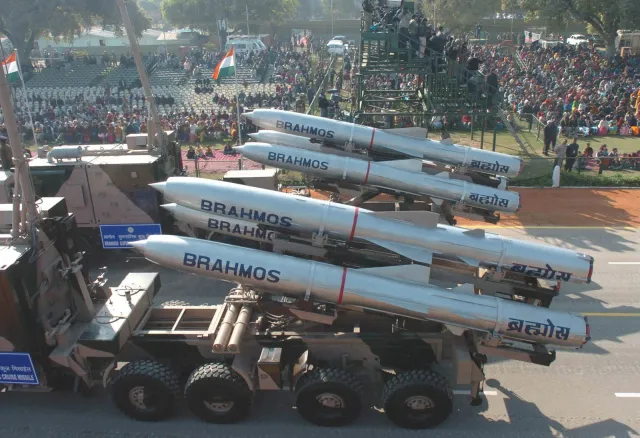
| BrahMos-II | Hypersonic cruise (in development) | Mach 7 (target) | ~1,500 km (target) | India / Russia (joint) |
All figures above for Kinzhal, Zircon, and DF-17 are manufacturer or state claims with limited independent verification, Russian and Chinese defense ministries do not publish test data, telemetry, or third-party audited figures the way NATO test ranges typically do for Western systems. Treat the numbers as the ceiling the manufacturer wants you to believe, not a confirmed floor. BrahMos-II remains in development with speed and range figures that are program targets, not measured results.
Why maneuvering, not speed, is the real defensive problem
Here’s the part the press releases skip: raw speed has never been the hard problem for air defense. ICBM warheads have reentered at hypersonic velocity for sixty years, and missile defense systems designed around predictable ballistic arcs, a parabola you can calculate the instant you get a launch detection, have historically had a fighting chance at intercept, because the intercept point is knowable well in advance.
What breaks that model is a weapon that changes course mid-flight while still going fast. A maneuvering glide vehicle or a cruise missile making terminal corrections denies the defender a fixed intercept solution, the interceptor battery has to keep re-solving the fire control problem as the target’s flight path updates, all inside a dramatically compressed engagement window compared to a subsonic cruise missile. Layer on top of that a low-altitude flight profile, which shrinks radar horizon and cuts the total warning time to seconds, and you get the actual capability gap: not “too fast to hit,” but “too unpredictable, too low, and too fast to hit in the time available.”
That distinction matters because it also explains why the “unstoppable” framing doesn’t survive contact with real intercept data. Kinzhal was rolled out by Russian state media in 2018 as a weapon NATO defenses could not counter. In Ukraine, Patriot batteries have intercepted Kinzhal missiles on multiple confirmed occasions since May 2023, a documented, repeated result that directly contradicts the original marketing claim. That doesn’t mean hypersonic weapons are easy to stop; a single successful intercept against a system marketed as invulnerable is still notable evidence, and it shows defense against maneuvering high-speed threats is a solvable problem under the right radar coverage and interceptor kinematics, not an unbeatable one.
For a side-by-side on how Kinzhal’s aeroballistic profile stacks up against Zircon’s cruise-missile approach, the Kinzhal vs. Zircon comparison breaks down the tradeoffs in more depth. For the fuller landscape of missile designs these systems sit within, our missile systems overview is the place to start.
Reading the claims critically
Whenever a new hypersonic system gets announced, three questions are worth asking before accepting the headline figure. First: is this a state claim, or is there independent test telemetry, flight-test range data, third-party observation, or peer confirmation? Second: is the “range” figure measured at a useful payload weight, or is it a best-case unloaded number? Third: has the weapon ever faced a real, contested defense environment, or only unopposed test flights? Kinzhal is the instructive case precisely because it has faced a contested environment, and the record there is mixed, not the clean “unstoppable” story its early coverage suggested.
If you’re trying to work through what a specific hypersonic or conventional system actually offers versus what’s being marketed, our systems advisor is built to walk through exactly these tradeoffs, claimed spec versus verified capability, and what that gap means for a given comparison.
The bottom line
“Hypersonic” describes a speed threshold, not a capability tier, and speed alone was never the defensive puzzle, maneuverability combined with low-altitude flight is. Boost-glide, hypersonic cruise, and aeroballistic designs each solve that puzzle differently, with different tradeoffs in altitude, powered flight, and detectability. And the loudest claims, Kinzhal chief among them, deserve the most scrutiny, because the one dataset we do have from actual combat conditions in Ukraine complicates the marketing narrative rather than confirming it.
Want to dig into the numbers yourself instead of taking a press release’s word for it? Compare claimed specs directly with our missile systems database, or browse more breakdowns like this on the WeaponSpecs articles.
Systems in this comparison
Every system covered above, with its photo and, where available, a video. Tap a card to open the full spec sheet.
Compare these side by side →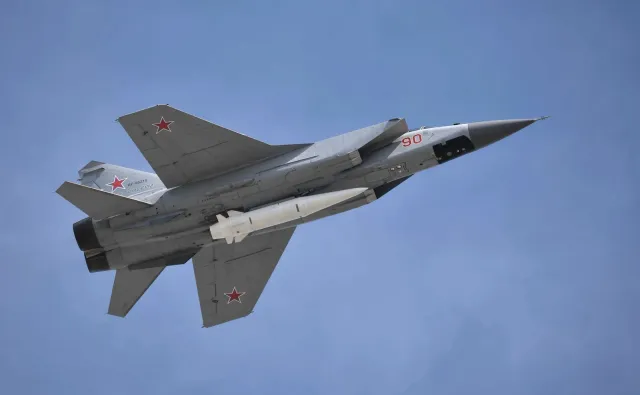
Missile
Kh-47M2 Kinzhal
Missile
3M22 Zircon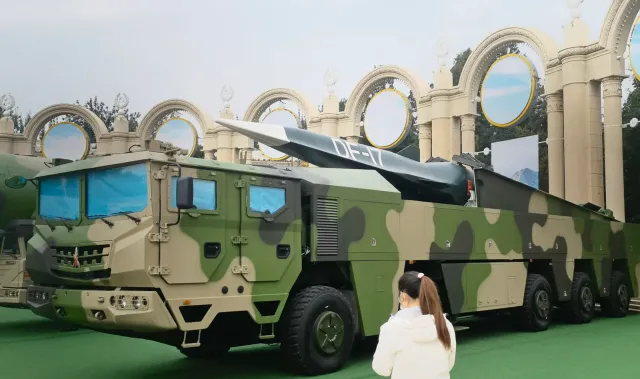
Frequently asked questions
What makes a missile hypersonic? +
Technically, any weapon sustaining Mach 5 or faster qualifies, and most ICBM reentry vehicles have done that since the 1960s. What's new is maneuverable hypersonic flight: boost-glide vehicles and cruise missiles that sustain Mach 5+ while changing course, denying defenders a predictable intercept point.
Are hypersonic missiles unstoppable? +
No. Speed alone doesn't defeat defenses, predictability does. Kinzhal, marketed as unstoppable, has been intercepted by Patriot batteries in Ukraine multiple times. Maneuvering flight complicates tracking, but low-altitude cruise missiles and stealth aircraft have posed similar challenges for decades.
What is the difference between boost-glide and hypersonic cruise? +
Boost-glide weapons ride a rocket to high altitude, release a glide vehicle that skips through the upper atmosphere unpowered. Hypersonic cruise missiles carry an air-breathing scramjet engine, sustaining powered hypersonic flight at lower altitude for the entire course to target.
Has a hypersonic missile ever been intercepted? +
Yes. Ukrainian Patriot batteries have shot down Russian Kh-47M2 Kinzhal aeroballistic missiles on multiple confirmed occasions since May 2023, despite Russian state media describing the weapon as unstoppable. This is the clearest public counterevidence to blanket hypersonic invulnerability claims.
Who leads the hypersonic arms race? +
Russia and China have fielded operational systems first (Kinzhal, Zircon, DF-17), but most performance figures are unverified state claims. The United States, India (BrahMos-II), and others are fielding boost-glide and cruise programs; no country has demonstrated a reliable, layered counter-hypersonic defense yet.
Related reading