Is Published Range a Lie? We Audited 1,017 Systems
Of the 593 systems in our database that publish a range, only 52 also say whether it is a combat radius or a ferry figure. That gap misleads readers.
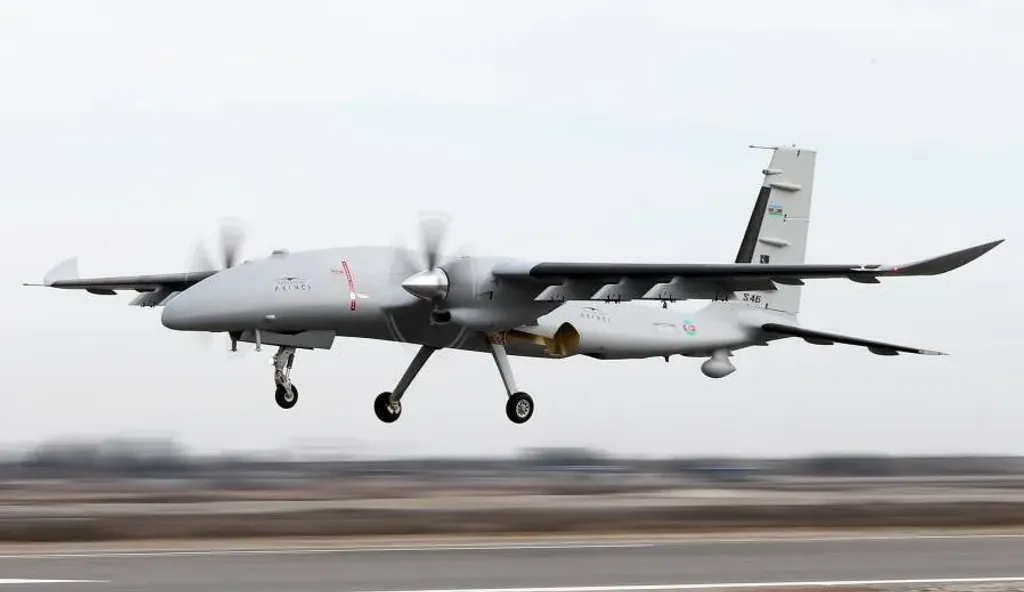
Via Wikipedia, Baykar Bayraktar Akinci (shown for identification)
Across the WeaponSpecs database of 1,017 systems, 593 publish a range figure. Only 52 of those also publish a combat radius alongside it. That means for roughly 91% of systems with a listed range, there is no way to tell from the spec sheet alone whether the number is a ferry range, a combat radius, or an operational datalink limit. Five of those figures, once we checked them against primary sources, turned out to be flatly wrong on the basis they used, not just imprecise. One was off by a factor of 20.
This is not a story about bad actors. It is a story about a unit of measurement that gets treated as one thing when it is actually three, and about how quietly that confusion propagates from spec sheet to spec sheet.
How often does a range figure tell you what it measures?
We queried every system in the database with a non-null range field. Of 1,017 total systems, 593 carry a range value. Cross-referencing those against systems that also carry a combat radius field returns 52 matches, about 8.8% of the range-bearing set. The remaining 541 systems give you a single number and expect you to guess its basis.
That guess matters more than it looks. A “range” of 300 km could mean an aircraft that flies 300 km out and back, one that flies 300 km one-way on a ferry tank, or a drone that can only stay within 300 km of its ground control station while its actual endurance and fuel would carry it much farther. Treat any one of those as interchangeable with another and every downstream comparison, our compare tool included, produces a false ranking.
What does range actually mean, and why do the definitions collide?
Three bases show up under the single word “range” across open-source military specifications:
- Ferry range: the maximum one-way distance on internal fuel, no payload, often used to position aircraft between bases.
- Combat radius: the practical out-and-back distance on a mission profile that includes a payload, loiter time, and a fuel reserve. As a rule of thumb, combat radius runs a third to a half of ferry range, per the general definition used in combat radius literature.
- Operational or datalink radius: specific to remotely piloted aircraft, this is how far the airframe can fly from its ground control station before losing control link, which is a communications limit, not a fuel or airframe limit.
A manufacturer’s marketing sheet, a government fact sheet, and a third-party database can each report a different one of these three numbers under the identical label “range,” with no flag distinguishing them. That is the collision, and it is largely invisible unless someone checks the primary source.
Which figures did we find wrong, and by how much?
We ran five previously-listed range figures against primary manufacturer and institutional sources. All five needed correction, and each failure mode was different.
| System | Class | Previously listed | Corrected | What went wrong |
|---|---|---|---|---|
| Bayraktar Akinci | UAV | 300 km | 6,000 km | Operational/datalink radius filed as range |
| Bayraktar TB3 | UAV | 150 km | 2,000 km | Comms/operational radius, not range |
| TAI Kaan | Fighter | 1,100 km | 2,037 km (radius 1,111 km) | Combat radius filed as range |
| Heron TP | UAV | 1,852 km | 7,400 km | Unit slip: 1,852 km = exactly 1,000 nmi |
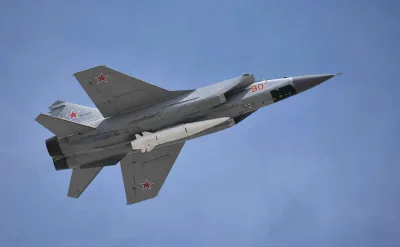
| Kh-47M2 Kinzhal | Missile | 2,000 km (state claim) | ~480 km airframe | Aircraft-inclusive figure, not missile range |
The Kinzhal entry needs its own caveat. The 2,000 km figure is a Russian state-linked claim, tied to the reach of the MiG-31K launch aircraft carrying the missile rather than the missile’s own powered flight. The missile’s own airframe range is closer to 460 to 480 km, per CSIS Missile Threat. We retain 2,000 km in our data as the cited state claim, flagged as such, alongside the corrected airframe figure. Neither WeaponSpecs nor this analysis independently verifies Russian Ministry of Defense figures, and readers should treat any unflagged 2,000 km citation elsewhere as an unverified claim.
How a radius becomes a 300 km headline
The clearest case is the Bayraktar Akinci. Multiple specification sets, including an earlier version of our own data, listed its range at 300 km. Baykar’s own official technical sheet states a 6,000 km operational range for the aircraft, per the Bayraktar Akinci product page. The 300 km figure most plausibly reflects an operational or datalink radius, the distance at which the aircraft can maintain direct control-station link before switching to satellite relay, mislabeled as the aircraft’s total range. A twentyfold gap between “how far the drone can be from its ground antenna” and “how far the drone can fly” is not a rounding error. It is two different questions answered with one number.
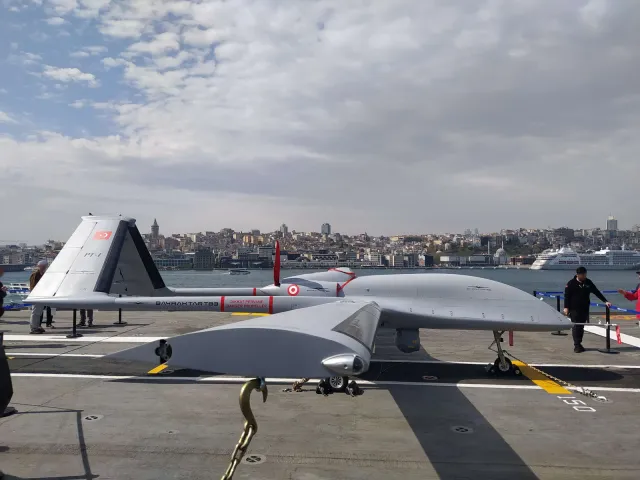
The same mechanism produced the same error on the Bayraktar TB3, where a 150 km figure understates Baykar’s stated range by more than an order of magnitude, again pointing to a comms-radius basis rather than airframe range.
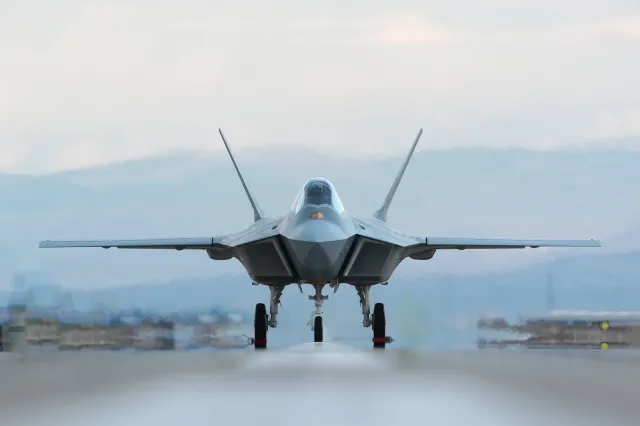
The TAI Kaan case is a different mechanism: 1,100 km was a combat radius, not the aircraft’s range, per general specifications tracked at TAI TF Kaan. The corrected range is 2,037 km, with the 1,111 km combat radius retained as its own field rather than overwriting the range figure.
The Heron TP error is the odd one out: a pure unit conversion slip. 1,852 km is exactly 1,000 nautical miles, the kind of number that results from converting a nautical-mile spec into kilometers once and then treating the wrong output as the true range. The IAI Eitan family’s actual range runs closer to 7,400 km. No radius-versus-range confusion here, just an unconverted or mis-converted unit that then got copied forward.
How we now catch it at build time
We built a validator that runs on every site build and checks a single physical impossibility: no system’s range can be lower than its own published combat radius. Combat radius is by definition shorter than range, since range is measured one-way on internal fuel while radius accounts for a return leg and reserve. If a system’s data shows radius exceeding range, that inversion is a hard signal that a radius value was filed into the range field, or vice versa.
Running that check now, after the five corrections above, returns zero inversions across all 1,017 systems in the database. That does not mean every remaining figure is correct. It means the specific, mechanically detectable error we found five instances of is no longer present. The 541 systems that list a range with no accompanying combat radius remain unverified on that specific point, and we are working through them via manual cross-checks against manufacturer sheets and institutional sources rather than claiming the validator alone closes the gap.
How to read any range figure
Treat a bare “range” number the way you would treat an unsourced claim generally: useful once you know its basis, misleading once you assume a basis it does not state. Before comparing two systems, in our compare tool or anywhere else, confirm both figures are measured the same way. If a source does not specify, do not average it against one that does, and be especially cautious with UAV specs, where the ferry-versus-combat-versus-datalink split is widest and most commonly conflated.
The corrections above are now live in our database, each with its source cited. We will keep running the radius-inversion check on every build and keep working through the 541 unflagged range figures manually. If you are procuring against a published range spec, ask the vendor one question before anything else: is that number one-way, out-and-back, or link-limited. Most spec sheets do not answer it. Ours, for these five systems, now does.
The same audit applies outside range specs. Our Arleigh Burke vs Type 055 vs Sejong the Great comparison found the same pattern in cost and sensor claims: an undisclosed Chinese destroyer price, a radar detection range no OSINT source has actually confirmed, and even our own database’s Arleigh Burke cost figure running behind current reporting. Claims drift. The fix is the same one applied here: cite the source, flag the gap, and keep checking.
Sources
Systems in this comparison
Every system covered above, with its photo and, where available, a video. Tap a card to open the full spec sheet.
Compare these side by side →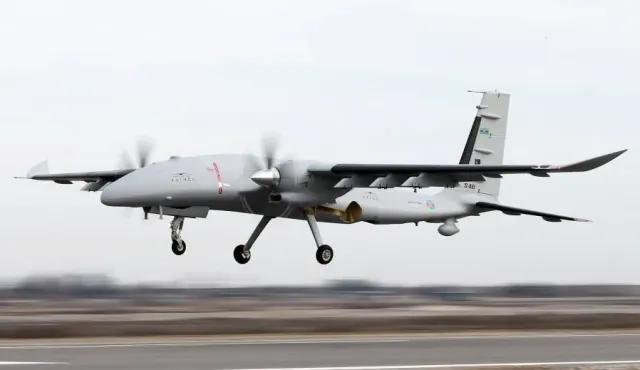
UAV / drone
Bayraktar Akinci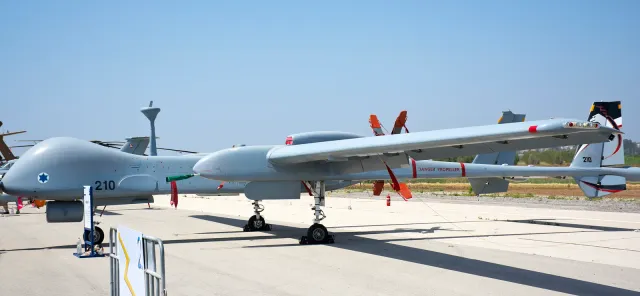
UAV / drone
Bayraktar TB3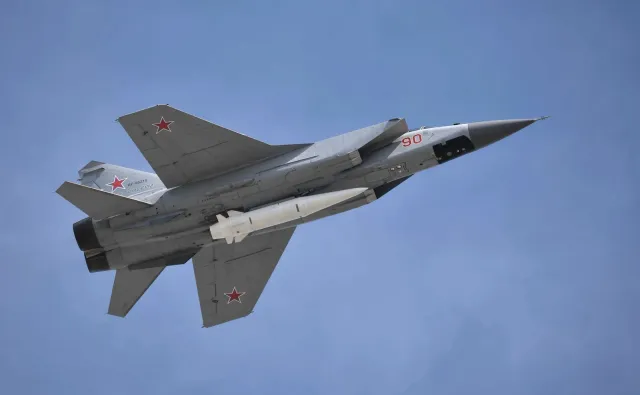
Missile
Kh-47M2 KinzhalFrequently asked questions
What is the difference between range and combat radius? +
Combat radius is roughly the out-and-back distance on a mission, often a third to a half of ferry range. Ferry range is the maximum one-way distance on internal fuel. A drone's operational or datalink radius is how far it can fly from its control station. Mixing these bases is the core error we found.
Was the Bayraktar Akinci's range really listed as 300 km? +
Yes, in several specification sets including our own earlier data. Baykar's official sheet states a 6,000 km operational range. The 300 km figure most likely reflected an operational or datalink radius, not the aircraft's true range.
Is the Kh-47M2 Kinzhal's 2,000 km range real? +
The 2,000 km figure is widely cited but it includes the launch aircraft's own reach. The missile's airframe range is roughly 460 to 480 km per CSIS Missile Threat. Treat 2,000 km as a state-linked system figure, not the missile's own range.
How does WeaponSpecs check for these errors? +
A build-time validator flags any system whose listed range is lower than its own published combat radius, an impossible inversion that signals a radius filed as range, alongside manual source cross-checks.
How should I read a published range figure? +
Ask which basis it uses. If the source does not say, treat it as unspecified and only compare it against figures measured on the same basis.
Related reading