MANPADS Explained: Stinger, Igla & the Portable SAM
MANPADS explained: how shoulder-fired IR-guided SAMs like Stinger and Igla punch far above their $30K-$100K cost.
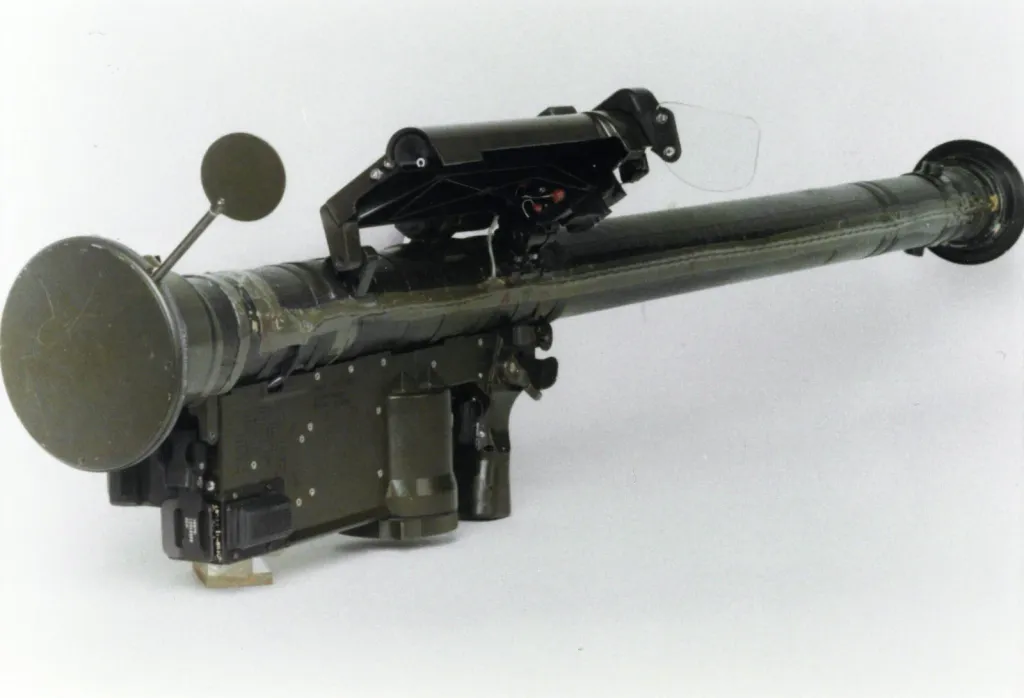
Via Wikipedia, FIM-92 Stinger (shown for identification)
A weapon that costs less than a used car has shot down more helicopters than almost anything else in the modern arsenal, and it fits in a duffel bag. MANPADS, short for Man-Portable Air-Defense Systems, are shoulder-fired, infrared-guided surface-to-air missiles that one soldier can carry, aim, and launch without a radar vehicle, a fire-control truck, or even much training beyond a few weeks. That’s the entire point and the entire threat: a $30,000-$100,000-class weapon, publicly disclosed U.S. sales figures suggest, that can put a multi-million-dollar helicopter or a slow-moving transport aircraft on the ground in seconds. Nothing else in ground-based air defense delivers that ratio of cost to effect, which is exactly why every serious discussion of low-altitude airpower risk starts here.
What a MANPADS actually is
Strip away the acronym and a MANPADS is a simple system: a sealed missile tube, a reusable or disposable grip stock with the trigger and battery/coolant unit, and an infrared seeker in the missile’s nose. All-in weight typically runs 15-20 kg, light enough for one person to carry, shoulder, and fire from a standing, kneeling, or vehicle-mounted position. There’s no radar to switch on, no truck to park, no crew to coordinate. That portability is the tradeoff for everything a MANPADS gives up against a proper vehicle-based system: engagement range topping out around 5-6 km instead of tens of kilometers, and IR guidance instead of a radar seeker that can track through cloud, dust, or countermeasure-heavy environments.
Comparison table
| System | Engagement Range | Altitude | Guidance | Origin |
|---|---|---|---|---|
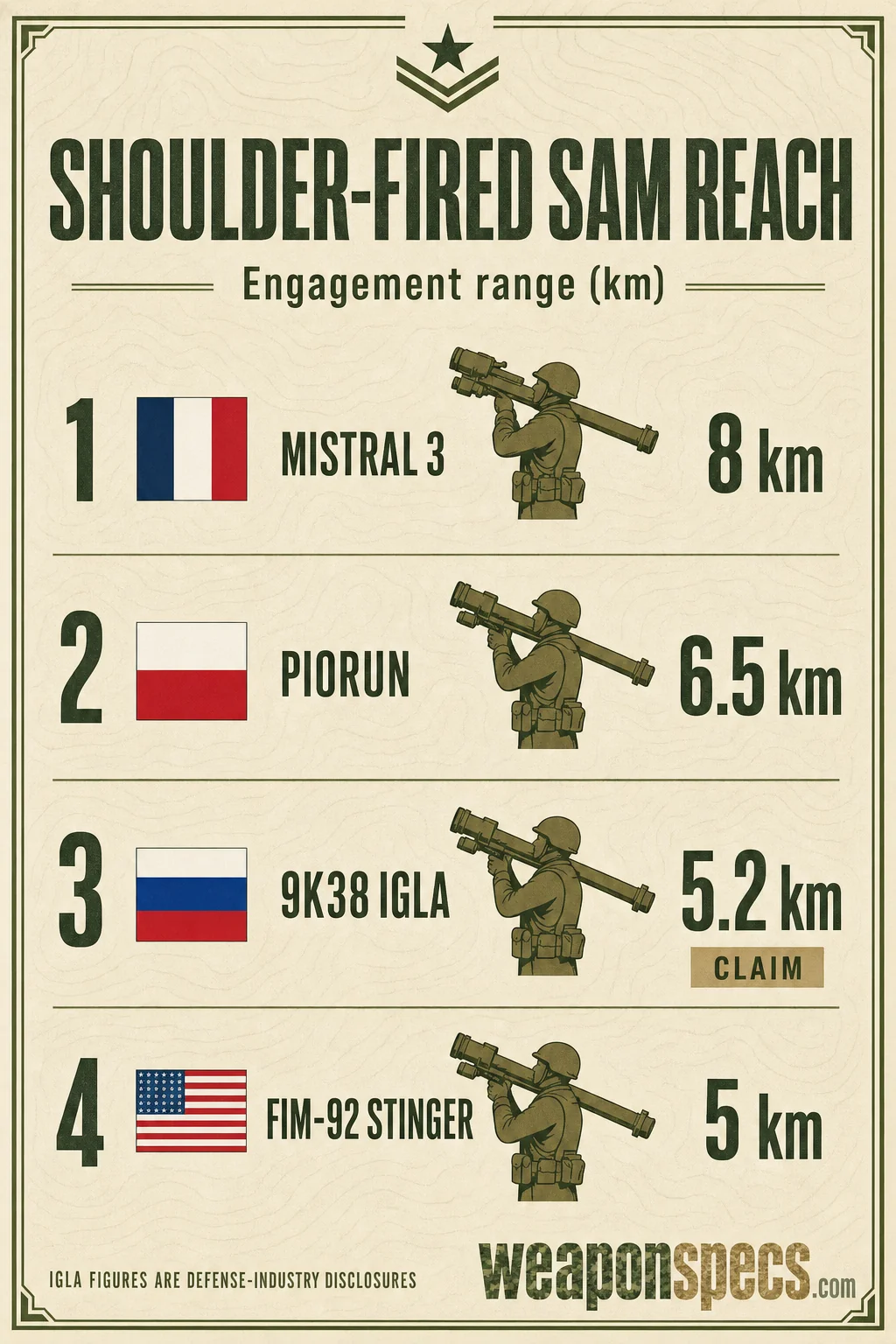
| FIM-92 Stinger | ~4.8-5 km | Up to ~3.8 km | Passive IR / IR-UV seeker | United States |
| 9K38 Igla | ~5.2 km | Up to ~3.5 km | Passive IR seeker | Russia (Soviet-era design) |
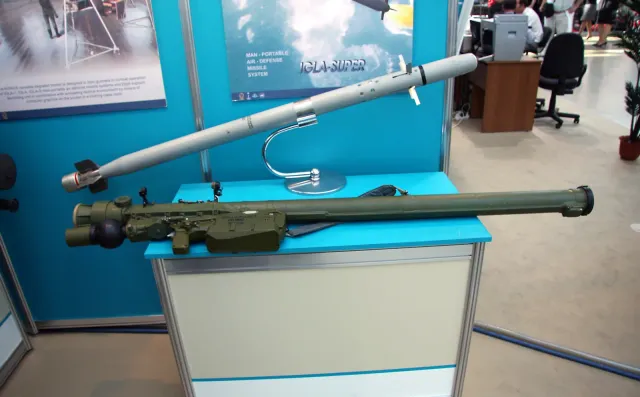
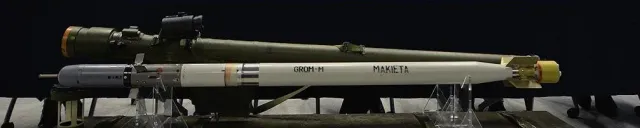
| Piorun | ~6.5 km | Up to ~4 km | Passive IR seeker (upgraded) | Poland |
| Mistral 3 | ~6-8 km | Up to ~4 km | Passive IR imaging seeker | France |
Range and altitude figures above are publicly cited manufacturer or national defense figures. Western NATO-aligned systems (Stinger, Piorun, Mistral) generally publish test-range data with more independent scrutiny than Russian-origin systems; Igla performance claims should be read as the Russian defense industry’s own disclosures rather than independently audited figures.
How the infrared seeker actually works
Every MANPADS in wide service uses some version of the same basic trick: the seeker head detects the heat signature radiating from an aircraft’s engine exhaust and airframe skin friction, then steers itself toward the strongest and most consistent heat source in its field of view. Early first-generation seekers, the kind that armed the original Cold War-era systems, could only track raw heat intensity, which made them relatively easy to spoof with a bright enough decoy. Later generations, including the seeker in the Stinger and in modern upgrades like the Piorun, add IR/UV dual-band discrimination or basic imaging capability, comparing the heat signature’s shape and spectral profile against known decoy behavior to reject a simple flare. That seeker evolution is the whole story of the MANPADS arms race: cheap countermeasures force better seekers, better seekers force smarter countermeasures, repeat.
Once the gunner gets an audio and visual lock tone confirming the seeker has a stable track, firing hands off control entirely. The missile’s own proportional-navigation guidance takes over, continuously adjusting its flight path to intercept the target rather than simply chasing its current position, and detonates either on direct impact or via a proximity fuze that triggers when it passes close enough to guarantee a kill against the airframe or engine.
The low-cost, high-impact story: helicopters and low-flying aircraft
This is where MANPADS earn their reputation. Helicopters spend most of their operational life at exactly the altitude band, a few hundred to a few thousand meters, where a MANPADS seeker has the easiest possible shot: close range, a hot exhaust plume pointed roughly at the launch position, and a flight profile that’s often slow and predictable during landing, takeoff, or a hover for troop insertion. Transport and cargo aircraft on short-field approaches into forward airstrips face a similar exposure window. Multiple conflicts over the past four decades, from Soviet operations in Afghanistan through more recent conflicts in Ukraine and the Middle East, have repeatedly shown the same pattern in open-source reporting: a handful of shoulder-fired missiles, distributed among small dispersed teams, can force an entire air force to change its low-altitude tactics, reroute transport flights, or accept it can no longer safely fly troops and cargo below a certain altitude in contested airspace. That’s an outsized strategic effect for a weapon that costs a rounding error next to the aircraft it threatens.
Proliferation: the part that worries arms-control analysts most
The same portability that makes MANPADS effective on a battlefield makes them a persistent proliferation headache off of one. A weapon this light, this simple to operate, and this easy to conceal is also easy to divert, smuggle, or lose track of once large numbers enter a conflict zone. Publicly documented incidents, including the loss of unaccounted-for stockpiles after the fall of the Gaddafi government in Libya, have been cited by arms-control researchers and Western governments as a recurring concern: once a MANPADS leaves state control, tracking its eventual buyer becomes extremely difficult, and the same weapon built to counter a battlefield helicopter is just as capable, in principle, against a civilian airliner on approach or departure near an airport. That dual-use civil aviation risk is a large part of why MANPADS export controls, end-user monitoring, and post-conflict weapons-collection programs get far more sustained diplomatic attention than most other infantry-portable weapon categories.
Countermeasures: flares and DIRCM
Aircraft haven’t stood still against this threat. The oldest and still most common countermeasure is the flare: a pyrotechnic decoy ejected in bursts that burns hotter than engine exhaust, designed to pull a basic IR seeker off the real aircraft and onto the decoy instead. Flares are cheap, simple, and still reasonably effective against older, single-color seekers, which is why nearly every military helicopter and many transport aircraft still carry dispenser racks as a baseline defense.
Against newer seekers that can discriminate a flare’s different heat and burn signature from a real engine, the more advanced answer is DIRCM, Directed Infrared Countermeasures. Rather than throwing out a decoy, a DIRCM system detects the missile’s launch and seeker lock, then aims a modulated infrared or laser jamming beam directly at the incoming seeker to corrupt its tracking signal and break the lock before impact. DIRCM pods are increasingly standard on higher-value military transports and VIP aircraft precisely because flares alone no longer guarantee protection against the newest seeker generation. Beyond hardware, tactics matter just as much: flying at higher altitude, avoiding predictable low-altitude approach corridors, and minimizing time spent in the engagement envelope all reduce exposure regardless of what’s mounted on the airframe.
For where MANPADS sit inside the broader ground-based air defense picture, from short-range systems up through layered strategic networks, our air defense systems overview lays out the full spectrum. And if you’re trying to understand infrared-guided missile design more broadly, the missile systems section covers the seeker and guidance technology in more depth.
The bottom line
MANPADS are the clearest example in modern warfare of asymmetric cost-effectiveness: a shoulder-fired, infrared-guided missile costing tens of thousands of dollars can force multi-million-dollar aircraft to change how, where, and whether they fly at low altitude. That leverage comes from a simple, mature technology, an IR seeker chasing heat, wrapped in a package light enough for one person to operate, which is also exactly why the same weapon is such a persistent proliferation and civil-aviation risk once it leaves state control. Flares and DIRCM have kept pace so far, but the seeker-versus-countermeasure race here is far from settled.
Want to see how shoulder-fired systems compare against the rest of the air-defense spectrum, spec for spec? Our systems advisor walks through exactly that kind of tradeoff, or browse more breakdowns like this on the WeaponSpecs articles.
Systems in this comparison
Every system covered above, with its photo and, where available, a video. Tap a card to open the full spec sheet.
Compare these side by side →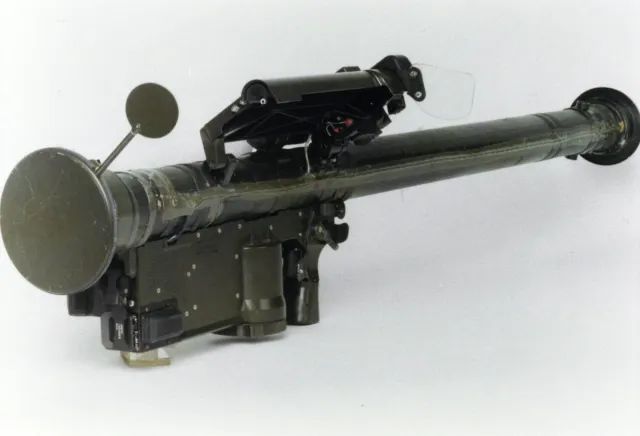

Frequently asked questions
What is a MANPADS? +
MANPADS stands for Man-Portable Air-Defense System: a shoulder-fired, infrared-guided surface-to-air missile one soldier can carry, aim, and fire without a vehicle or radar vehicle. Weighing roughly 15-20 kg all-in, it's built to down helicopters and low-flying, slow-moving fixed-wing aircraft at short range.
How does a Stinger missile work? +
A Stinger's infrared seeker homes on the heat signature of an aircraft's engine exhaust. The gunner gets an audio/visual lock tone, fires, and the missile's proportional-navigation guidance steers it into an intercept course, detonating on impact or via proximity fuze near the target.
How much does a MANPADS cost? +
Publicly disclosed U.S. Foreign Military Sales figures put a Stinger missile plus grip stock around $38,000-$120,000 depending on contract and variant, with the reusable launcher adding more on first purchase. Russian and other state-sourced Igla-family cost figures are far less transparent and should be treated as estimates.
Can a MANPADS shoot down a fighter jet? +
Rarely, and not by design. MANPADS are built against helicopters and low, slow fixed-wing aircraft within a few kilometers and a few thousand meters of altitude. Fast, high-flying fighters, and especially anything with modern flare countermeasures and altitude margin, are a poor match for this weapon class.
How do aircraft defend against MANPADS? +
The two main countermeasures are flares, which decoy older single-color IR seekers by burning hotter than engine exhaust, and DIRCM (Directed Infrared Countermeasures), which jam the seeker directly with a modulated laser. Flying higher, faster, and avoiding predictable low-altitude approach corridors also reduces exposure.
Related reading