The Most Heavily Armed Destroyers of 2026, Ranked
South Korea's Sejong the Great-class destroyer carries 128 VLS missile cells, more than any other destroyer in our database, ahead of the US Arleigh Burke class.
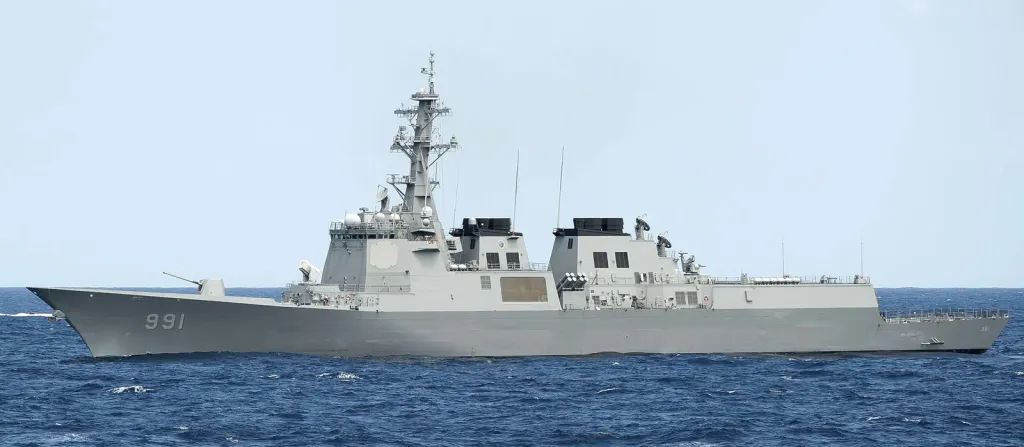
Via Wikipedia, Sejong the Great-class destroyer (shown for identification)
South Korea’s Sejong the Great-class destroyer carries 128 vertical launch system (VLS) cells, the most of any destroyer in the WeaponSpecs database, ahead of the US Navy’s Arleigh Burke class at 96, the Zumwalt class at 80, and South Korea’s own Chungmugong Yi Sun-sin class at 56. That ranking, drawn straight from four destroyer classes with publicly disclosed cell counts and displacement figures, is the whole story on paper. It is not the whole story in practice, and the gap between those two things is the actual point of this piece.
Which destroyer carries the most VLS cells?
The ranking, by raw VLS cell count:
| Rank | Destroyer class | Country | VLS cells | Full-load displacement |
|---|---|---|---|---|
| 1 | Sejong the Great-class | South Korea | 128 | 10,000 t |
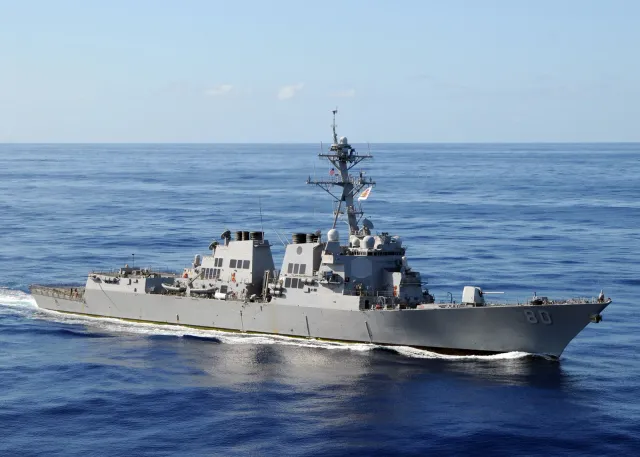
| 2 | Arleigh Burke-class | United States | 96 | 9,700 t |
| 3 | Zumwalt-class | United States | 80 | 15,761 t |
| 4 | Chungmugong Yi Sun-sin-class | South Korea | 56 | 6,520 t |
South Korea’s Sejong the Great-class destroyer tops the field at 128 cells on a 10,000-ton hull, more cell capacity than the US Navy’s own workhorse destroyer, the Arleigh Burke-class, carries at 96 cells on a comparable 9,700 tons. The Zumwalt-class sits third at 80 cells, and South Korea’s earlier Chungmugong Yi Sun-sin-class rounds out the list at 56, on a notably smaller 6,520-ton hull.
Does cell count actually mean missile count?
No, and this is the caveat WeaponSpecs has made before in the context of warship missile density: a VLS cell is a launch slot, not a missile. Many navies quad-pack their cells with the Evolved Sea Sparrow Missile (ESSM), a smaller point-defense interceptor, letting a single cell hold up to four ESSMs instead of one larger strike or area-defense missile. That means two destroyers with identical cell counts can carry very different actual missile loadouts depending on how their magazines are packed on a given deployment, and a ship with fewer cells is not automatically the lesser-armed ship in practice.
Cell count is best read as a design-capacity ceiling, the maximum number of launch slots a hull was built with, not a snapshot of what missiles are loaded in port on any given day. Treat every number in this ranking that way. It describes what a shipyard built into the hull, not what a war-ready magazine looks like at sea.
Why does the heaviest destroyer here have fewer cells, not more?
This is the contrast worth sitting with. The Zumwalt class is the heaviest ship in this ranking by a wide margin, nearly 15,800 tons full load, more than 6,000 tons heavier than the Sejong the Great and Arleigh Burke classes. Yet it carries fewer VLS cells than both of them. That is not a flaw or an oversight. It is a deliberate tradeoff.
Zumwalt’s tonnage went somewhere else. A large share of the hull is built around a low-observable stealth shape, angled surfaces and a tumblehome bow designed to reduce radar cross-section far more aggressively than a conventional destroyer hull. Another large share went into two Advanced Gun System mounts, sizable gun installations meant for sustained naval gunfire support rather than missile engagement. Stealth shaping and gun magazines both compete for the same internal volume and displacement budget that would otherwise go toward additional VLS cells, and on the Zumwalt class, that budget went to the guns and the hull form instead.
The result is a ship built for a different mission profile: closing on a coastline with a reduced signature and delivering sustained gunfire support, not maximizing missile magazine depth. Judged purely on VLS cells, the Zumwalt looks like it underperforms its own size. Judged against what it was actually built to do, the tradeoff makes sense on its own terms.
Does displacement predict firepower?
Not on this evidence. If tonnage tracked cell count in a straight line, the Zumwalt class, as the heaviest ship here, would top this list, not sit third. Instead the two lighter destroyers, the Sejong the Great at 10,000 tons and the Arleigh Burke at 9,700 tons, both out-cell a hull that outweighs them by roughly 6,000 tons. Displacement tells you how much steel, propulsion, and internal volume a design carries. It does not tell you, by itself, how that volume was allocated between missiles, guns, sensors, or stealth shaping. Those are separate design choices, and this set of four destroyers is a clean illustration of how differently they can be made.
Where the smaller hull lands
The Chungmugong Yi Sun-sin class, at 56 cells on 6,520 tons, is the smallest and least-armed hull in this set by cell count, but it is also the oldest design lineage of the four and a notably lighter ship than the other three. Its lower cell count tracks its lower tonnage more closely than the other three ships do with each other, a reminder that the size-versus-cells relationship isn’t fixed across an entire navy’s shipbuilding history, it shifts as design priorities and hull generations change.
The bottom line
On raw VLS cell count, the ranking is straightforward: Sejong the Great leads at 128, Arleigh Burke follows at 96, Zumwalt at 80, and Chungmugong Yi Sun-sin at 56. But cell count is a capacity figure, not a missile inventory, and the Zumwalt class shows why displacement alone can’t explain that capacity either. A heavier hull can carry fewer cells on purpose, because its designers spent that tonnage on stealth and guns instead.
For the fuller three-way breakdown against China’s Type 055, including launcher composition, radar, cost, and combat record, see Arleigh Burke vs Type 055 vs Sejong the Great. Run a direct Sejong the Great vs Arleigh Burke comparison yourself to see the full spec sheets side by side, browse every hull in the warship category to see how other destroyers, cruisers, and frigates allocate their tonnage, or build a mission-specific comparison in the Advisor tool. For more original-data rankings like this one, see the WeaponSpecs articles archive.
Systems in this comparison
Every system covered above, with its photo and, where available, a video. Tap a card to open the full spec sheet.
Compare these side by side →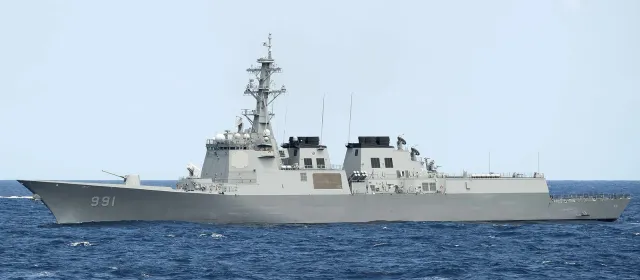
Warship
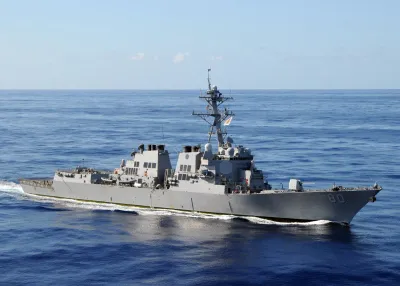
Arleigh Burke-class Destroyer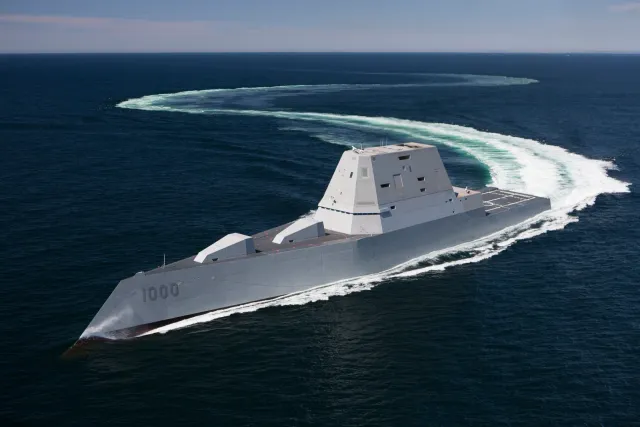
Warship
Zumwalt-class Destroyer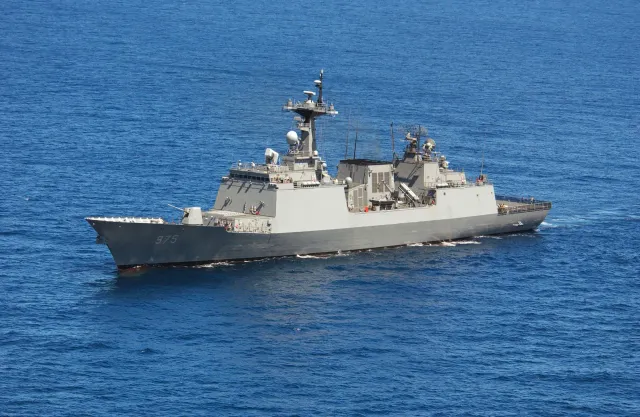
Frequently asked questions
Which destroyer has the most VLS cells? +
South Korea's Sejong the Great-class destroyer carries 128 vertical launch system cells, the most of any destroyer in the WeaponSpecs database. The US Navy's Arleigh Burke class follows at 96, then the Zumwalt class at 80, and South Korea's own Chungmugong Yi Sun-sin class at 56.
Does a higher VLS cell count mean a destroyer carries more missiles? +
Not necessarily. A VLS cell is a launch slot, not a missile. Many cells can be quad-packed, most commonly with the Evolved Sea Sparrow Missile, letting a single cell hold up to four smaller point-defense missiles instead of one larger one. Cell count is a design-capacity ceiling, not a direct missile-for-missile comparison between ships.
Why does the Zumwalt class have fewer VLS cells than the Arleigh Burke class despite being much heavier? +
The Zumwalt class displaces nearly 15,800 tons full load, well above the Arleigh Burke's 9,700 tons, yet carries only 80 VLS cells against the Burke's 96. That's a deliberate tradeoff: Zumwalt's tonnage goes into a low-observable stealth hull shape and two large-caliber Advanced Gun System mounts, both of which eat into the space and displacement that would otherwise go toward missile cells.
Is displacement a good proxy for a destroyer's firepower? +
No. The Zumwalt class is the heaviest ship in this ranking but sits third in VLS cell count, while the lighter Sejong the Great and Arleigh Burke classes carry more cells on less tonnage. Displacement reflects a ship's overall size and design priorities, hull shape, propulsion, gun armament, sensors, not how many missile cells its designers chose to fit.
What was the Zumwalt class built to do if not maximize missile capacity? +
The Zumwalt class was designed around stealth shaping and shore bombardment, built to approach a coastline with a reduced radar signature and deliver sustained naval gunfire support from its two Advanced Gun System mounts. Missile magazine depth was a secondary design priority next to those two goals, per publicly disclosed US Navy program details.
Related reading