The Best Infantry Fighting Vehicles (IFVs) of 2026
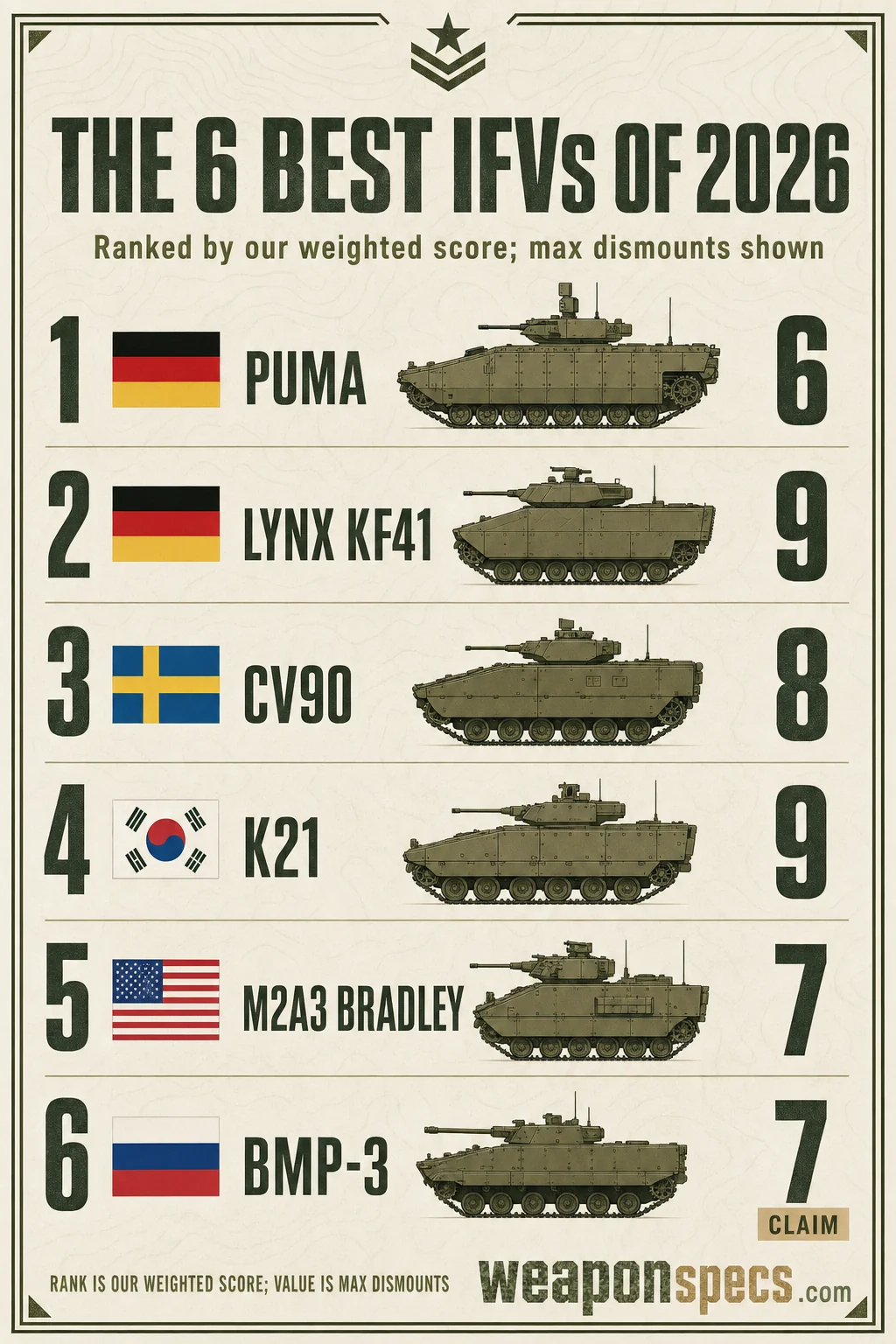
The best IFVs of 2026, ranked on firepower, protection/APS, troop capacity, mobility, and cost, Puma leads a tight field.
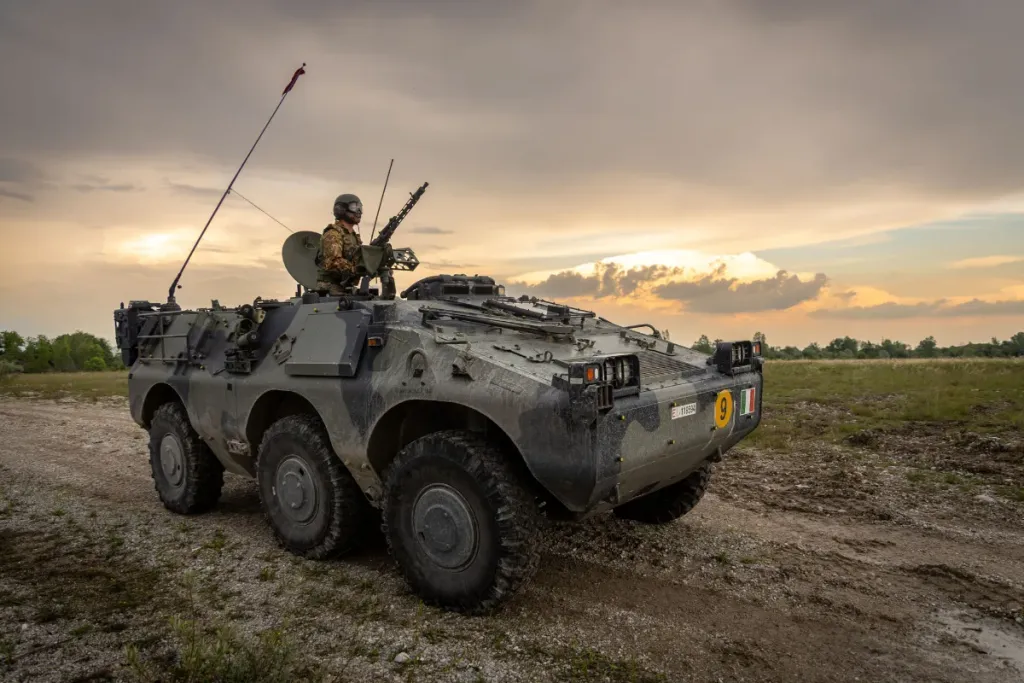
Via Wikipedia, Puma (Italian armoured fighting vehicle) (shown for identification)
The best infantry fighting vehicle of 2026 is the Puma, not because it’s the newest design on this list, but because it wins on the factors that decide whether an IFV survives contact: layered passive armor plus a real active protection system integration path, a 30mm autocannon that outranges most competing autocannons, and a service record with an army that has actually fielded it in numbers. We ranked the field below on five weighted criteria, firepower, protection/APS, troop capacity, mobility, and cost, and a few widely-hyped names land lower than their marketing decks suggest.
How we ranked them
Five criteria, weighted in this order:
- Firepower, main weapon caliber, ammunition family, fire-control and stabilization, and, where fitted, anti-tank missile integration. A bigger autocannon with poor stabilization loses to a smaller one that actually hits a moving target.
- Protection and APS, base armor class, applique/modular upgrade packages, and whether the platform has a fielded or near-fielded active protection system. We discount vehicles whose protection claims exist only in brochures.
- Troop capacity, dismount count and how much usable space remains once electronics, ammunition stowage, and crew stations are accounted for. A cramped “eight-man” rating that’s uncomfortable in practice isn’t worth much.
- Mobility, power-to-weight ratio and how it holds up once appliqué armor and mission kit add weight, since IFVs routinely gain several tons over their baseline curb weight in service.
- Cost, approximate unit cost and how sustainable the logistics tail is: spare parts, allied production lines, and export footprint.
We did not rank on dismount count or gun caliber alone, both are marketing numbers without armor and fire-control context. An IFV is a system, not a spec sheet.
1. Puma
The Puma tops this list because it does the hard things well: composite modular armor that can be built up to a “combat configuration” for high-intensity operations, a clear integration path for hard-kill APS, and a Rheinmetall/KMW MK30-2 30mm autocannon with a longer effective range than most rival autocannons. It carries six dismounts in German army configuration, fewer than some competitors, but the tradeoff buys genuinely combat-relevant protection rather than paper capacity. See the full spec breakdown under /types/ifv/.
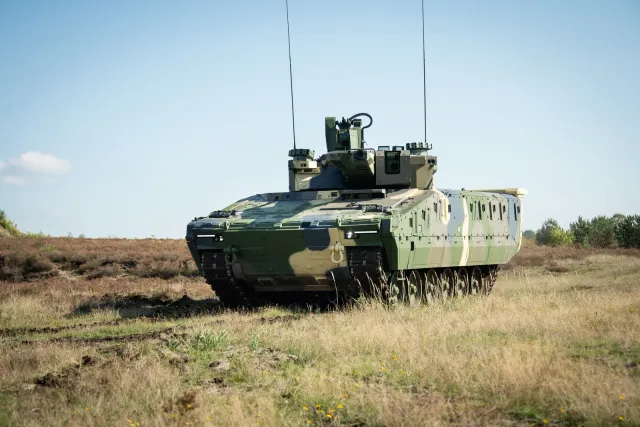
2. Lynx KF41
Rheinmetall’s clean-sheet Lynx design is arguably the most future-proofed IFV on this list, a larger hull than the Puma, room for up to eight or nine dismounts depending on configuration, and a modular architecture built explicitly so armor, turret, and mission systems can be swapped without a full redesign. It loses ground to the Puma mainly on combat pedigree: the KF41 is newer to service and still building the operational track record the Puma already has. It’s also the natural head-to-head in most European procurement debates, see our Puma vs Lynx KF41 comparison.
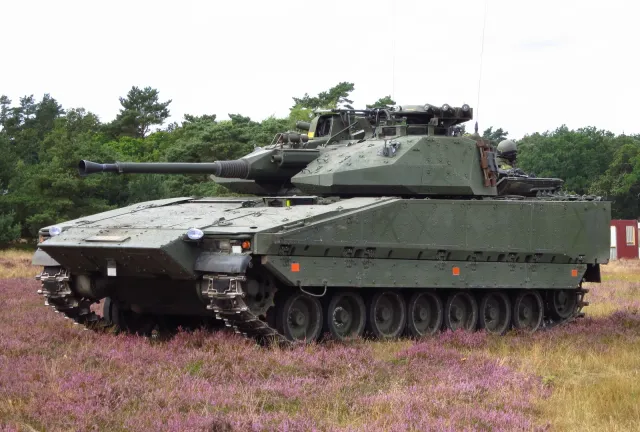
3. CV90
Sweden’s CV90 has quietly become the most exported Western IFV of the last three decades, and for good reason: a mature, repeatedly upgraded platform (now well past its Mk III/IV iterations), strong mobility on a favorable power-to-weight ratio, and a 35/40mm autocannon option that outguns most 30mm-armed peers on paper. It ranks third rather than higher mainly because its base armor generation, while continuously upgraded, started from an older baseline than the Puma or Lynx.
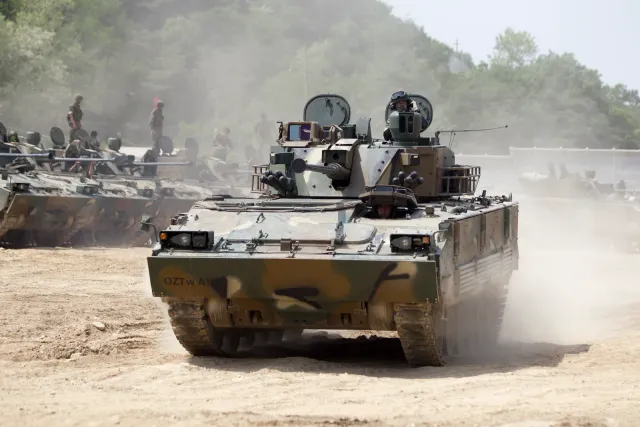
4. K21
South Korea’s K21 stands out for an unusual design choice: a lightweight hull using composite and ceramic armor to keep weight down while still claiming protection against 30mm autocannon fire on the frontal arc, plus an unusual amphibious capability without added flotation kits. Firepower (40mm) and mobility are strong. It sits mid-table because its protection claims against modern anti-tank guided weapons are thinner than the top three, and its export/allied footprint remains smaller.
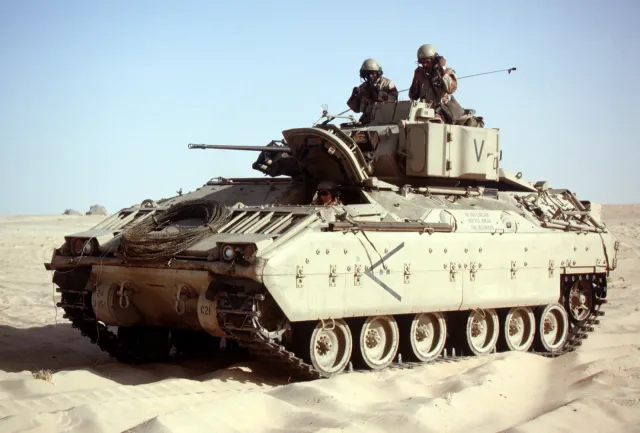
5. M2A3 Bradley
The Bradley is the most combat-tested IFV on this list by a wide margin, with a service and combat record stretching back decades and continuously updated electronics, armor tiles, and a TOW missile launcher that gives it genuine anti-armor reach most autocannon-only IFVs lack. It ranks here rather than higher because the base hull design is now dated relative to clean-sheet competitors, dismount capacity (six to seven) and internal volume trail the Lynx and CV90, and the Army’s own replacement program (XM30) is a tacit admission the platform is aging out.
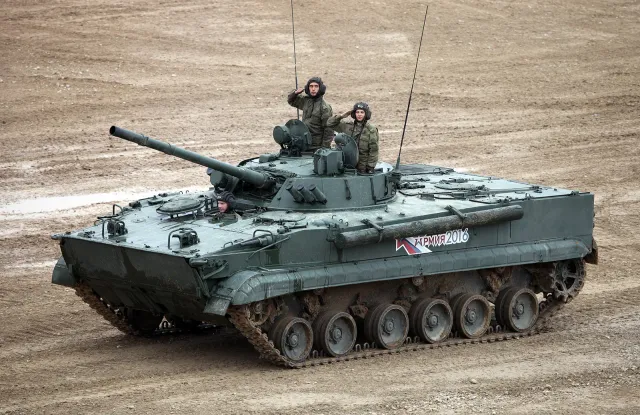
6. BMP-3
Russia’s BMP-3 claims an unusual triple-weapon fit, a 100mm gun-launched missile system, a coaxial 30mm autocannon, and machine guns, plus amphibious capability and a low profile. These are largely manufacturer or state claims with limited independent verification, particularly around fire-control integration of the 100mm/30mm combination under combat conditions and modern-era protection levels. Treat its position here as provisional pending more transparent, independently verifiable data.
| Rank | IFV | Main Weapon | Troops Carried | Protection Note | Origin |
|---|---|---|---|---|---|
| 1 | Puma | 30mm MK30-2 autocannon | 6 dismounts | Modular composite, APS-integration path | Germany |
| 2 | Lynx KF41 | 30-35mm autocannon (configurable) | 8-9 dismounts | Modular armor, APS-ready | Germany |
| 3 | CV90 | 35/40mm autocannon | 6-8 dismounts | Continuously upgraded modular armor | Sweden |
| 4 | K21 | 40mm autocannon | 6-9 dismounts | Composite/ceramic, claimed 30mm-resistant frontal arc | South Korea |
| 5 | M2A3 Bradley | 25mm autocannon + TOW ATGM | 6-7 dismounts | Upgraded armor tiles, combat-tested | United States |
| 6 | BMP-3 | 100mm gun-missile + 30mm autocannon | 7 dismounts | Claimed composite armor (state claims) | Russia |
The bottom line
No IFV on this list wins on every axis, and that’s the honest state of the class in 2026: a running trade-off between firepower, protection, troop capacity, mobility, and what your logistics chain can actually sustain over a service life measured in decades. The Puma tops our ranking because it treats fielded, combat-relevant protection as non-negotiable rather than as a future upgrade promise, but the Lynx KF41 and CV90 are close enough that mission profile and existing fleet commonality should decide a real procurement call, not a spec sheet. If you’re weighing two of these head-to-head, run them through our Puma vs Lynx KF41 comparison, browse the full IFV class page, or get a tailored recommendation from the advisor. More rankings and breakdowns like this live on the articles page.
Systems in this comparison
Every system covered above, with its photo and, where available, a video. Tap a card to open the full spec sheet.
Compare these side by side →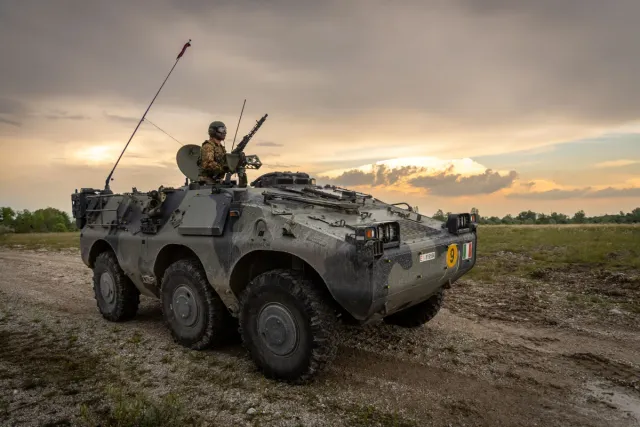
Frequently asked questions
What is the best IFV in 2026? +
By our weighting of firepower, protection/APS, troop capacity, mobility, and cost, the Puma IFV ranks first. It combines top-tier passive armor, a mature APS integration path, and a 30mm autocannon in a package German and partner armies have committed to at scale.
What is the difference between an IFV and an APC? +
An APC (armored personnel carrier) is built primarily to move troops safely, usually with only a machine gun for self-defense. An IFV adds a stabilized cannon (20-40mm), often anti-tank missiles, and armor rated to fight alongside tanks, letting dismounts assault under direct fire support.
Which IFV has the best protection? +
The Puma and Lynx KF41 are widely regarded as the best-protected IFVs in production, combining modular composite armor with a clear path to hard-kill active protection systems. Exact protection ratings are classified across every program on this list.
How many troops does an IFV carry? +
Most modern IFVs carry a two-to-three-person crew plus six to nine dismounts, though this varies with hull size. The Puma carries six dismounts in its baseline German configuration, while the CV90 and Lynx can carry seven to eight depending on variant.
Is the Puma or the Lynx better? +
The Puma has the edge in combat-ready protection and a longer service record with the Bundeswehr, while the Lynx KF41 offers more internal volume, a larger dismount squad, and a design built from the outset for easy future upgrades. Neither is a clear loser, the choice is procurement-context dependent.
Related reading