Service Pistol Magazine Capacity Compared, 2026
The FN Five-seveN holds 20 rounds of 5.7x28mm, the highest standard magazine capacity of any service pistol in our database.
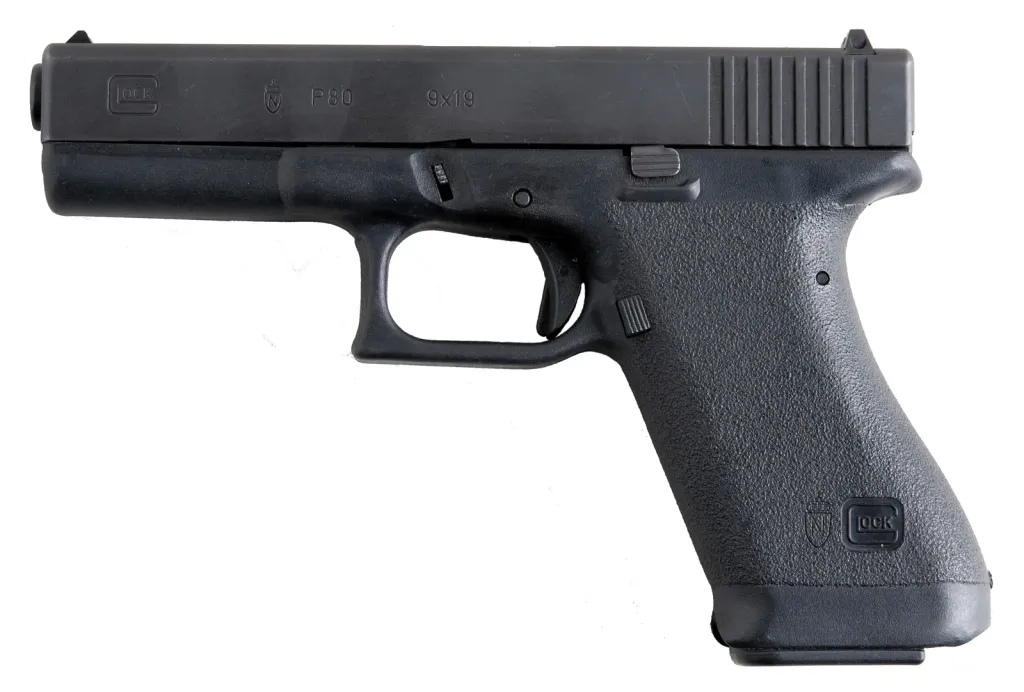
Via Wikipedia, Glock (shown for identification)
The FN Five-seveN carries 20 rounds of 5.7x28mm, the highest standard magazine capacity of any service pistol in our database, while the Desert Eagle carries just 7 rounds of 12.7 mm (.50 AE), the lowest. That 13-round spread across six pistols isn’t a story about better or worse engineering. It’s a story about cartridge geometry. A magazine is a fixed-volume box, and the only way to fit more rounds into it is to make each round smaller. The Five-seveN’s slim, high-velocity 5.7x28mm cartridge takes up little space, so 20 of them fit in a compact grip. The Desert Eagle’s massive .50 AE case, roughly eight times the volume of the 5.7x28mm, leaves room for only seven. Same physical constraint, opposite ends of the result.
What do the numbers actually say?
| Rank | Pistol | Country | Magazine capacity | Caliber |
|---|---|---|---|---|
| 1 | FN Five-seveN | Belgium | 20 rounds | 5.7 mm |
| 2 | Glock 17 | Austria | 17 rounds | 9 mm |
| 3 | CZ 75 | Czechoslovakia | 16 rounds | 9 mm |
| 4 | Glock 19 | Austria | 15 rounds | 9 mm |
| 5 | Browning Hi-Power | Belgium | 13 rounds | 9 mm |
| 6 | Desert Eagle | Israel | 7 rounds | 12.7 mm |
Four of the six run 9mm, and they land in a tight band between 13 and 17 rounds. The two outliers, the Five-seveN and the Desert Eagle, sit at opposite ends of the cartridge-size spectrum, and their capacity numbers track that spectrum almost exactly.
Why does the Five-seveN top this list?
Because its cartridge is built for volume rather than mass. The 5.7x28mm round FN designed for the Five-seveN is narrow and relatively short by pistol-cartridge standards, developed originally alongside the P90 submachine gun as a high-velocity, small-diameter round for penetrating soft body armor at range. That same slim geometry that makes it useful in a compact PDW magazine also means more of them stack into a pistol grip. Twenty rounds of 5.7x28mm fit in roughly the same physical footprint as far fewer rounds of a wider cartridge, which is exactly why the Five-seveN posts the highest number on this list without needing an oversized or extended magazine.
Why does the Desert Eagle sit at the bottom?
For the mirror-image reason. The Desert Eagle’s 12.7 mm (.50 AE) cartridge is a large-diameter, long-case round built to deliver heavy bullet weight and energy per shot, not to conserve magazine space. At roughly eight times the case volume of the 5.7x28mm, each .50 AE round simply takes up far more room. A magazine that a shooter can still comfortably grip only has space for seven of them. This isn’t a flaw in the Desert Eagle’s design, it’s the same tradeoff every pistol maker faces, just resolved in the opposite direction from the Five-seveN. More power per round means fewer rounds per magazine, and the Desert Eagle was never designed to compete on capacity in the first place.
What does the Glock 17 vs Glock 19 pair actually show?
It isolates the variable that matters when the cartridge is held constant. Both pistols fire the identical 9mm round, so the 2-round gap between the Glock 17’s 17 rounds and the Glock 19’s 15 rounds has nothing to do with ballistics. The Glock 19 is a compact variant with a shorter grip, built for easier concealment and carry, and a shorter grip simply has less vertical space to stack rounds. When caliber is fixed, capacity differences come down almost entirely to physical frame and magazine-well size, not cartridge choice. That’s a cleaner illustration of the general principle than comparing across calibers, because every other variable in the Glock 17/19 pair is the same gun.
Why do four of six pistols on this list run 9mm?
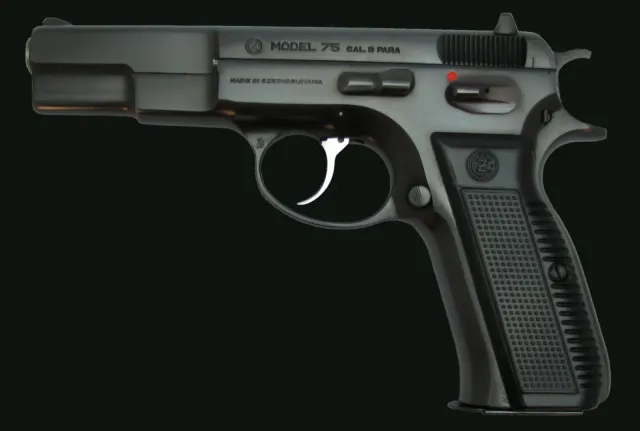
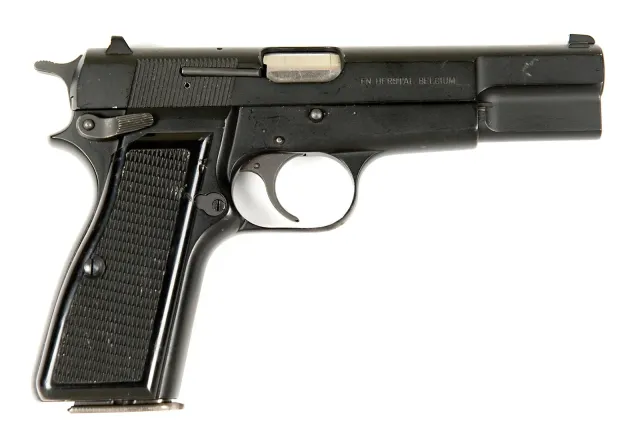
The Glock 17, CZ 75, Glock 19, and Browning Hi-Power all chamber 9mm, and that’s not a coincidence of this particular sample, it reflects a broader pattern in service pistol adoption. The 9mm cartridge sits in a middle zone: compact enough that double-stack magazines can hold 13 to 17 rounds without an oversized grip, but not so small that it sacrifices the stopping power militaries and police forces have historically wanted in a sidearm. That middle-ground positioning is why 9mm became the default caliber for so many service pistols across different countries and manufacturers, Belgium’s Browning Hi-Power, Austria’s Glock line, and Czechoslovakia’s CZ 75 all landed on the same cartridge independently. The capacity numbers in the middle of this table are less a story about any one manufacturer’s design and more a story about where the caliber math tends to converge.
Does any of this settle which pistol is “best”?
No, and treating this table as a ranking of quality would be a mistake. Capacity is one spec, and it trades directly against cartridge size, which trades against stopping power, recoil, and range. A Five-seveN loaded with 20 rounds of a smaller, faster round and a Desert Eagle loaded with 7 rounds of a much larger one aren’t competing for the same job. The Five-seveN was built as a high-capacity sidearm with body-armor-penetrating ballistics in mind; the Desert Eagle was built around raw per-shot energy, more novelty and hunting handgun than standard-issue service pistol. Manufacturer claims about stopping power, penetration, or combat effectiveness for any of these six should be read as claims, not settled facts, capacity is the one number here that’s a straightforward count, not a performance assertion.
Compare these pistols yourself
Run any two of these side by side in the comparison tool, or browse the full field of sidearms on the pistol class page. If you’re trying to weigh capacity against caliber, size, and other mission priorities for your own use case, the Advisor walks through those tradeoffs directly. More data-first breakdowns like this one are on the WeaponSpecs articles page.
Systems in this comparison
Every system covered above, with its photo and, where available, a video. Tap a card to open the full spec sheet.
Compare these side by side →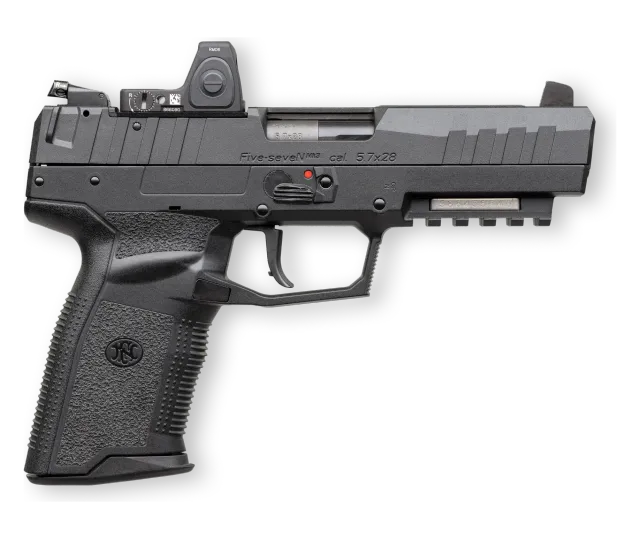
Pistol & sidearm
Five-seveN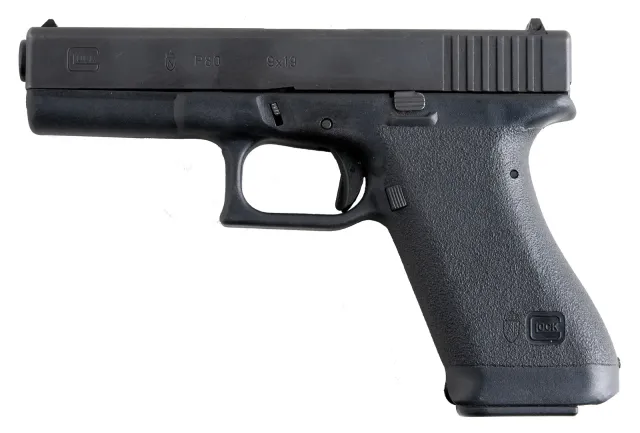
Pistol & sidearm
Browning Hi-Power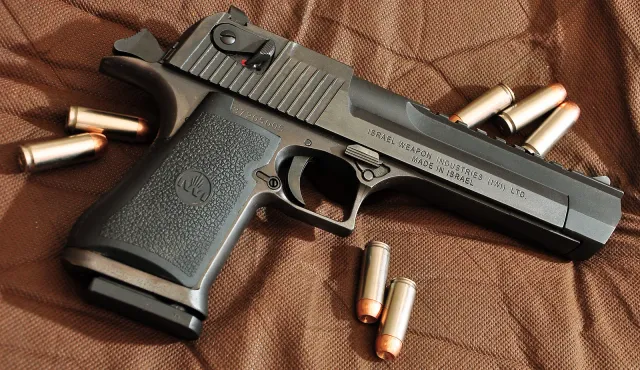
Pistol & sidearm
Desert EagleFrequently asked questions
Does higher magazine capacity mean a weaker cartridge? +
In this comparison, yes, and it's not a coincidence. The FN Five-seveN tops the list with 20 rounds because its 5.7x28mm cartridge is small and slim, so more of them fit in a magazine of a given size. The Desert Eagle sits at the bottom with 7 rounds because its 12.7 mm (.50 AE) cartridge is roughly eight times the case volume of the 5.7x28mm. Magazine capacity and cartridge size are locked in a direct tradeoff: a magazine is a fixed box, and the only way to fit more rounds in it is to make each round smaller. Neither end of this list represents a design failure, they're different answers to the same physical constraint.
Why does the Desert Eagle have such low capacity if it's so popular? +
The Desert Eagle's 7-round capacity is the direct cost of chambering a cartridge built for raw energy delivery rather than magazine efficiency. The 12.7 mm (.50 AE) round is large in diameter and case length, so a magazine sized to fit comfortably in a shooter's hand can only stack seven of them. Its popularity has never really rested on magazine capacity, it's a niche hunting and novelty pistol, not a standard-issue sidearm bought for sustained-fire duty. Comparing it to a 9mm service pistol on rounds-per-magazine is comparing two different design goals, not two attempts at the same job.
What's the real difference between a compact and full-size service pistol? +
Usually just grip and frame length, not the cartridge. The Glock 19 in this list is a compact variant of the Glock 17, both fire the same 9mm round, but the Glock 19's shorter grip holds 15 rounds against the Glock 17's 17. Two fewer rounds for a frame that's easier to conceal and carry. That's the general pattern across compact/full-size pairs in a given caliber: the ammunition is identical, the magazine well is shorter, and capacity drops in rough proportion to how much shorter the grip is.
Why does 9mm dominate modern service pistol calibers? +
Four of the six pistols in this comparison, the Glock 17, CZ 75, Glock 19, and Browning Hi-Power, are chambered in 9mm. The pattern across military and police adoption generally comes down to a balance point: 9mm cartridges are compact enough to allow double-stack magazines with capacities in the 15-17 round range, controllable enough for fast, accurate follow-up shots, and light enough that a shooter can carry a large volume of spare ammunition without excessive load. Larger cartridges like the .50 AE trade that balance for more energy per shot at the cost of capacity, weight, and recoil control. Manufacturer and procurement claims about terminal performance should still be read as claims, but the logistics case for 9mm, more rounds carried, more rounds fired accurately, is fairly plain arithmetic.
Is magazine capacity the most important spec for a service pistol? +
No, and this list only measures one variable. Capacity matters for sustained engagements and reduced reload frequency, but it says nothing about accuracy, reliability, recoil management, concealability, or terminal ballistics, all of which factor into why a given military or police force adopts one pistol over another. A 20-round Five-seveN and a 7-round Desert Eagle serve completely different roles, one's a standard-issue sidearm and personal-defense weapon candidate, the other is closer to a specialty hunting handgun. Capacity is one axis on a much longer spec sheet, worth tracking, not worth treating as a verdict on its own.
Related reading