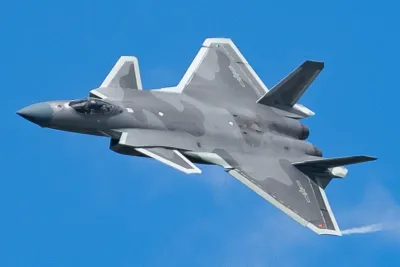
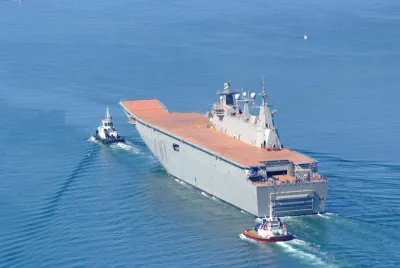
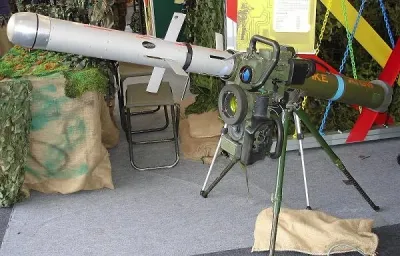
NATO Standardization: Why 5.56, 155mm & Link 16 Matter
How NATO STANAG standardization on ammo, artillery calibers and datalinks quietly drives procurement decisions.
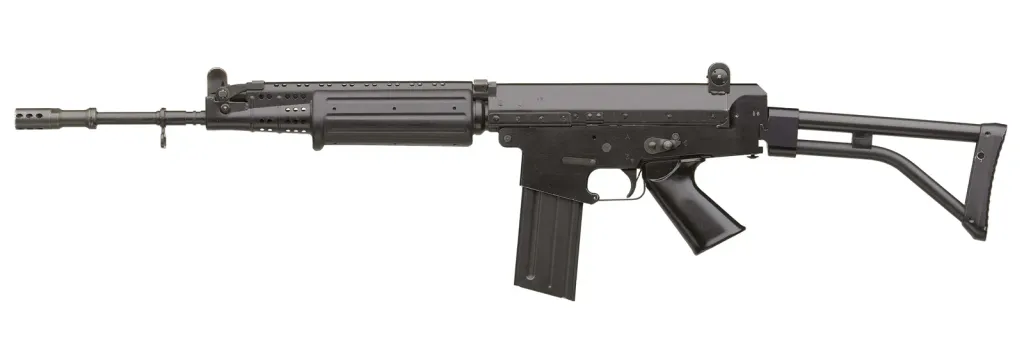
Via Wikipedia, FN FNC (shown for identification)
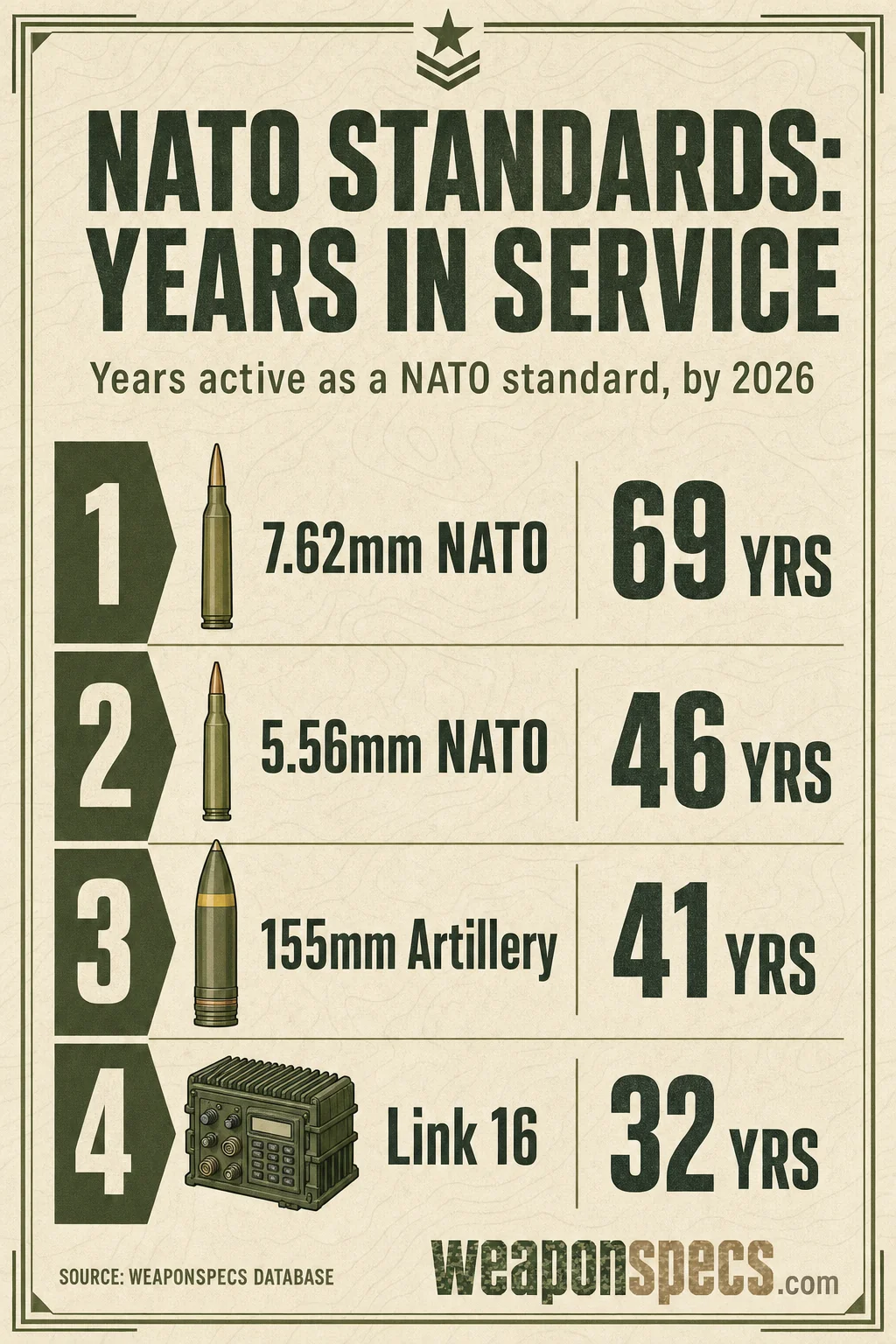
Here’s the procurement fact that rarely makes it into the glossy spec-sheet comparisons: the single biggest force multiplier in NATO’s arsenal isn’t a weapon at all, it’s a filing cabinet full of paperwork called STANAG, the Standardization Agreements that force member nations to build to common specs. A rifle that fires 5.56mm NATO can draw ammunition from any allied unit’s supply dump. A jet built to STANAG fuel standards can refuel from any allied tanker on the ramp. A radio or radar built to Link 16 can talk to every other Link 16 node in theater regardless of whose flag is on the aircraft. None of that shows up in a muzzle velocity chart or a top-speed figure, and all of it decides whether a coalition force can actually fight as one force instead of thirty national contingents that happen to be standing in the same place. For a buyer, a defense ministry, a program office, anyone filling out a procurement request, interoperability isn’t a nice-to-have footnote. It’s often the deciding variable.
What STANAG actually is
STANAG stands for Standardization Agreement, and it’s the mechanism NATO uses to make “interoperability” something more than a talking point. A STANAG document specifies a technical standard, a cartridge dimension, a fuel spec, a data protocol, a radio frequency band, that every signatory nation agrees to build equipment around. It’s not a treaty in the dramatic sense; it’s closer to an engineering contract that trades some national design freedom for guaranteed compatibility across the alliance. The tradeoff is real on both sides. A nation adopting a STANAG-compliant round or connector gives up some latitude to optimize for its own doctrine or terrain. In exchange, it gets a logistics tail that thirty-plus other militaries can support, resupply, and maintain.
That tradeoff is why STANAG compliance quietly outranks raw performance in a lot of procurement decisions. A marginally better rifle round that requires its own dedicated supply chain is a liability in a coalition deployment. A marginally worse round that every allied logistics depot already stocks is often the safer bet, because the fight you’re actually planning for is rarely a single-nation operation anymore.
The rifle round: 5.56x45mm NATO
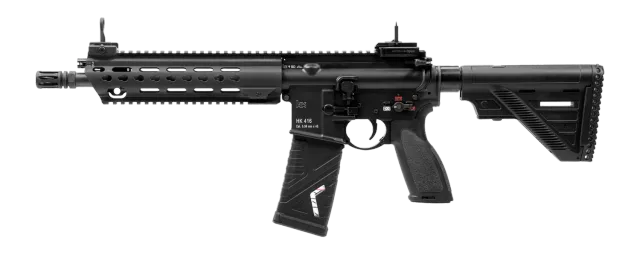
The clearest, most visible example of standardization at work is the 5.56x45mm NATO cartridge, adopted as the alliance’s standard intermediate rifle round in 1980 (alongside the older 7.62x51mm NATO, which it largely supplemented rather than replaced, more on that below). The practical effect: an American soldier, a German soldier, and a Danish soldier can all be issued rifles chambered for the same round, and any of them can resupply from any allied unit’s ammunition stock without needing a caliber-specific logistics chain. Our rifle systems overview covers how that single-caliber standard shapes weapons like the M4A1 and HK416, different manufacturers, different countries of origin, same magazine-compatible cartridge.
It’s worth being precise about what standardization guarantees and what it doesn’t. Two rifles both chambered in 5.56mm NATO can still have wildly different reliability, ergonomics, and accuracy, caliber compatibility says nothing about the rifle’s mechanical quality. What it guarantees is the ammunition supply chain, not the weapon itself. That’s a distinction procurement officers sometimes blur, and it’s worth keeping straight: STANAG buys you logistics interoperability, not a guarantee of equal battlefield performance.
The heavier round: 7.62x51mm NATO
7.62x51mm NATO remains the alliance’s standard for designated marksman rifles, general-purpose machine guns, and longer-range engagements where 5.56mm’s lighter bullet loses effectiveness. It matters for the same structural reason 5.56mm does, a GPMG built to the 7.62 NATO standard can be fed from any allied ammunition point, but it also illustrates that “standardization” isn’t a single monolithic choice. NATO runs parallel standard calibers for different roles, and a buyer needs to know which standard applies to which weapon class before assuming blanket ammunition compatibility across a mixed small-arms inventory.
The artillery standard: 155mm
155mm is the NATO-standard howitzer caliber, and it became one of the most strategically visible standards in the alliance’s history once the Ukraine war turned 155mm shell production into a headline-level bottleneck. The logic is identical to the rifle-round case, just at a much larger industrial scale: a 155mm shell built to NATO spec can, in principle, be fired from any NATO-standard 155mm howitzer regardless of which member nation manufactured the gun or the shell. That shared standard let allied nations pool and cross-supply artillery ammunition to Ukraine from multiple national stockpiles simultaneously, a logistics feat that would have been far messier, or impossible, with non-standardized calibers. It also exposed the flip side of standardization: when demand spikes across an entire alliance built around one shared caliber, that caliber’s production capacity becomes a single point of strategic pressure instead of thirty independent ones. Our artillery systems section covers the platforms built around that standard.
The datalink standard: Link 16
Link 16 is where standardization moves from ammunition logistics into real-time battlefield awareness, and it’s arguably the least visible but highest-leverage STANAG in the alliance’s inventory. It’s a secure, jam-resistant tactical datalink that lets aircraft, ships, ground units, and command centers from different member nations share the same real-time picture, radar tracks, target designations, friend-or-foe status, on a common network, regardless of whose aircraft or radar generated the original data. Without a shared datalink standard, a coalition strike package built from four different nations’ aircraft would be flying with four different, non-communicating sensor pictures, each pilot blind to what the others’ radars were seeing. Link 16 is the reason a coalition air operation can function as a single networked force instead of four independent ones sharing airspace by radio call and luck.
Standard, coverage, and buyer stakes
| Standard | What it covers | Why it matters to a buyer |
|---|---|---|
| 5.56x45mm NATO | Standard rifle/carbine cartridge | Ammunition interoperability across allied small arms; the deciding factor over raw rifle performance in coalition contexts |
| 7.62x51mm NATO | Standard GPMG/marksman cartridge | Long-range and sustained-fire logistics compatibility, parallel to 5.56mm for a different weapon class |
| 155mm artillery | Standard howitzer shell/propellant | Cross-national ammunition pooling at industrial scale; exposed as a strategic bottleneck during high-tempo conflict |
| Link 16 | Tactical datalink protocol | Real-time shared sensor and targeting picture across a multinational force; without it, coalition units are sensor-isolated from each other |
The flip side: friction, ITAR, and non-NATO buyers
Standardization is a genuine procurement advantage for member nations, but it isn’t free, and it isn’t universal. The most persistent friction point is ITAR, the U.S. International Traffic in Arms Regulations, which governs export of American-origin defense technology and components even when that technology sits inside an otherwise STANAG-compliant, allied-built system. A jet, radio, or datalink terminal with U.S.-controlled components inside it can be restricted from resale or third-party transfer regardless of the buyer’s NATO membership, which has repeatedly complicated joint programs and export deals even between close allies. STANAG compliance answers the technical interoperability question; it does not answer the export-control question, and buyers routinely discover those are separate approval processes with separate timelines.
For non-NATO buyers, the calculus is different again. A nation outside the alliance gets none of the automatic logistics-pooling benefit, there’s no shared depot network to draw from, so the appeal of a “NATO standard” weapon for a non-member is less about interoperability and more about manufacturing maturity, parts availability, and the sheer size of the existing production base. That’s a real advantage (a widely produced standard round is usually cheap and easy to source), but it’s a different value proposition than the interoperability case NATO members are actually buying into. Confusing the two, assuming a non-member gets full coalition-logistics benefit just by adopting a NATO-caliber weapon, is a common procurement misread.
The bottom line
Standardization is the least glamorous variable in any weapons comparison and one of the most consequential. A rifle, howitzer, or datalink terminal that plugs into an existing alliance-wide logistics and communications network carries a procurement value that a spec sheet alone will never show, and a system that ignores those standards, however capable on paper, can become an expensive logistics island the moment it needs to operate alongside allied forces. If you’re weighing that tradeoff for a specific comparison, our systems advisor explicitly flags interoperability as a decision factor, alongside the raw performance numbers, because in a coalition context, compatibility is a capability in its own right. For more breakdowns like this one, browse the rest of our articles.
Systems in this comparison
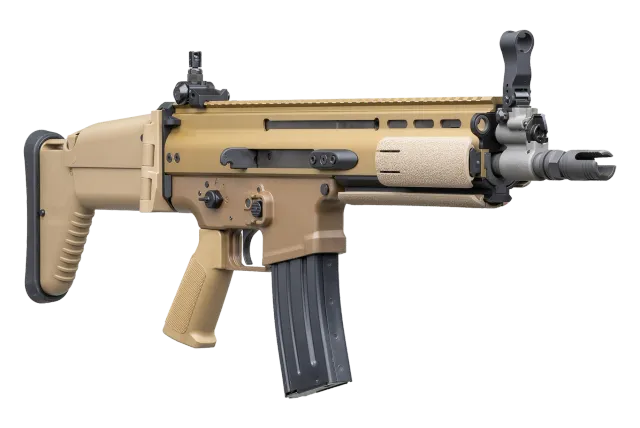
Every system covered above, with its photo and, where available, a video. Tap a card to open the full spec sheet.
Compare these side by side →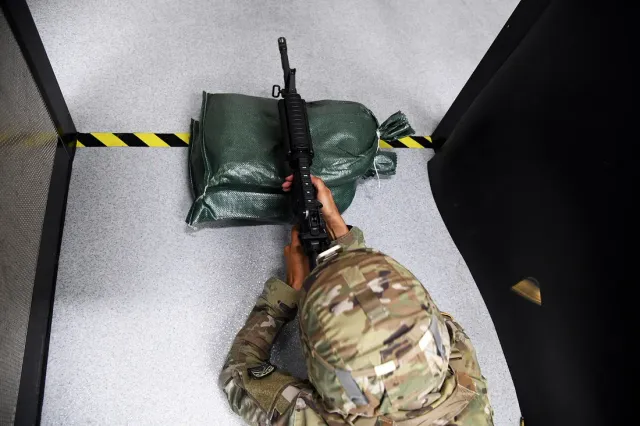
Frequently asked questions
What is NATO standardization? +
It's the system of STANAG (Standardization Agreements) that commit member nations to common specs for ammunition, fuel, equipment, and communications. The goal is simple: a Belgian rifle should fire the same round as an American one, and a German jet should be able to refuel from a Canadian tanker.
Why does 5.56mm NATO ammunition matter? +
5.56x45mm NATO is a shared cartridge standard across nearly every member military, meaning a soldier from one country can draw ammunition from another's supply chain in a combined operation. That logistics interoperability matters more in a real coalition fight than any single rifle's ballistic performance.
What is Link 16? +
Link 16 is NATO's standardized tactical datalink, letting aircraft, ships, and ground units from different countries share real-time radar tracks, targeting data, and situational awareness on a common network. Without it, coalition forces operating side by side would be functionally blind to each other's sensor picture.
Why is 155mm the artillery standard? +
155mm howitzers share a common NATO shell and propellant standard, meaning ammunition stockpiles can be pooled and cross-supplied between allied artillery units. That shared logistics chain became highly visible during the Ukraine war, when 155mm shell production capacity itself became a strategic bottleneck.
Does interoperability affect a purchase decision? +
Yes, heavily. A buyer choosing between two similarly capable systems should weight the STANAG-compliant option higher, because it plugs into existing coalition logistics, training, and datalink networks. A superior but non-standard system can become a logistics island in a multinational deployment.
Related reading