Tank Armor Explained: Composite, ERA & Active Protection
Tank armor explained: composite (Chobham-type), reactive (ERA), and active protection systems like Trophy, layered against modern threats.
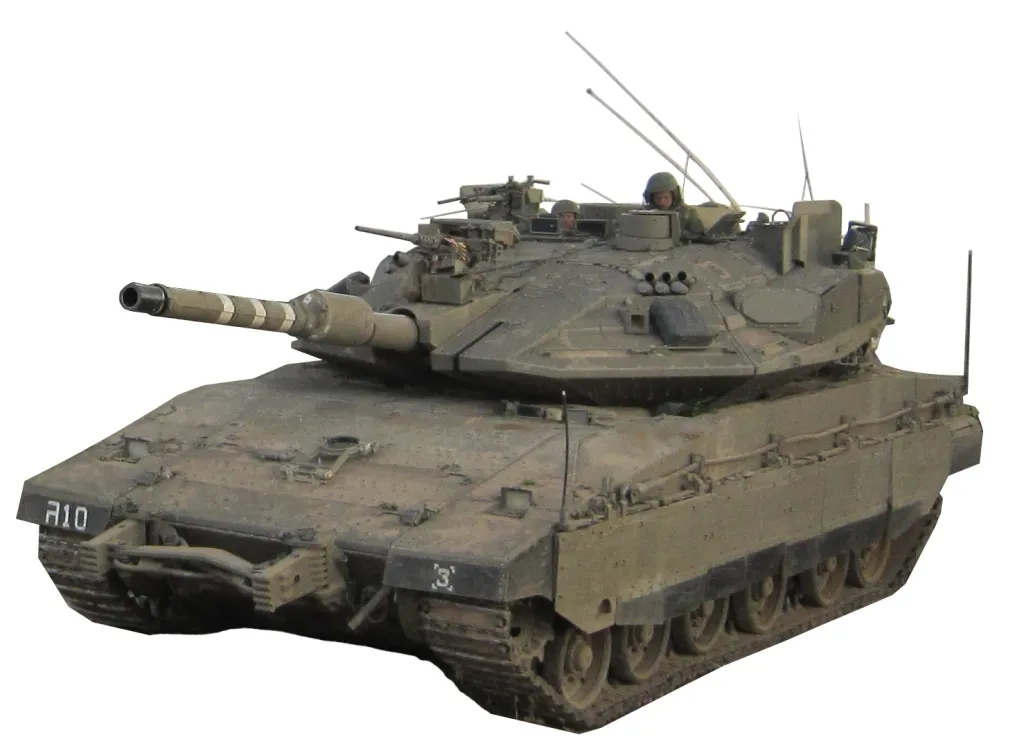
Via Wikipedia, Merkava (shown for identification)
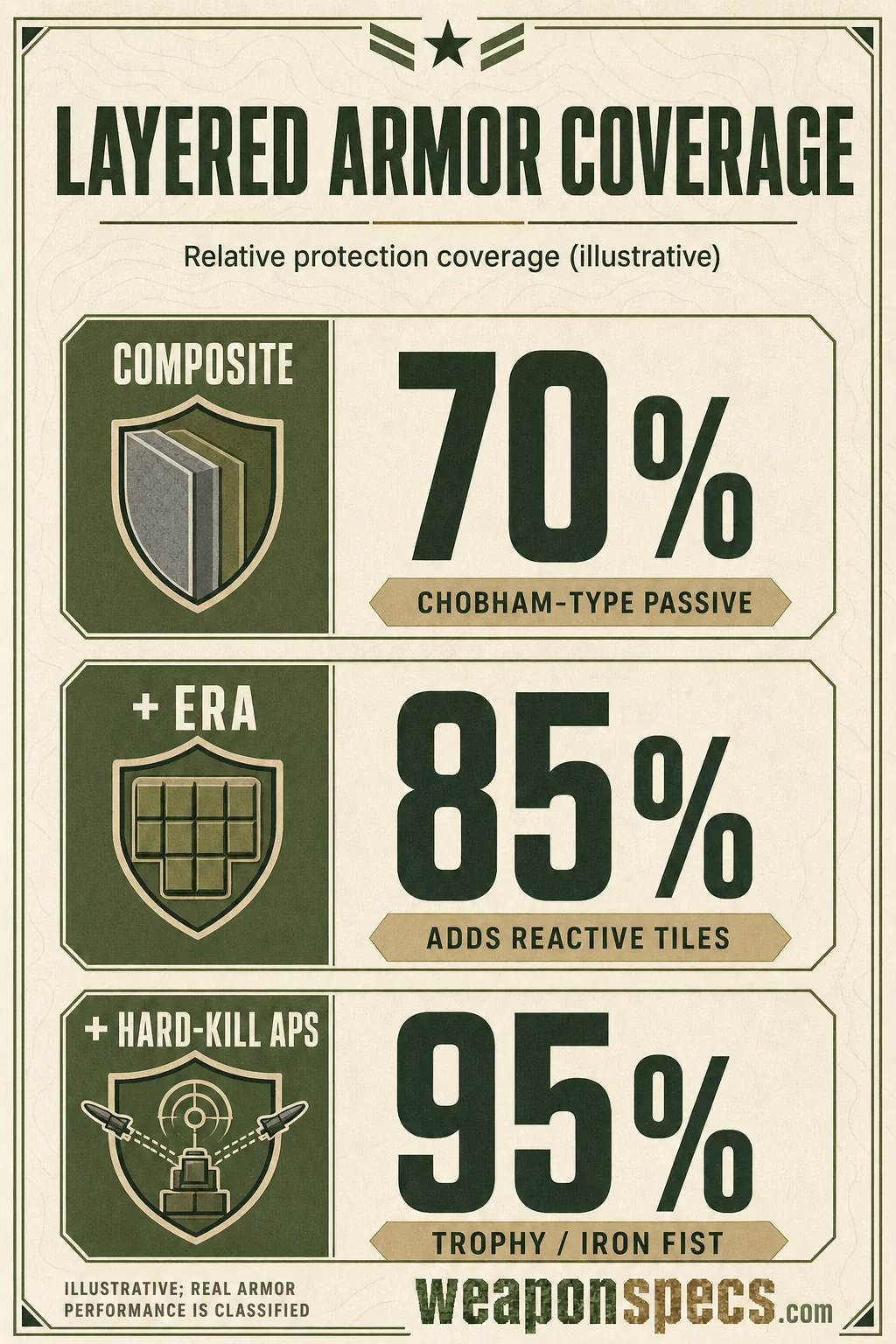
A modern main battle tank is not protected by one thing. It’s protected by a stack of things, each defeating a different threat the others can’t: passive composite armor (the Chobham-type ceramic-and-metal sandwich) to blunt kinetic and chemical penetrators, explosive reactive armor (ERA) bolted on top to defeat shaped-charge warheads before they reach the hull, an active protection system (APS) like Trophy or Iron Fist that shoots down incoming threats before they ever land, and signature-reduction measures that try to keep the tank from being targeted in the first place. Strip away any one layer and the others are covering for a gap they weren’t designed to fill. That’s the actual engineering story behind “tank armor”, not a single material, but a defense-in-depth system built because no single material can stop everything a battlefield throws at it.
The two threats that shaped every design decision
Almost all tank armor engineering traces back to defeating two fundamentally different attack mechanisms.
Kinetic energy penetrators (APFSDS), armor-piercing fin-stabilized discardant-sabot rounds, are long, dense darts (often depleted uranium or tungsten alloy) fired at extremely high velocity from a tank’s main gun. They don’t explode on impact; they punch through armor via sheer kinetic energy and the resulting spall and fragments do the damage inside the crew compartment. Defeating APFSDS is largely a materials-and-geometry problem: dense, layered composite armor that has to defeat a physical dart with physical mass.
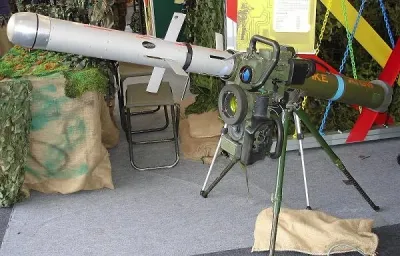
Chemical energy threats (HEAT), high-explosive anti-tank warheads, work completely differently. A shaped-charge liner collapses into a hypervelocity metal jet on detonation, and that jet burns through armor regardless of impact velocity. HEAT is the weapon of choice for infantry-portable anti-tank weapons (RPGs, ATGMs like Javelin and NLAW) precisely because a shoulder-fired weapon can generate a jet capable of defeating armor that would shrug off a rifle-caliber kinetic strike. Defeating HEAT is why reactive armor exists at all, it disrupts the jet’s formation before it can cut through, something passive composite alone struggles to do as efficiently.
Composite armor packages are engineered to handle both threat families reasonably well, but no passive material stack handles either threat perfectly forever, which is precisely why the protection stack kept growing layer by layer.
The protection stack, layer by layer
| Protection type | How it works | Example system/tank |
|---|---|---|
| Passive composite (Chobham-type) | Layered ceramics, metals, and composites disrupt and absorb kinetic penetrators and chemical-energy jets without moving parts | Leopard 2A7, Challenger 3 |
| Explosive reactive armor (ERA) | Explosive-filled tiles detonate outward on impact, disrupting a shaped-charge jet before it reaches the base armor | Merkava Mk4 (add-on ERA kits) |
| Active protection system (APS), hard-kill | Radar/sensor detects an incoming rocket or missile and fires an interceptor to destroy it meters from the hull | Trophy (M1A2 SEP v3 Abrams, Merkava Mk4) |
| Active protection system (APS), soft-kill | Jammers, smoke, and countermeasures degrade an incoming guided weapon’s seeker before intercept is needed | Various NATO soft-kill suites |
| Signature reduction | Thermal, radar, and visual signature management makes a tank harder to detect and target in the first place | Ongoing feature across most 2020s-era upgrade programs |
Each row solves a problem the row above it can’t. Composite armor doesn’t stop everything ERA stops, ERA doesn’t stop a missile before it arrives the way an APS does, and none of them help if the tank was never seen versus if it was seen and engaged. That’s the logic of the stack, not redundancy for its own sake, but coverage of genuinely different failure modes. For a full rundown of how these packages differ across in-service tanks, the tank type page breaks out armor generation alongside gun and mobility specs.
Why active protection is the real shift, not a footnote
For most of the tank’s history, protection meant “survive the hit.” Composite armor and ERA are both built around that assumption: something is going to strike the vehicle, and the job of the armor is to keep the crew alive when it does. Active protection systems change the premise entirely, the goal is to make sure the threat never strikes at all.
Trophy, developed in Israel and now integrated onto both Merkava Mk4 and the US M1A2 SEP v3 Abrams program, is the most combat-referenced hard-kill APS in the open literature, with Israeli sources publicly crediting it with intercepting numerous ATGM and RPG engagements over more than a decade of use. Iron Fist, a competing Israeli hard-kill system, has similarly been marketed and tested for integration on multiple NATO platforms. The mechanism in both cases is broadly similar: radar or sensor cueing detects an inbound projectile, the system calculates an intercept solution in a fraction of a second, and a countermunition destroys or deflects the threat within meters of the hull, before it can reach the armor stack at all.
This matters because it fundamentally changes the cost-and-mass equation. Adding enough passive composite to stop every modern ATGM would make a tank too heavy to move efficiently; intercepting the missile before it arrives sidesteps that trade-off entirely. It’s also why APS is generally treated as the biggest protection-doctrine shift of the last two decades in public defense literature, not because composite armor stopped improving, but because it stopped being the only plausible answer to guided anti-tank weapons. Readers weighing protection packages across specific platforms can run side-by-side comparisons through the Advisor tool.
Top-attack and loitering munitions are rewriting the threat model again
Every layer above assumes the threat is coming from roughly the front or side arc, because that’s where a tank has historically expected to get shot at, and where its armor is thickest by design. Top-attack weapons break that assumption on purpose. Javelin’s top-attack mode, and a growing family of loitering munitions and first-person-view attack drones documented extensively in open-source coverage of recent conflicts, deliberately strike the thinnest armor on the vehicle: the roof.
Public battlefield reporting and open-source tracking projects have repeatedly flagged top-attack drone and loitering-munition strikes as a disproportionate cause of armored-vehicle losses in recent conflicts, precisely because roof armor was never engineered to the same standard as frontal glacis or turret-face armor, weight budgets simply didn’t allow it. Some APS programs and add-on armor kits are being adapted or marketed specifically toward detecting and countering top-down threats, but the honest public-data answer is that top-attack protection remains the least mature part of the stack compared to frontal kinetic and chemical defenses that have had decades of refinement. That gap, more than any single new gun or missile, is arguably the active frontier in tank protection right now, see the loitering-munition threat itself broken down in more depth on the loitering munitions guide.
What this means for how you should read “armor” claims
Treat any single armor number or claim with skepticism, because armor performance is classified across essentially every serious program, Western or otherwise. What’s publicly knowable is generational and structural: whether a platform has a modern composite package, whether it’s fielded with an integrated hard-kill APS, and whether reactive or add-on kits are available for it. Claims about Russia’s T-14 Armata specifically deserve extra caution, its armor and APS integration have been described in state and manufacturer claims, but independent verification of production-scale fielding and combat performance is limited, and public reporting on the program’s actual deployment numbers should be treated as unverified rather than confirmed. The best main battle tanks of 2026 ranking weighs protection generation explicitly against lethality, mobility, and logistics, rather than taking any single armor claim at face value.
The bottom line
Modern tank protection stopped being a single-material question a long time ago. It’s a layered system: composite armor to absorb what it can, ERA to disrupt shaped-charge jets before they reach the hull, active protection to intercept threats before they land at all, and signature reduction to avoid the engagement in the first place. Active protection systems are the biggest doctrinal shift of the last two decades because they replace “survive the hit” with “prevent the hit,” and top-attack drones and loitering munitions are now pressuring the one axis, the roof, that stack never fully solved. Anyone evaluating a platform on armor alone is reading half the spec sheet.
Compare protection packages across in-service platforms on the tank type page, run your own mission requirements through the Advisor, or see how protection generation stacks up against lethality and mobility in the best main battle tanks of 2026 ranking. For more breakdowns like this one, browse the WeaponSpecs articles.
Systems in this comparison
Every system covered above, with its photo and, where available, a video. Tap a card to open the full spec sheet.
Compare these side by side →
Main battle tank
Leopard 2A7
Main battle tank
M1A2 SEP v3 Abrams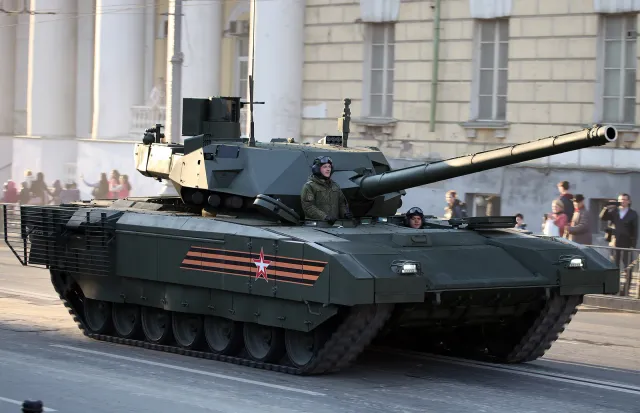
Main battle tank
T-14 Armata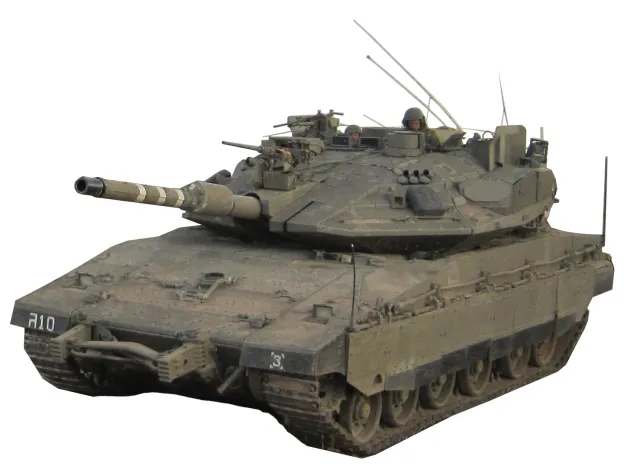
Main battle tank
Merkava Mk4Frequently asked questions
How does modern tank armor work? +
Modern tank protection is layered, not singular: passive composite armor (Chobham-type ceramics and metals) absorbs and disrupts penetrators, explosive reactive armor (ERA) defeats shaped-charge jets before they reach the hull, and active protection systems intercept incoming threats before impact. No single layer does the whole job.
What is an active protection system (APS)? +
An APS is a radar- or sensor-cued defense that detects an incoming rocket, missile, or ATGM and destroys or deflects it meters from the vehicle, before it ever reaches the armor. Trophy and Iron Fist are the most combat-tested hard-kill examples in Western service.
What is reactive armor (ERA)? +
Reactive armor is a grid of explosive-filled tiles bolted to a tank's hull and turret. When a shaped-charge warhead strikes, the tile detonates outward, disrupting the metal jet before it can cut through the base armor underneath. It's a countermeasure to HEAT, not to kinetic penetrators.
Can a tank survive a top-attack missile? +
It depends heavily on the system and the missile. Top armor is historically thinner than frontal armor, which is exactly why top-attack weapons like Javelin exist. Some APS and add-on armor kits address top-attack threats, but public evidence suggests this remains the least-protected axis on most fielded tanks.
What is Chobham armor? +
Chobham armor is the original British composite armor concept from the 1960s-70s, layering ceramics, metals, and other materials to defeat both kinetic and chemical-energy threats better than steel alone. The name is now used loosely for any modern composite armor package descended from that concept.
Related reading