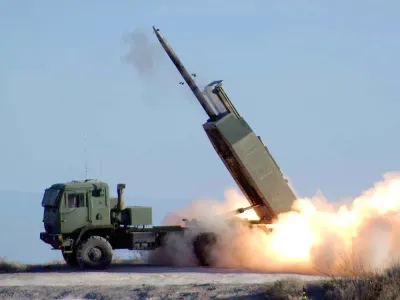
February 2026: The month the Iran war began
A US-Israeli strike campaign on Iran, an Afghanistan-Pakistan border war, and a Hormuz blockade defined the month's biggest defense stories, alongside NATO's air-defense warning and a growing Gulf arms show.
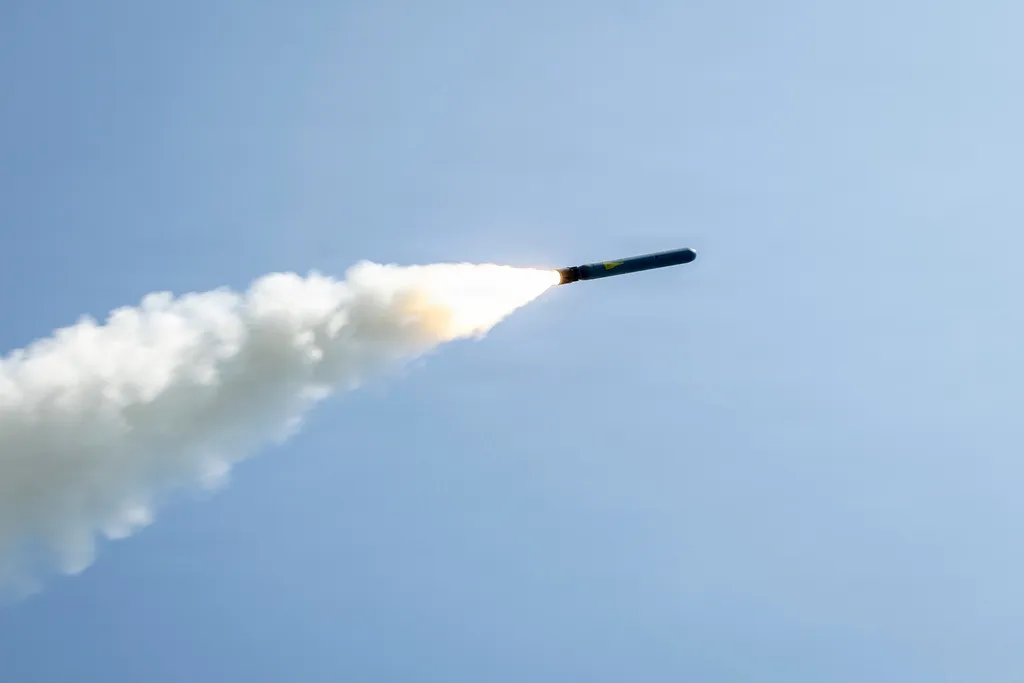
DVIDS / U.S. Navy, public domain
February 2026 opened with a naval drill and closed with the biggest single-day strike campaign the region has seen in years. By the time the month ended, a new war had started in the Middle East, a border war had reignited in South Asia, the Strait of Hormuz had been closed twice, and NATO had put a number on how far behind its own air defenses have fallen. Here are the developments that mattered most, and what to watch as March opens.
Operation Epic Fury: the US and Israel strike Iran
The month’s defining event arrived on its last day. On February 28, US and Israeli forces launched a coordinated campaign against Iran, reported under the name Operation Epic Fury, that delivered roughly 900 strikes in a 12-hour window, according to Wikipedia’s tracking of the war. Israel fired air-launched ballistic missiles into Iranian territory while US Navy surface ships and submarines launched Tomahawk cruise missiles, backed by carrier-based F-35C Lightning II strike fighters, per CNN’s live coverage and PBS NewsHour. The Tomahawk Block V, the variant most likely in service with the strike ships involved, is built for exactly this kind of long-range, high-volume land-attack role against fixed targets.
Iran’s response came within hours: 150 to 200 ballistic missiles and drones fired at Israel, roughly 140 more at the UAE, and about 63 at Qatar, per the same Wikipedia tracking. Iran’s own ballistic missile inventory reportedly includes the Sejjil medium-range design, though as with any Iranian government or state-media figure on missile inventories or strike counts, that is a state claim, not independently verified. The UAE, Saudi Arabia, and Kuwait struck back at Iranian targets after absorbing the barrage, widening the conflict from a bilateral Israel-Iran exchange into a multi-state confrontation across the Gulf.
The most contested element of the entire month is a March 10 CNN report alleging that a Tomahawk strike hit a school in Minab, killing at least 168 children and 14 teachers. US officials have disputed this account, maintaining the actual target was an adjacent IRGC facility and that the school was not the aimpoint. Neither claim is settled. The casualty figure comes from initial reporting that has not been independently verified against an on-the-ground forensic accounting, and the US “adjacent facility” characterization has not been backed by a released battle-damage assessment. WeaponSpecs is treating this as a contested, unresolved allegation on both sides until independent verification emerges, not as a confirmed fact in either direction.
Iran also moved to blockade the Strait of Hormuz in retaliation for the strikes, a chokepoint through which a substantial share of the world’s seaborne oil passes, and that blockade rattled fuel markets through the final days of the month.
Afghanistan-Pakistan border war escalates
Two days before the Iran campaign began, a separate conflict flared on the other side of the region. On February 26 and 27, Taliban forces claimed to have captured 19 Pakistani border outposts and killed 55 Pakistani soldiers, according to Wikipedia’s tracking of the war and NPR’s reporting on the airstrikes. Those figures are the Taliban’s own claims and have not been independently confirmed by Pakistani military sources.
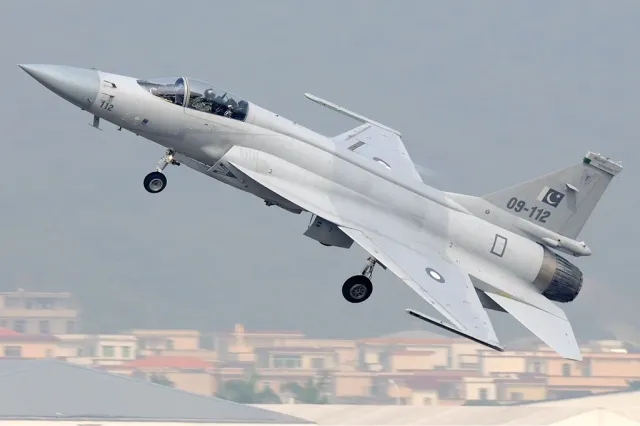
Pakistan retaliated with airstrikes on Kabul and Kandahar and formally declared what Fox News described as “open war.” Pakistani strikes killed at least 13 civilians, including 11 children, in a strike on Nangarhar province, per CNN’s reporting on the border attack. Pakistan’s air force operates the JF-17 Thunder and the newer JF-17 Block 3 as its primary multirole strike platforms, both jointly developed with China, and either type is a plausible candidate for cross-border strike missions of this kind, though neither source specifies the exact airframe used.
The escalation matters beyond the immediate casualties because it opened a second active front in South Asia at the same time attention was fixed on the Gulf, stretching intelligence and diplomatic bandwidth across two simultaneous regional wars rather than one.
Iran’s Hormuz drills set the stage weeks before the war
The Strait of Hormuz closure that followed the February 28 strikes was not Iran’s first move there that month. On February 16 and 17, Iran’s IRGC Navy ran live-fire anti-ship missile drills under the name “Smart Control of the Strait of Hormuz,” temporarily closing the strait, its first such closure since the 1980s, according to Wikipedia’s crisis tracking and the Jerusalem Post. The timing was notable: the drills ran concurrently with Oman-mediated nuclear talks, a signal of leverage rather than a purely defensive exercise. Iran’s broader air-defense posture reportedly leans on Russian-supplied systems in the S-400 Triumf and S-300PMU2 family; any performance, range, or inventory claim tied to that network from Iranian or Russian state sources should be read as unverified.
Read together with the blockade that followed the February 28 strikes, the month shows Iran using the Strait twice as a coercive tool, first as diplomatic leverage during talks, then as retaliation during open conflict, underscoring how central that single chokepoint has become to the entire standoff.
NATO warns munitions stocks are “dangerously low”
On February 13, NATO officials warned that allied air-defense munitions stockpiles were dangerously low and called for a 400 percent increase in collective air-defense capability ahead of the alliance’s July 2026 summit, according to Bloomberg. The warning was driven directly by consumption rates observed in the Ukraine war, where interceptor demand has consistently outpaced production. Air-defense systems like the Patriot PAC-3 remain in heavy demand across multiple allied militaries simultaneously, and a fourfold capability increase is a multi-year industrial commitment, not something achievable through existing production lines alone.
This warning, issued mid-month, reads differently in hindsight after the barrages that followed in Kyiv, Israel, the UAE, and Qatar later in February and into March. The interceptor math NATO flagged on February 13 is the same math every one of those air-defense networks was running under fire weeks later.
World Defense Show highlights a shifting export map
Earlier in the month, the World Defense Show ran in Riyadh from February 8 to 12, drawing exhibitors including Egypt’s Hamza-3 loitering munition, Turkey’s Roketsan EREN rocket system, and Russian Rosoboronexport systems, according to Army Recognition’s coverage. The show’s growing footprint reflects Gulf states positioning themselves as a serious procurement hub independent of traditional Western trade shows, a trend that only gained more relevance once several of those same Gulf states, including the UAE, Saudi Arabia, and Kuwait, became active belligerents later in the same month.
What to watch in March
The most consequential open thread is whether the Minab school-strike allegation gets resolved by independent investigation, since the casualty figures, if confirmed, would represent one of the worst single incidents of the entire campaign. Also worth tracking: whether the Afghanistan-Pakistan border war stays contained to strikes and outpost skirmishes or escalates toward a sustained ground campaign, whether Iran keeps the Strait of Hormuz blockaded long enough to force a durable shift in global fuel markets, and whether NATO’s February 13 call for a 400 percent air-defense increase produces actual contracted production capacity by its July summit or remains a stated target.
By the numbers
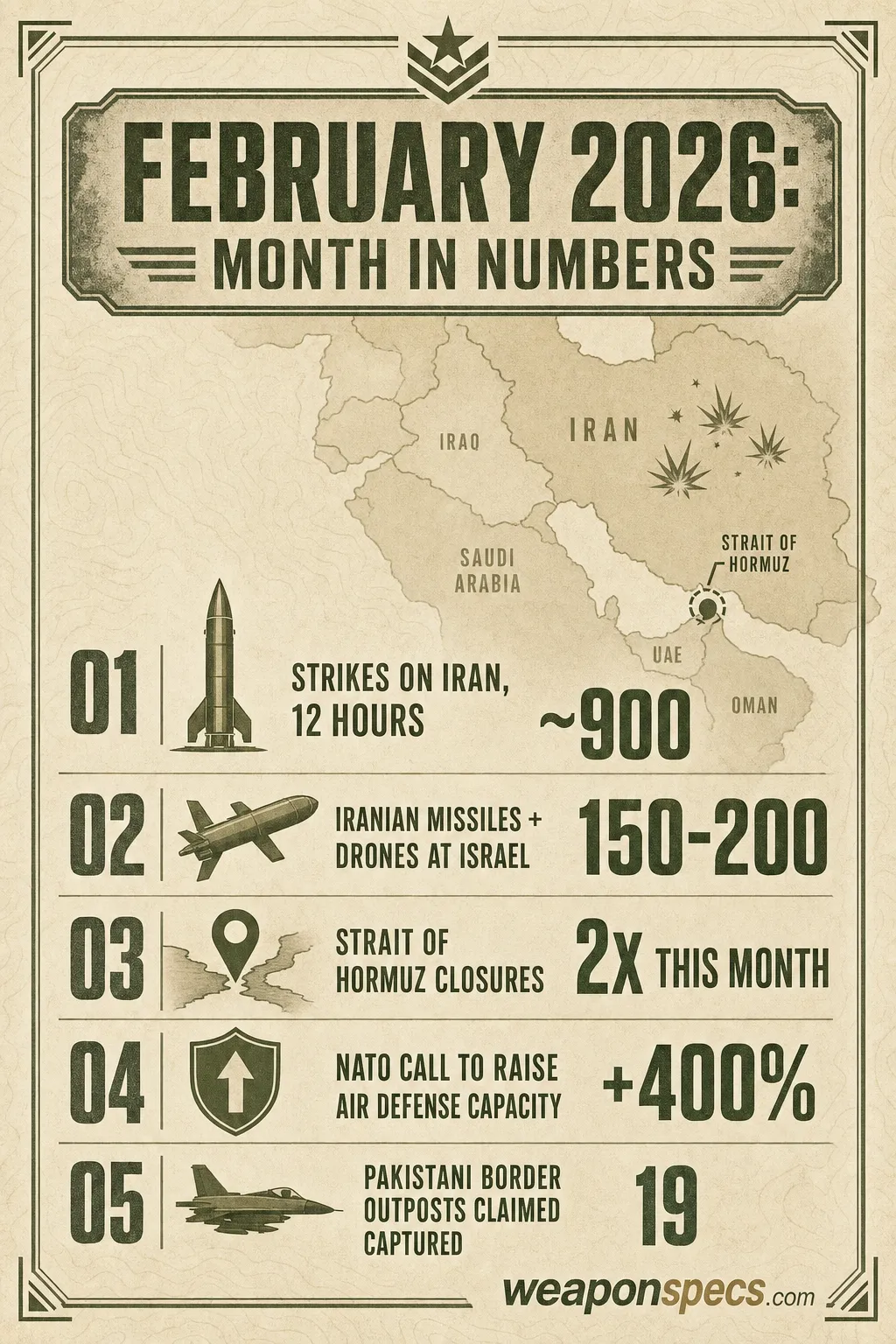
Infographic: WeaponSpecs News Desk
Sources
- 2026 Iran war — Wikipedia, Mar 1, 2026
- Live updates: Israel and Iran attack — CNN, Feb 28, 2026
- Live updates: U.S. and Israel attack Iran — PBS NewsHour, Feb 28, 2026
- 2026 Afghanistan-Pakistan war — Wikipedia, Feb 28, 2026
- Airstrikes in the Afghanistan-Pakistan war — NPR, Feb 26, 2026
- Afghanistan-Pakistan border attack — CNN, Feb 26, 2026
- Taliban unleash extensive offensive on Pakistan, deadly border strikes erupt — Fox News, Feb 27, 2026
- 2026 Strait of Hormuz crisis — Wikipedia, Feb 17, 2026
- Iran naval drills in the Strait of Hormuz — Jerusalem Post, Feb 17, 2026
- NATO moves on air-defense overhaul as Ukraine war spurs rethink — Bloomberg, Feb 13, 2026
- Why the Saudi World Defense Show 2026 is becoming one of the world's biggest military events — Army Recognition, Feb 12, 2026
Systems mentioned
Every system named in this story, with its photo and, where available, a video. Tap a card to open the full spec sheet.
Compare these side by side →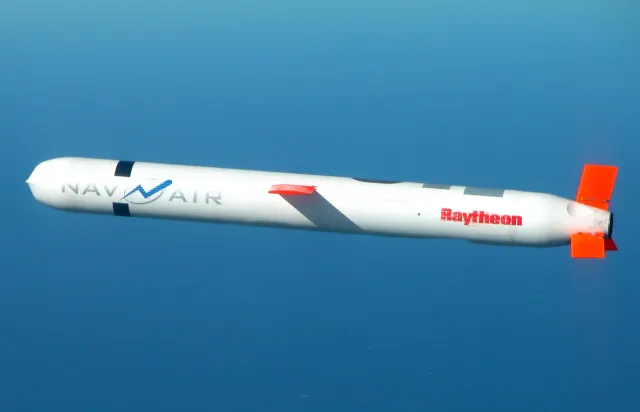
Missile
Tomahawk Block V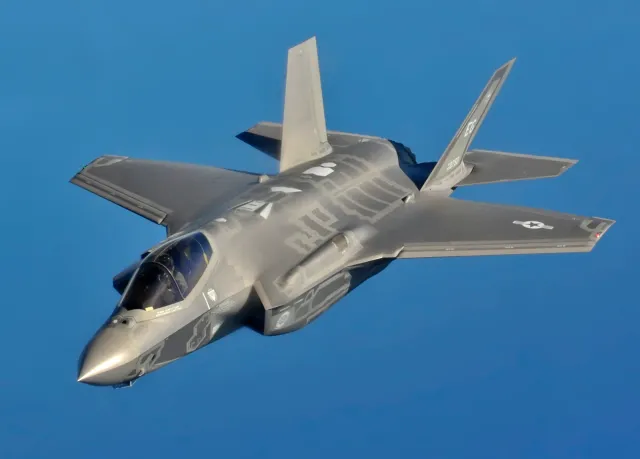
Fighter aircraft
F-35C Lightning II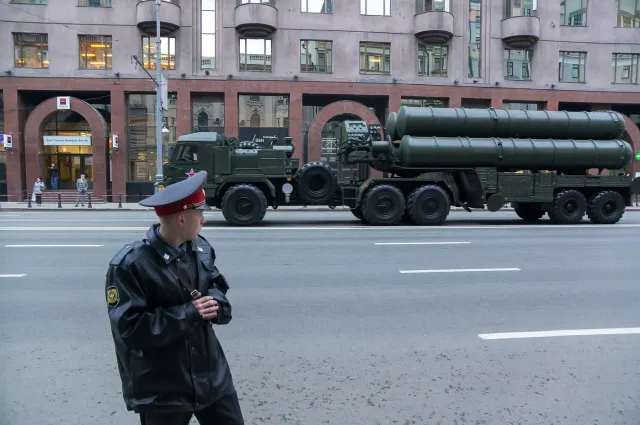
Air defense system
S-400 Triumf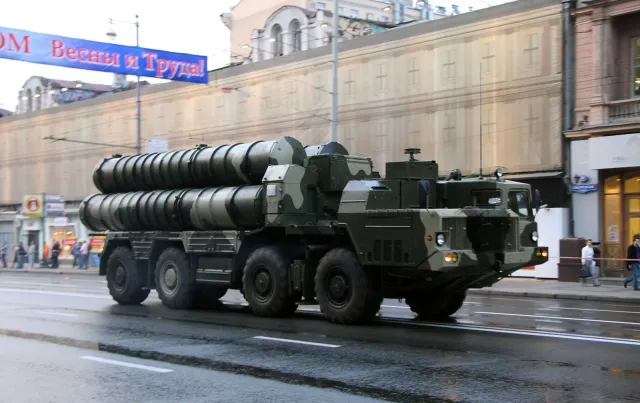
Air defense system
S-300PMU2 Favorit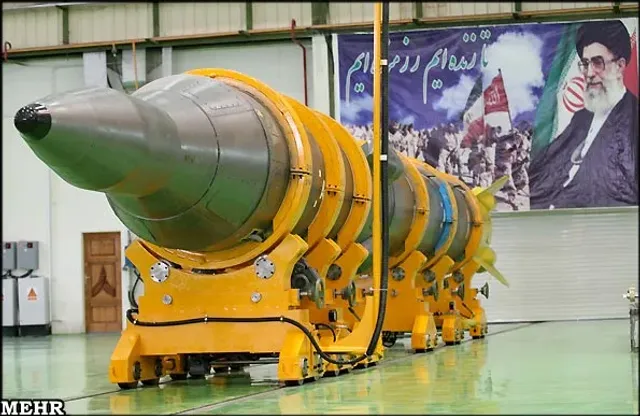
Fighter aircraft
JF-17 Thunder Fighter aircraft
JF-17 Thunder Block 3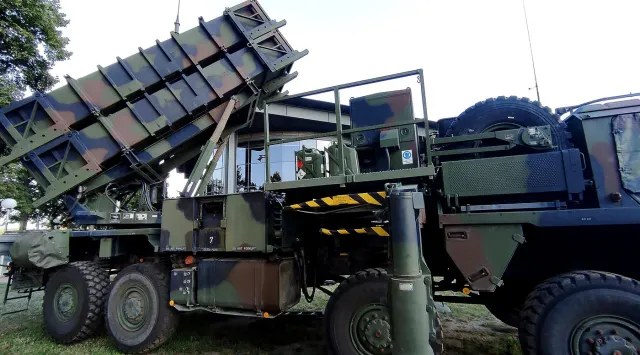
Air defense system
Patriot PAC-3Frequently asked questions
What was the single biggest defense story of February 2026? +
The US-Israeli strike campaign against Iran that opened on February 28, involving roughly 900 strikes in 12 hours using Israeli air-launched ballistic missiles, US Navy Tomahawk cruise missiles, and carrier-based F-35C fighters, followed by Iranian retaliation against Israel, the UAE, and Qatar.
Is the reported school strike in Minab confirmed? +
No. A CNN report published March 10 alleged a Tomahawk struck a school in Minab, killing at least 168 children and 14 teachers, but US officials maintain the actual target was an adjacent IRGC facility. Both the allegation and the denial remain contested and are not independently settled as of this writing.
Why did Iran close the Strait of Hormuz twice in one month? +
Iran's IRGC Navy ran live-fire anti-ship missile drills that closed the Strait Feb 16-17, its first closure since the 1980s, coinciding with Oman-mediated nuclear talks. After the February 28 strikes, Iran blockaded the Strait again in retaliation, disrupting global fuel markets.
What did NATO warn about air defense in February? +
On February 13, NATO officials warned that allied munitions stockpiles were dangerously low and called for a 400 percent increase in collective air-defense capability ahead of the alliance's July 2026 summit.
More news