Documents
 Russia
 Rubin Design Bureau
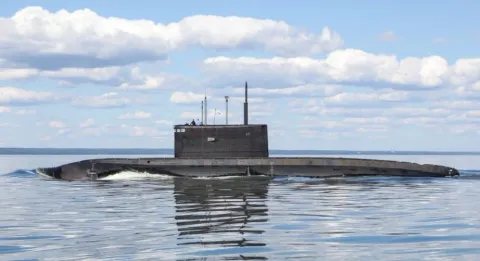
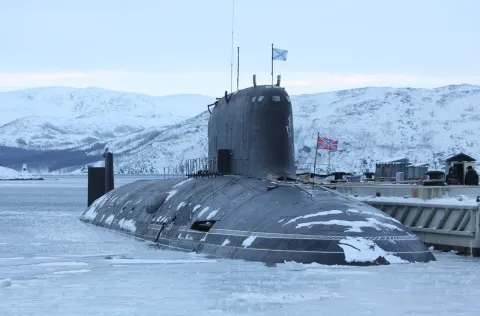
Akula-class (Project 971)
A Cold War-era nuclear-powered attack submarine that closed the acoustic-quietness gap with Western designs, remaining a mainstay of the Russian Navy's torpedo-armed attack submarine force through ongoing modernization.
In service since 1984 · 1 operator countries
Compiled from public sources ·primary reference ↗ ·last verified 2026-07-02
480
m depth
33
kn
8,140
t
73
crew
Pricing: No public modern unit cost
Procurement snapshot
Availability & export
Russian state channel
Rosoboronexport monopoly; Western sanctions exposure and payment/logistics risk for many buyers.
Channel: Rosoboronexport (state)
Fielded & proven
Limited · 1 operator
In service since 1984. Status: active · ~15 built.
Lifecycle cost (est.)
No public unit price to model from.
Interoperability
No standardised NATO calibre / datalink detected in public specs.
Derived guidance from public data, export regime by country of origin, lifecycle from the GAO ~30% acquisition rule. Verify eligibility, pricing and offsets with the manufacturer and your acquisition authority.
Compatible munitions & weapons
Publicly reported weapons the Akula-class (Project 971) can carry. Linked items have a full spec page.

Full specifications
Firepower
Armament, payload and guidance.
- Torpedo tubes
Number of torpedo tubes (submarines and some surface ships).
- 8 Stronger than 88% of submarines
Physical
Dimensions, weight and crew.
- Length
Overall length including gun/probe where applicable.
- 110.3 m
Program
Cost, production scale and operators.
- Units built
Total production run. Higher means proven manufacturing, mature logistics and spares availability.
- 15 Stronger than 77% of submarines
- Operator countries
Number of countries operating the system. More operators means broader support ecosystem.
- 1 Stronger than 39% of submarines
Specifications compiled from public Rubin Design Bureau and reference sources ↗. Published defense figures are approximations, treat comparisons as directional. Last verified 2026-07-02.
Compare with rivals
See how it stacks up
 General Dynamics Electric Boat Virginia-class Submarine
 Frequently asked questions
What is the Rubin Design Bureau Akula-class (Project 971) used for? +
The Rubin Design Bureau Akula-class (Project 971) is a submarine typically used for anti armor.
How many countries operate the Rubin Design Bureau Akula-class (Project 971)? +
The Rubin Design Bureau Akula-class (Project 971) is operated by 1 countries.
How much does the Rubin Design Bureau Akula-class (Project 971) cost? +
Rubin Design Bureau Akula-class (Project 971): No public modern unit cost. Defense program costs are rarely fully public and vary by contract and configuration.