Russia strikes Kyiv with 570 missiles and drones, 30 killed
Russia launched a coordinated overnight assault; 30 confirmed dead, 92+ injured. Iskander ballistic missiles and Kinzhal hypersonics hit civilian targets across the city.
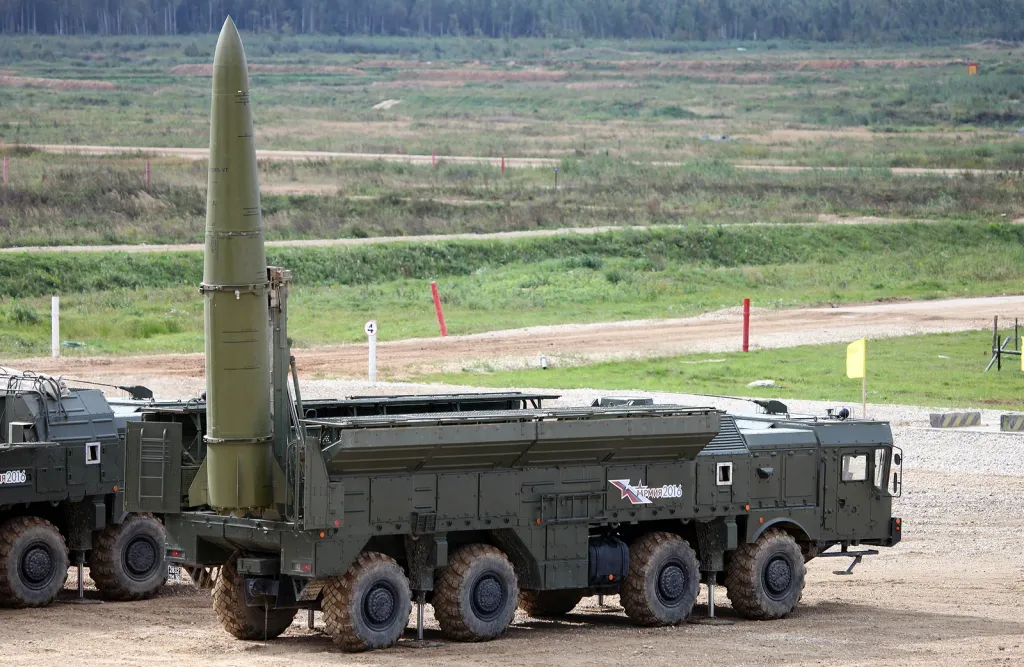
Via Wikipedia, 9K720 Iskander (shown for identification). Shows the 9K720 Iskander-M, one of the three missile systems used in this barrage.
Russia launched one of the largest combined missile-and-drone barrages of the war against Kyiv overnight, firing roughly 570 missiles and drones at the Ukrainian capital in coordinated waves, according to Al Jazeera. At least 30 people were killed and more than 92 injured, with strikes landing across more than 30 locations in the city, including an ambulance station, a scientific institute, a hotel, and residential buildings, per reporting from CNN and ABC News.
The worst damage was concentrated in Kyiv’s Darnytskyi district, where a nine-story apartment building partially collapsed after being hit, according to ABC News. NPR reported the toll climbing through the day as rescue crews worked through the rubble. The scale of the barrage puts it among the largest single strike packages of the war, in the same tier as the mass strikes Russia used in late 2022 and early 2023 to grind down Ukraine’s stock of interceptors rather than simply to inflict damage on any one night.
What systems did Russia use?
The barrage combined ballistic missiles from the Iskander family, Kh-47M2 Kinzhal air-launched hypersonic missiles, and Kh-101 air-launched cruise missiles, fired in coordinated waves alongside dozens of loitering attack drones, according to Al Jazeera and CNN. The three systems are built to do very different jobs, and WeaponSpecs’ own database entries lay out why each one shows up in a mass strike like this.
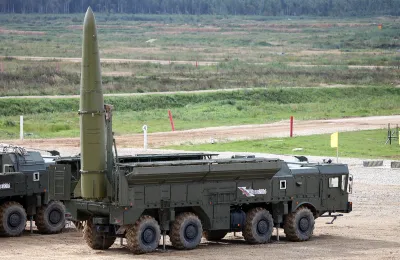
The 9K720 Iskander-M is a road-mobile short-range ballistic missile with a roughly 500km range, a 480kg warhead, and a claimed top speed near Mach 6. It has been Russia’s primary precision-strike system against Ukrainian cities and infrastructure since the start of the full-scale invasion in 2022. Guidance is a mix of inertial navigation, GLONASS satellite positioning, and optical terminal correlation, and the missile performs quasi-ballistic maneuvers on its way down specifically to make interception harder, rather than flying a predictable arc a defense battery can plot in advance.
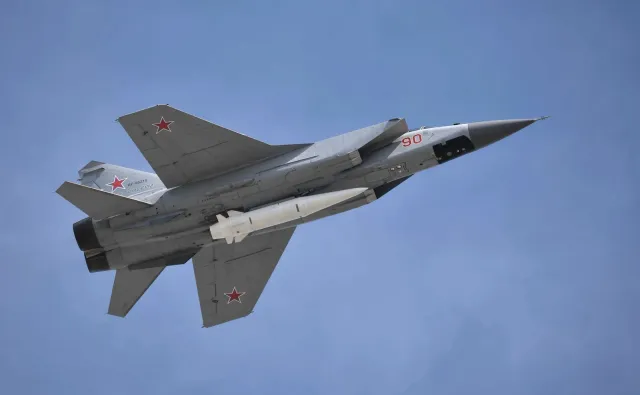
The Kh-47M2 Kinzhal is an air-launched ballistic missile carried by MiG-31K interceptors or Tu-22M3 bombers, with a far longer stated range of roughly 2,000km, an equivalent 480kg warhead, and a widely repeated claim of Mach 10 speed. Russia markets it as a maneuverable hypersonic weapon that can dodge terminal defenses, but Western analysts are split: some assess it retains genuine maneuvering ability on final descent, others argue it largely follows a ballistic arc like the Iskander once past boost phase. That is an open analytical question, not a settled fact, and it matters because it changes how much credit the “hypersonic” label deserves versus how much of its survivability just comes from raw closing speed.
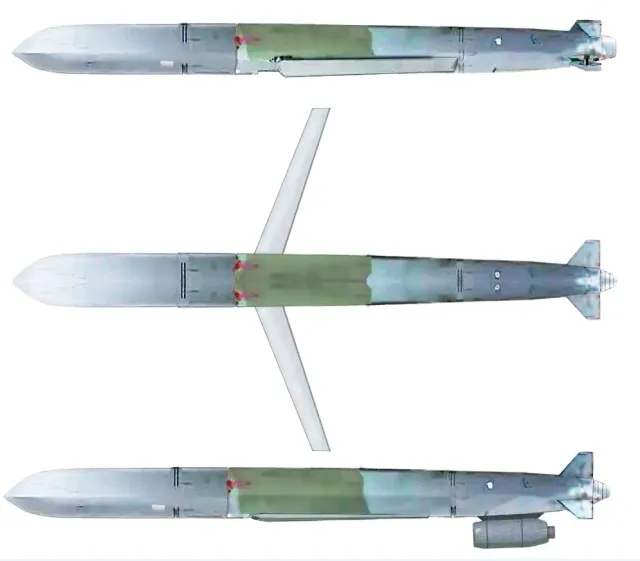
The Kh-101 is the odd one out in this trio: a subsonic air-launched cruise missile, cruising at roughly Mach 0.77, with a much longer 4,500km range and a low radar cross-section designed to slip past air defense radar rather than outrun it. Launched from Tu-95MS or Tu-160 strategic bombers, it has been the workhorse of Russia’s mass strikes since 2022 precisely because it is cheaper to produce and easier to mass than a ballistic missile, even though any single Kh-101 is far easier for a modern interceptor to catch.
Why mix three completely different flight profiles?
Putting a slow stealthy cruise missile, a maneuvering short-range ballistic missile, and a claimed hypersonic weapon into the same barrage alongside dozens of drones is not incidental. It is a deliberate saturation tactic. Each weapon type demands a different kind of intercept: a Patriot battery tuned to catch a ballistic missile is not necessarily the best tool against a low-flying cruise missile, and a short-range system like a Buk or Tor built for cruise missiles and drones has no realistic chance against an Iskander or Kinzhal coming in on a ballistic profile. By combining all three, Russia forces Ukraine’s air defense network to partition a finite pool of interceptors across three distinct threat classes at once, in the same seconds-to-minutes window, rather than concentrating everything on one kind of threat.
How effective was Ukrainian air defense?
Ukraine’s air force said its air defense network downed or suppressed 48 missiles and 476 drones, an interception rate above 90 percent of the total barrage, but 25 ballistic missiles and 12 drones still penetrated and struck targets across the city, per Al Jazeera. Ballistic missiles like the Iskander and Kinzhal are far harder to intercept than subsonic drones or cruise missiles because of their speed and, in the Kinzhal’s case, disputed maneuverability during descent, which is why a relatively small number of ballistic missiles getting through can still account for a large share of the damage and casualties.
What to watch: can Ukraine sustain this intercept rate?
A 91 percent-plus intercept rate sounds like a clear defensive win, and against a single night’s barrage it is. But every one of those roughly 524 intercepts consumed a scarce interceptor, whether a Patriot PAC-3 round against a ballistic missile, or an S-300, Buk, or Tor engagement against a drone or cruise missile. None of those interceptor types are produced or supplied at anything close to the rate Russia can build Shahed-style drones or draw down its Iskander and Kh-101 stockpiles. That is the real sustainability question raised by a barrage this size: not whether Ukraine’s air defense worked on July 1, but whether its interceptor stocks can absorb repeated barrages at the 500-plus scale without the intercept rate eventually sagging. Mass strikes of comparable scale in late 2022 and early 2023 followed exactly this logic, aimed less at any single night’s damage than at forcing Ukraine to burn through Western-supplied air defense munitions faster than they can be replenished.
Why did Russia launch this specific attack now?
Russia’s Defense Ministry said the strike was retaliation for Ukrainian drone strikes on Russian oil refineries, including one near Nizhny Novgorod, according to NPR. That is a state claim from Russia’s own government, not an independently verified motive, and it arrives alongside a broader exchange in which both sides have targeted the other’s energy infrastructure in recent weeks.
Did Ukraine respond?
Ukrainian forces separately struck a Russian oil refinery near Nizhny Novgorod around the same period, according to NPR, part of an ongoing tit-for-tat campaign against energy infrastructure on both sides of the front. President Zelenskyy had warned of a “massive Russian strike” in the hours before the barrage hit, per Al Jazeera.
The broader pattern: energy infrastructure as a target set
Neither side’s targeting in this exchange looks purely military. Russia’s barrage hit an ambulance station, a scientific institute, a hotel, and residential apartment blocks in Kyiv, per CNN and ABC News, while Ukraine’s drone strike hit a Russian oil refinery, an economic target rather than a front-line military asset, according to NPR. Both sides are increasingly reaching past the battlefield toward the other’s civilian and economic infrastructure, an attrition logic rather than a strategy built around any single decisive engagement.
For more on the individual systems involved, see WeaponSpecs’ entries on the 9K720 Iskander, Kh-47M2 Kinzhal, and Kh-101.
By the numbers
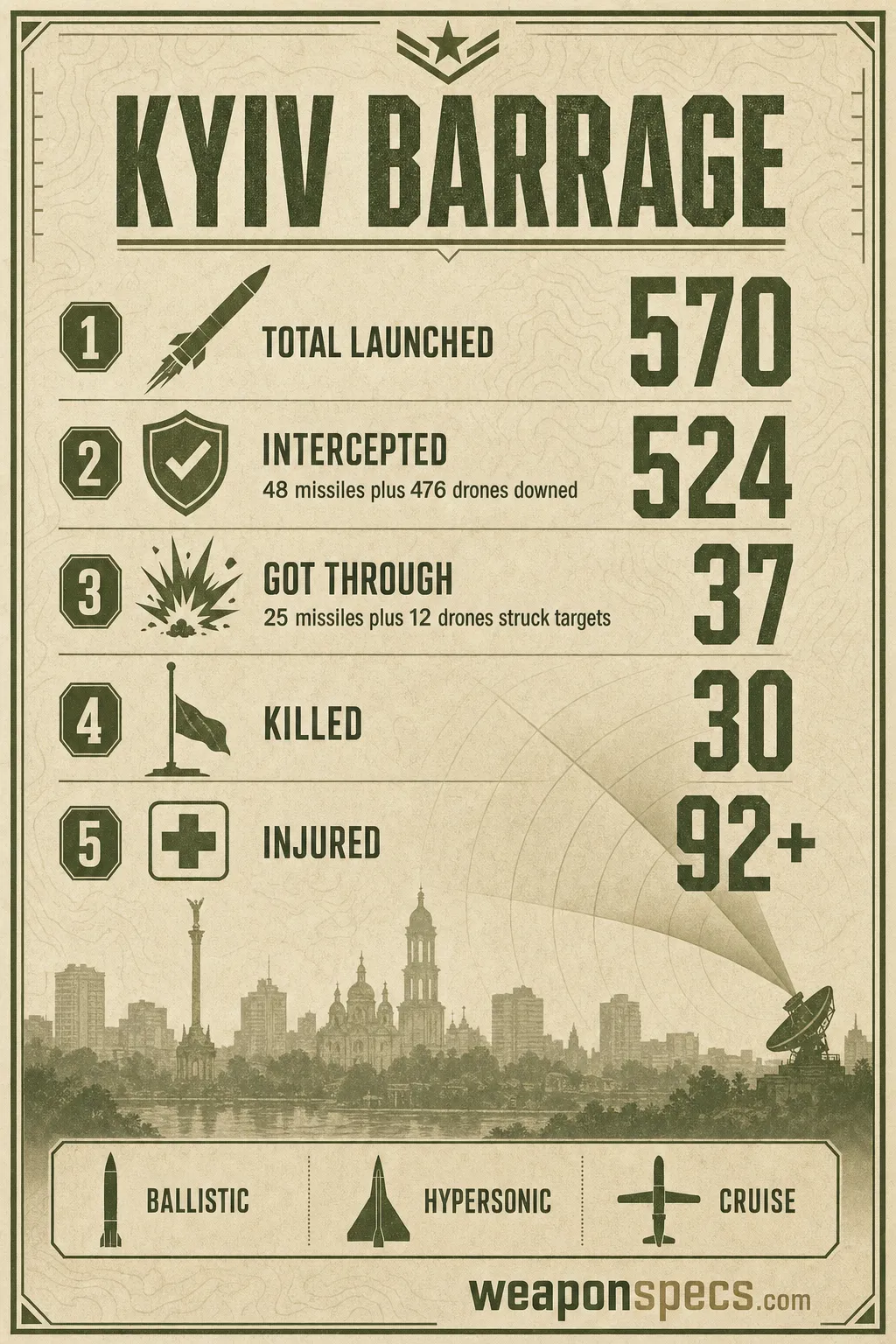
Infographic: WeaponSpecs News Desk
Sources
- At least 22 killed in Kyiv as Zelenskyy warns of 'massive Russian strike' — Al Jazeera, Jul 2, 2026
- A major Russian attack kills 17 in Kyiv as Ukraine keeps striking Moscow's oil sector — NPR, Jul 2, 2026
- 27 dead, more than 100 injured in Kyiv as Ukraine hit with 'massive' Russian strike — ABC News, Jul 2, 2026
- Russia unleashes a massive assault on Ukraine's capital, killing more than 20 — CNN, Jul 1, 2026
Systems mentioned
Every system named in this story, with its photo and, where available, a video. Tap a card to open the full spec sheet.
Compare these side by side →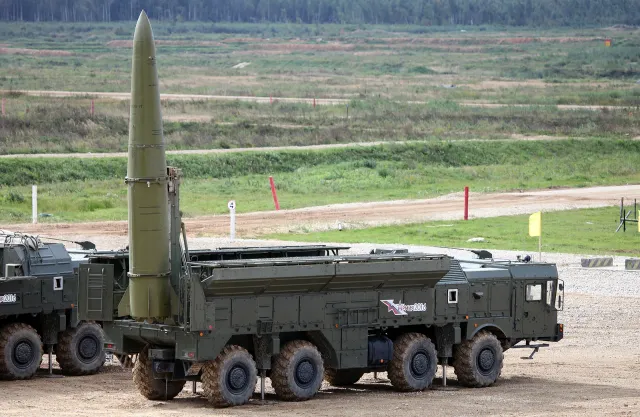
Frequently asked questions
Why did Russia launch this specific attack now? +
Russia's Defense Ministry said it was retaliation for Ukrainian drone strikes on Russian oil refineries, including one near Nizhny Novgorod. This is Russia's own stated justification, not an independently verified motive.
What systems did Russia use? +
Ballistic missiles including Iskander-family systems, Kh-47M2 Kinzhal hypersonic missiles, and Kh-101 cruise missiles, launched in coordinated waves alongside dozens of loitering drones.
How effective was Ukrainian air defense? +
Ukraine's air force says it downed or suppressed 48 missiles and 476 drones, but 25 ballistic missiles and 12 drones still got through and struck targets across Kyiv.
Did Ukraine respond? +
Ukrainian forces struck a Russian oil refinery near Nizhny Novgorod around the same period, part of an ongoing exchange targeting energy infrastructure on both sides.
More news