War's New Math: Russia Bleeds Interceptors, Ukraine Exports Drones
Two strikes in one week exposed Ukraine's air-defense crisis while the Drone Deal opens combat-proven exports to NATO allies, reshaping the war's industrial logic.
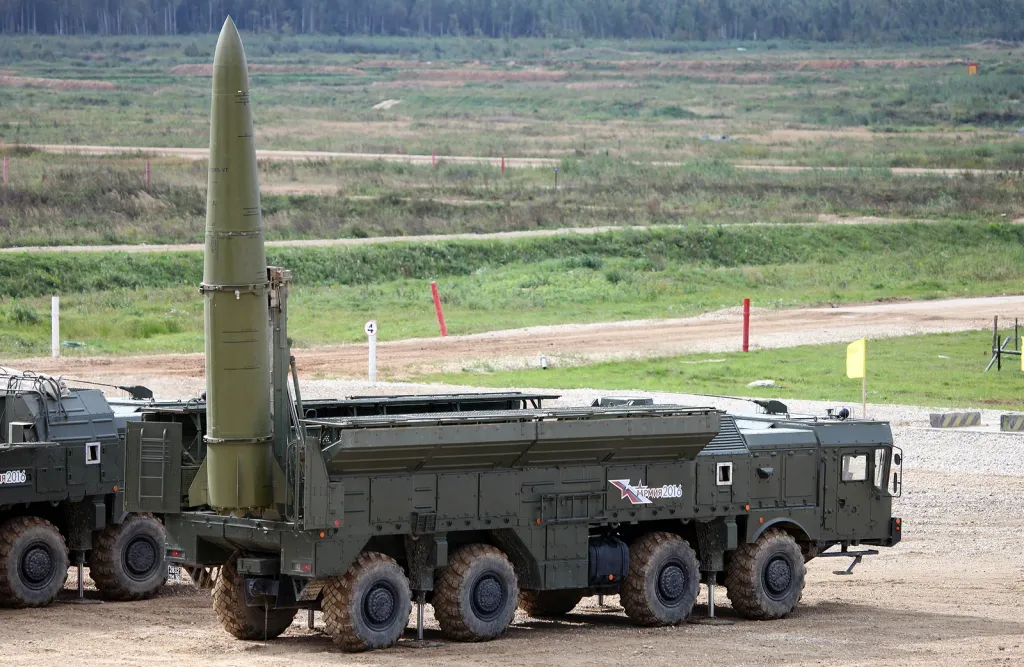
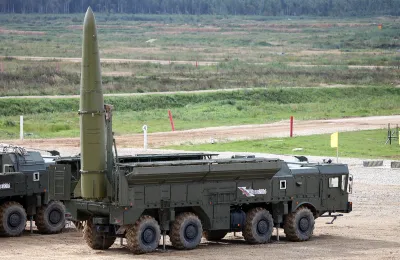
Via Wikipedia, 9K720 Iskander (shown for identification). Shows the 9K720 Iskander-M mobile ballistic-missile system, the primary Russian precision-strike platform used in the July Kyiv barrages.
Ukraine’s week split cleanly into two facts that do not sit comfortably together. Russia fired roughly 570 missiles and drones at Kyiv on July 1-2 and Ukraine intercepted 91 percent of them, a result read at the time as a defensive success. Four days later, in a second major barrage, Ukrainian air defenders shot down zero ballistic missiles, citing insufficient interceptor supply. In the same window, Ukraine’s government opened its defense industry to wartime exports, inviting 27 vetted allied nations to buy combat-proven drones and missiles built by a production base that has grown 35 times larger than before the war. The country absorbing the heaviest air assault of the summer is, simultaneously, positioning its arms industry as a peer supplier to NATO militaries. Both things are true, and the tension between them is this week’s real story.
Attrition warfare is industrial-scale math, and the math turned this week
The July 1-2 barrage on Kyiv looked, in isolation, like an air-defense win: roughly 570 missiles and drones launched, about 524 intercepted or suppressed, 37 leakers, according to Al Jazeera and CNN. A 91 percent intercept rate against a barrage that size is a genuinely hard technical result. But it also consumed roughly 524 interceptor rounds in a single night, whether Patriot PAC-3 munitions against ballistic missiles or S-300, Buk, and Tor engagements against cruise missiles and drones, none of which Ukraine’s allies can replace at anything close to the rate Russia can build or draw down its own stockpiles.
The bill came due fast. In a second major strike on Kyiv reported by NPR and previewed by CNN ahead of the July 6 attack, Ukraine’s air force downed zero ballistic missiles, attributing the gap directly to an interceptor shortage rather than a tactical failure. That is the throughline of the week: not that Russia’s July 1-2 barrage was unusually large, but that repeating it within days exposed how little slack exists in the system. A single night’s 91 percent intercept rate says nothing about whether that rate holds on the second, third, or tenth repetition. This week supplied the answer, and it was worse than the headline number from four days earlier suggested.
Russia’s deliberate weapon-mix saturation forces an impossible partition of scarce interceptors
Both Kyiv barrages this week combined systems built to entirely different flight profiles, and that is not incidental. The 9K720 Iskander-M is a road-mobile ballistic missile with a roughly 500km range that performs maneuvering descents specifically to defeat interception. The Kh-47M2 Kinzhal is an air-launched weapon with a claimed 2,000km range and Mach 10 speed, marketed as hypersonic and maneuverable, though Western analysts remain split on how much genuine terminal maneuver it retains versus simply following a fast ballistic arc. The Kh-101 is the slow one of the three, a subsonic cruise missile with a 4,500km range and a low radar cross-section built to evade detection rather than outrun it, and it has been the workhorse of Russia’s mass strikes since 2022 precisely because it is cheap to mass-produce.
Putting all three into the same barrage, alongside dozens of drones, forces Ukraine’s air defense network to split a finite interceptor pool across incompatible threat classes in the same few minutes. A Patriot battery tuned for a ballistic missile is not the right tool against a low-flying cruise missile, and a Buk or Tor built for cruise missiles and drones has no real chance against an Iskander or Kinzhal. That structural mismatch, not any single system’s individual lethality, is why this week’s second barrage produced a zero-intercept result on ballistic missiles specifically: it is the threat category hardest to defend against and most expensive to counter, and it is the one Russia appears to be leaning into as interceptor fatigue sets in.
<text x="90" y="14" font-size="8" font-weight="700" fill="var(--color-ink)">Current 2026</text>
<rect x="90" y="20" width="14" height="100" fill="var(--color-accent)"></rect>
<text x="90" y="134" font-size="8" fill="var(--color-ink-soft)">$35B</text>

<text x="180" y="14" font-size="8" font-weight="700" fill="var(--color-ink)">Projected 2026</text>
<rect x="180" y="4" width="14" height="116" fill="var(--color-accent)" opacity="0.6"></rect>
<text x="180" y="134" font-size="8" fill="var(--color-ink-soft)">$55B</text>
Ukraine’s export pivot is a defense-industrial bet placed under fire
While absorbing the week’s barrages, Ukraine’s Cabinet moved forward on the Drone Deal export framework approved July 1, opening a wartime arms-export mechanism to 27 vetted partner nations, at least 15 of them NATO members, according to Janes and The Defense Post. The terms are specific: a $335,000 minimum order, a 30-day approval window, and 20 percent of export value returned to the state budget. That structure only makes sense against the production numbers behind it: Ukraine’s domestic defense output has grown from roughly $1 billion before the full-scale invasion to $35 billion now, with a projected $55 billion by year’s end, per RBC Ukraine. A country cannot open exports on that scale unless it is genuinely producing more than its own front line can absorb.
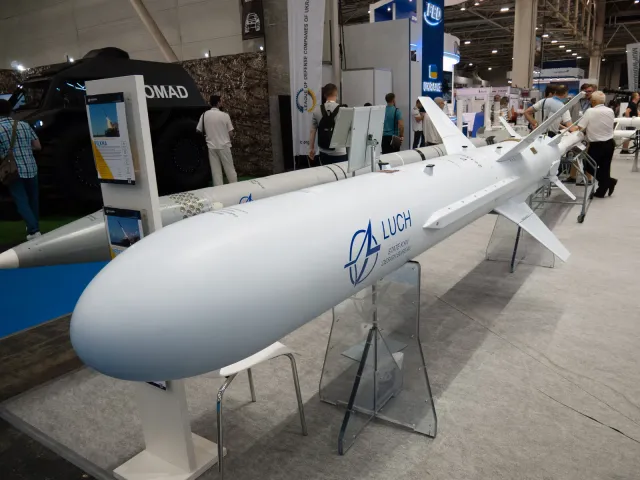
The systems on offer are not paper designs. The Neptune anti-ship missile sank the Russian cruiser Moskva in April 2022 and is the clearest combat-proven credential Ukraine’s export catalog can point to. The Bober loitering munition, originally a crowdfunded program, has since been hardened through sustained combat use. Both are being offered to buyers at the same moment Ukraine’s own air defense is visibly straining, which is either a confident bet that production capacity has genuinely outrun demand, or a hedge that export revenue and allied goodwill matter more right now than holding every unit back for the front.
NATO allies are treating Ukrainian hardware as a real alternative, not a favor
The Drone Deal’s $335,000 minimum and 27-nation vetting list, built around NATO/EU alignment per Janes, reads less like charity toward a wartime ally and more like ordinary defense procurement: buyers screening for combat-proven systems and a non-NATO-standard supply chain that diversifies away from single-vendor dependence. A missile that sank a cruiser and a drone hardened by three years of frontline iteration are not capabilities pitched off a slide deck, they carry an unusually short, unusually recent combat record. That is the kind of provenance defense ministries pay a premium for, and it is why the 27-nation list deserves to be read as a genuine market signal, not a wartime curiosity.
Energy infrastructure remains the other front in this war
Underneath the missile barrages and the export framework sits a parallel campaign against energy infrastructure that both sides are waging simultaneously. Ukraine struck the Lukoil refinery near Nizhny Novgorod, Russia’s fourth-largest, for the second time in seven days, according to Kyiv Independent, part of a campaign analysts estimate has taken more than a quarter of Russian refining capacity offline. Russia’s Defense Ministry characterized its own barrages as retaliation for these refinery strikes, a state claim from the party that launched the missiles, not an independently verified motive, and treated here as a claim rather than a fact. Whichever side’s targeting logic is doing more damage, neither campaign looks purely military anymore. Both are aimed at the other’s economic capacity to keep fighting, which is the same attrition logic driving the interceptor math above.
For continuing coverage of both threads, see WeaponSpecs’ news archive, the 9K720 Iskander and Kh-47M2 Kinzhal system pages for the strike side of the ledger, and the Neptune missile and Bober drone pages for the export side.
Sources
- At least 22 killed in Kyiv as Zelenskyy warns of 'massive Russian strike' — Al Jazeera, Jul 2, 2026
- A major Russian attack kills 17 in Kyiv as Ukraine keeps striking Moscow's oil sector — NPR, Jul 2, 2026
- Russia unleashes a massive assault on Ukraine's capital, killing more than 20 — CNN, Jul 1, 2026
- Russian missile and drone attack on Kyiv kills at least 12 — NPR, Jul 6, 2026
- Kyiv hit by ballistic missiles ahead of expected July 6 strike — CNN, Jul 5, 2026
- Ukraine's arms-export mechanism explained — The Defense Post, Jul 3, 2026
- Ukraine approves mechanism for partner countries to procure Ukrainian weapons — Janes, Jul 1, 2026
- Ukraine's Drone Deal triggers global scramble — RBC Ukraine, Jul 3, 2026
- Ukraine strikes major Russian oil refinery in Nizhny Novgorod — Kyiv Independent, Jul 2, 2026
Systems mentioned
Every system named in this story, with its photo and, where available, a video. Tap a card to open the full spec sheet.
Compare these side by side →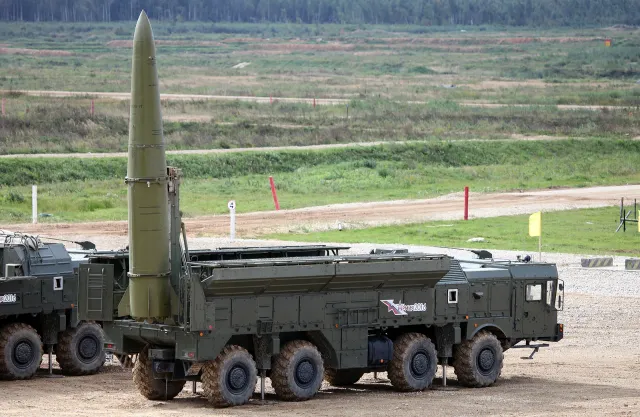
Missile
9K720 Iskander-M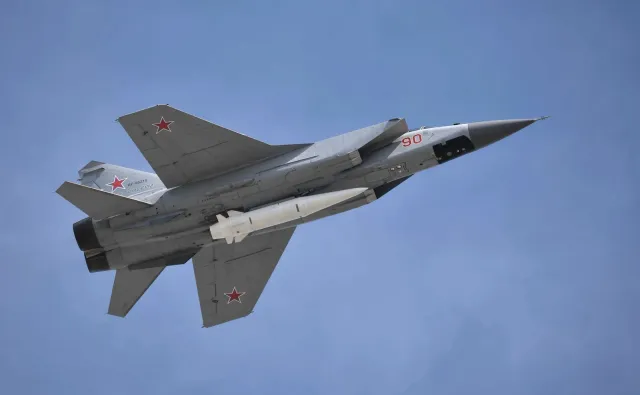
Missile
Kh-47M2 Kinzhal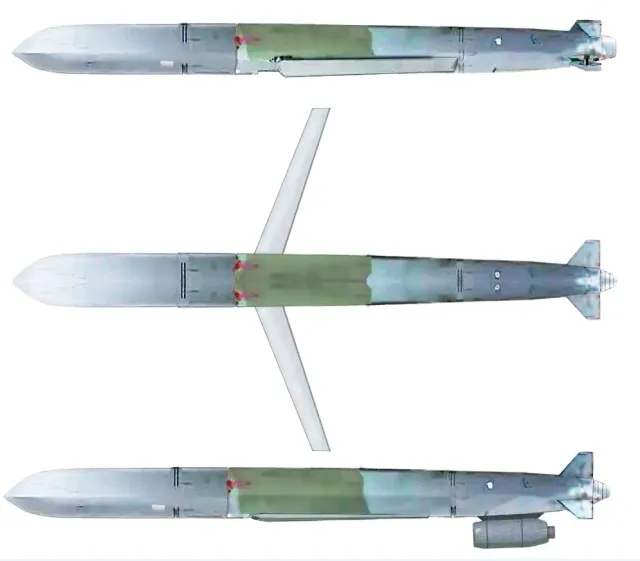
Missile
R-360 NeptuneUAV / drone
Bober (UJ-26)Frequently asked questions
What was the biggest development this week? +
Russia launched two major barrages in under a week; Ukraine intercepted 91% of the July 1-2 salvo but, by the second strike, downed zero ballistic missiles as interceptor stocks ran short. In parallel, Ukraine opened wartime arms exports to 27 vetted partner nations under its new Drone Deal framework.
Is Ukraine's air defense sustainable? +
Not at the current tempo. The 91% July 1-2 rate consumed roughly 524 interceptors in one night, and Patriot PAC-3, S-300, Buk and Tor stocks cannot be replenished at Russia's launch rate. The open question is whether allied resupply accelerates or the intercept rate collapses under repeated 500-plus barrages.
Which countries can buy Ukrainian weapons? +
The Drone Deal opens 27 vetted partner nations, at least 15 of them NATO members, to combat-proven systems like the Neptune anti-ship missile and Bober loitering munition, at a $335,000 minimum order. Vetting is built around NATO/EU alignment.
What should analysts watch next? +
Whether the zero-ballistic-intercept result repeats or reverses (a proxy for how fast allies can surge interceptors), how many Drone Deal agreements actually close, and which industrial base strains first: Russia's refining sector or Ukraine's power grid.
More news