Aircraft Carriers Compared: Ford vs Queen Elizabeth vs Fujian
Aircraft carriers compared: Gerald R. Ford's CATOBAR supercarrier, Queen Elizabeth's STOVL design, and China's new Fujian, side by side.
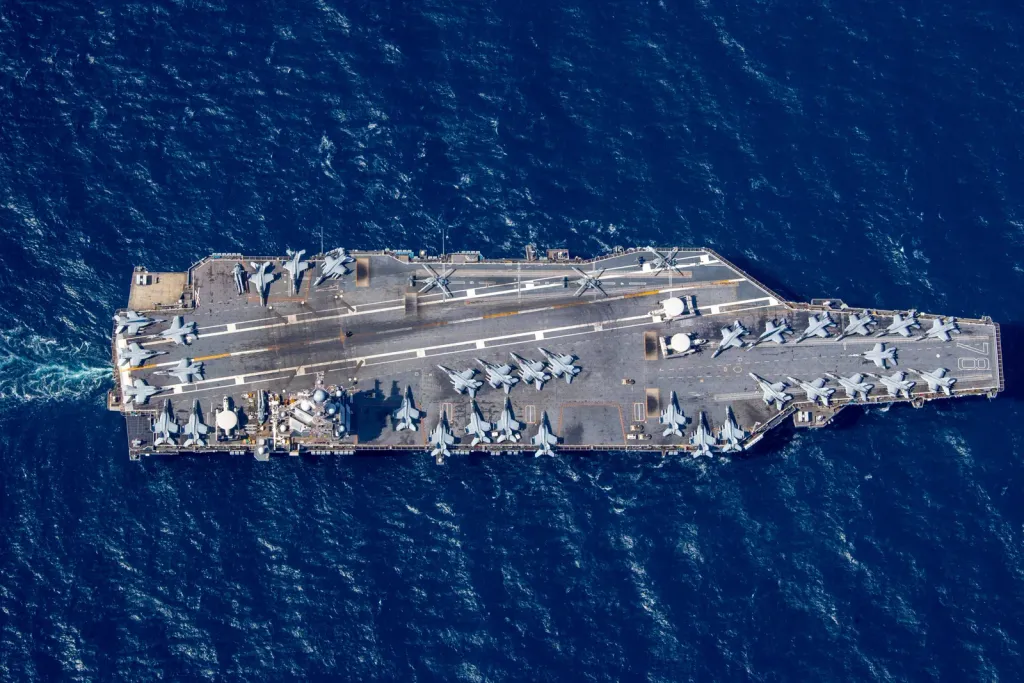
Via Wikipedia, Gerald R. Ford-class aircraft carrier (shown for identification)
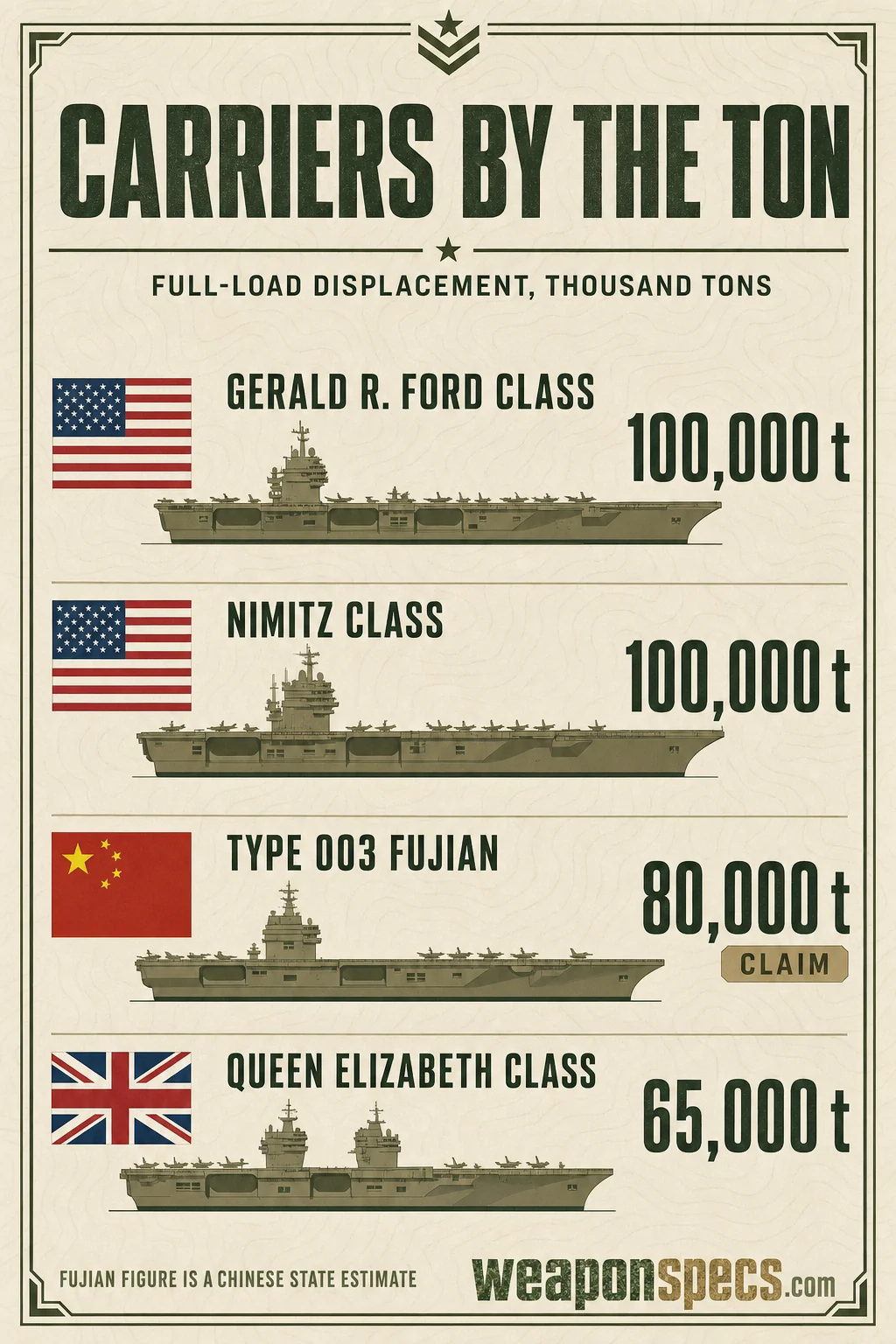
Not every ship that launches jets from a flight deck belongs in the same category, and the last decade has made that clearer than ever. The Gerald R. Ford class is a full CATOBAR (Catapult-Assisted Take-Off But Arrested Recovery) nuclear supercarrier, built to launch a heavy air wing at high sortie rates anywhere in the world for fifty years without refueling. The Queen Elizabeth class is a STOVL (Short Takeoff, Vertical Landing) carrier built around the F-35B, trading catapults and raw air wing size for a simpler, cheaper hull. China’s Type 003 Fujian is the newest entrant, the first Chinese carrier with catapults at all, closing a design gap that separated Beijing’s navy from Washington’s for decades, though its real-world performance remains largely a state claim awaiting combat-relevant validation. What actually defines carrier power isn’t the flight deck’s length on a recruiting poster, it’s air wing size, catapult type, and tonnage, because those three variables set the ceiling on how many aircraft you can put in the air, how heavy and far-ranged they can be, and how long the ship can sustain that tempo.
CATOBAR vs STOVL: the design fork that matters most
The single biggest divide in carrier design isn’t nationality, it’s how aircraft get off the deck. CATOBAR ships use steam or electromagnetic catapults to fling aircraft to flying speed and arrestor wires to catch them on landing, which lets the air wing include heavier jets carrying more fuel and ordnance, along with dedicated support aircraft like fixed-wing early-warning planes. STOVL ships skip the catapult entirely, relying on aircraft, in practice, almost exclusively the F-35B today, that can take off in a short run and land vertically, which simplifies the flight deck and lowers both the build cost and the crew needed to run it.
The Gerald R. Ford class sits at the top of the CATOBAR category, using the Electromagnetic Aircraft Launch System (EMALS) instead of the legacy steam catapults on older Nimitz-class ships. EMALS is designed to launch aircraft more smoothly and at a higher sortie rate while reducing stress on airframes, though the system’s early development was dogged by well-documented reliability problems that the Navy has spent years working through. The Queen Elizabeth class went the opposite direction on purpose: the Royal Navy built a STOVL carrier around the F-35B specifically to avoid the cost and complexity of catapults and arrestor gear, accepting a smaller and lighter air wing in exchange for a design the UK could build and crew more affordably.
Fujian: China’s first catapult carrier
China’s first two carriers, Liaoning and Shandong, were ski-jump designs, no catapults, meaning aircraft launch under their own power with a shorter runway and a reduced fuel/weapons load, similar in principle to the tradeoffs STOVL ships accept, but without STOVL’s vertical-landing flexibility. The Type 003 Fujian breaks that pattern: it’s reportedly fitted with electromagnetic catapults, a design leap that, per Chinese state media and open-source naval analysis, puts it conceptually closer to the Ford class’s launch system than to any prior Chinese carrier. Treat Fujian’s publicly claimed displacement, air wing composition, and catapult performance as Chinese government and state-media disclosures rather than independently verified figures; Beijing has historically been far less transparent about warship specifications than the US Navy or UK Ministry of Defence, and the ship has not yet demonstrated a combat deployment record of any kind.
The numbers, side by side
| Carrier | Displacement | Aircraft (typical wing) | Catapult type | Propulsion | Origin |
|---|---|---|---|---|---|
| Gerald R. Ford class | ~100,000 tons full load | ~75-90 | EMALS (electromagnetic) | Nuclear | USA |
| Nimitz class | ~100,000 tons full load | ~60-75 | Steam catapults | Nuclear | USA |
| Queen Elizabeth class | ~65,000 tons full load | ~24-36 (F-35B/helicopters) | None (STOVL) | Conventional (gas turbine/diesel) | UK |
| Type 003 Fujian | ~80,000-85,000 tons (state estimate) | Unconfirmed, state estimate | Electromagnetic (claimed) | Conventional | China |
Tonnage and air wing: why size still sets the ceiling
Displacement isn’t a vanity number, it’s the variable that determines how much fuel, ordnance, aviation infrastructure, and crew a carrier can carry, which in turn caps sustained sortie generation. At roughly 100,000 tons full load, the Ford and Nimitz classes carry an air wing of around 75-90 aircraft, mixing strike fighters, electronic warfare jets, and fixed-wing early-warning aircraft that STOVL ships simply can’t operate. The Queen Elizabeth, at roughly two-thirds the tonnage, carries a proportionally smaller wing built almost entirely around F-35Bs and helicopters, a deliberate tradeoff for a navy that prioritized having two carriers on a constrained budget over one larger ship.
Fujian’s displacement, per Chinese state disclosures, lands between the two, larger than Queen Elizabeth, smaller than Ford, and its claimed catapult fit suggests Beijing is chasing a US-style heavy air wing rather than accepting the STOVL tradeoff. Whether Fujian’s air wing in practice reaches anything close to a Ford-class sortie rate is an open question no public combat record has yet answered.
Nuclear vs conventional propulsion
The Ford and Nimitz classes run on nuclear reactors, which means essentially unlimited range and station time limited only by crew endurance and food, not fuel, a genuine strategic advantage for a navy that deploys carriers globally for months at a stretch. The Queen Elizabeth and Fujian both use conventional propulsion, which caps their range and requires more frequent replenishment, a real constraint for any navy trying to project power far from home waters, though less of a constraint for a fleet built primarily for regional deterrence.
The bottom line
Carrier power comes down to air wing size, catapult type, and tonnage, and on all three, the Ford class remains the clear benchmark, backed by decades of publicly disclosed figures and an active global deployment record. The Queen Elizabeth is a capable, purpose-built STOVL carrier that answers a different budget and mission question than the Ford class ever tried to. The Fujian is the most significant leap in Chinese carrier design to date, but its real capability rests on state claims that haven’t yet been tested by an independent observer or a combat deployment. Compare all three directly, alongside every other warship in the class, before drawing your own conclusions.
Run the Gerald R. Ford vs Queen Elizabeth breakdown yourself on WeaponSpecs, browse the full warship category to see how other carriers and escorts stack up, or let the Advisor tool weigh these tradeoffs against your own analysis. For more head-to-head breakdowns like this one, check the WeaponSpecs articles.
Systems in this comparison
Every system covered above, with its photo and, where available, a video. Tap a card to open the full spec sheet.
Compare these side by side →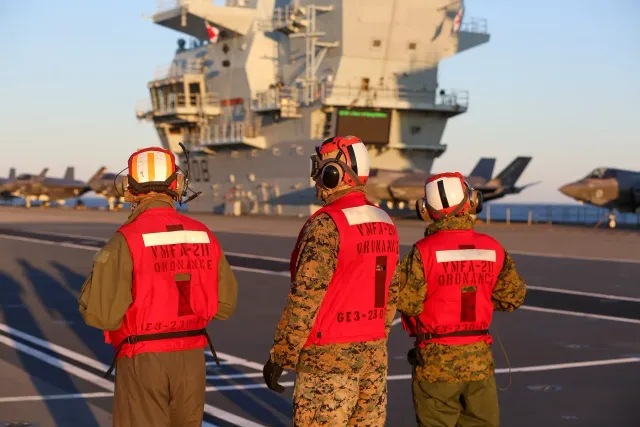
Warship
Queen Elizabeth-class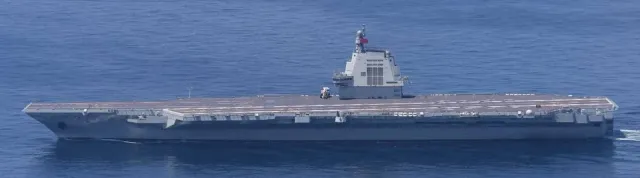
Warship
Type 003 Fujian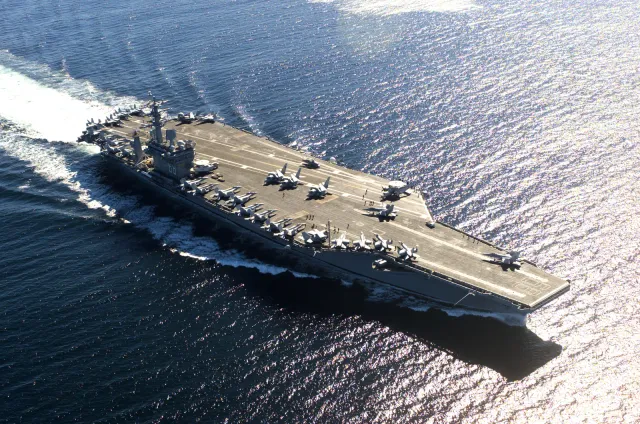
Warship
Nimitz-class Aircraft CarrierFrequently asked questions
What is the most powerful aircraft carrier? +
By tonnage, air wing size, and catapult-launched sortie generation, the Gerald R. Ford class is the most capable carrier in service, per publicly disclosed US Navy figures. It combines the largest air wing, EMALS catapults, and a mature nuclear-powered global deployment record no rival currently matches.
How is the Fujian different from US carriers? +
The Fujian is China's first carrier with catapults (electromagnetic, similar in principle to EMALS) instead of a ski-jump, letting it launch heavier, longer-range aircraft. It's conventionally powered rather than nuclear, and its air wing size and combat record remain state estimates, not independently verified figures.
Why does the Queen Elizabeth have no catapults? +
The Royal Navy chose a STOVL (short takeoff, vertical landing) design built around the F-35B, which needs no catapult or arrestor wires. This lowered build cost and complexity but caps aircraft weight and sortie rates versus a CATOBAR supercarrier like the Ford class.
How many aircraft does a carrier hold? +
A US Ford or Nimitz-class carrier typically embarks a wing of roughly 75-90 aircraft. The Queen Elizabeth carries a smaller mixed F-35B/helicopter wing, often 24-36 jets in current deployments. China's Fujian's planned wing size is a state estimate, not an independently confirmed figure.
How much does an aircraft carrier cost? +
The lead Gerald R. Ford-class carrier cost roughly $13 billion in publicly disclosed program figures, excluding a multi-billion-dollar air wing and escort fleet. The Queen Elizabeth class cost roughly £3 billion each per UK government disclosures. Fujian's cost is not publicly confirmed by Chinese authorities.
Related reading