Best Attack Helicopters of 2026: Apache vs Ka-52 vs Z-10
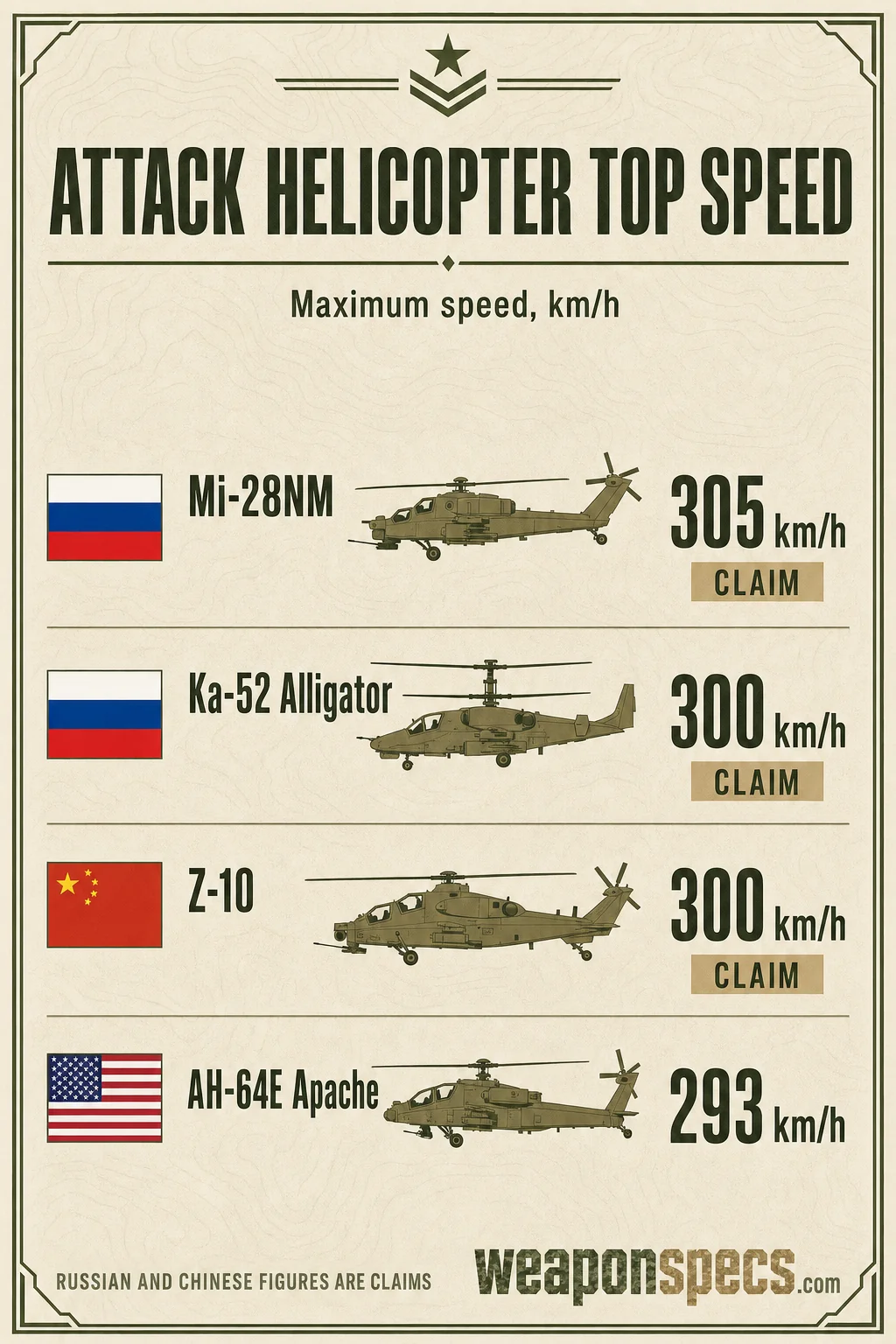
Attack helicopters compared: the AH-64E Apache leads on combat record and sensor fusion; Ka-52 and Z-10 trail on verified data.
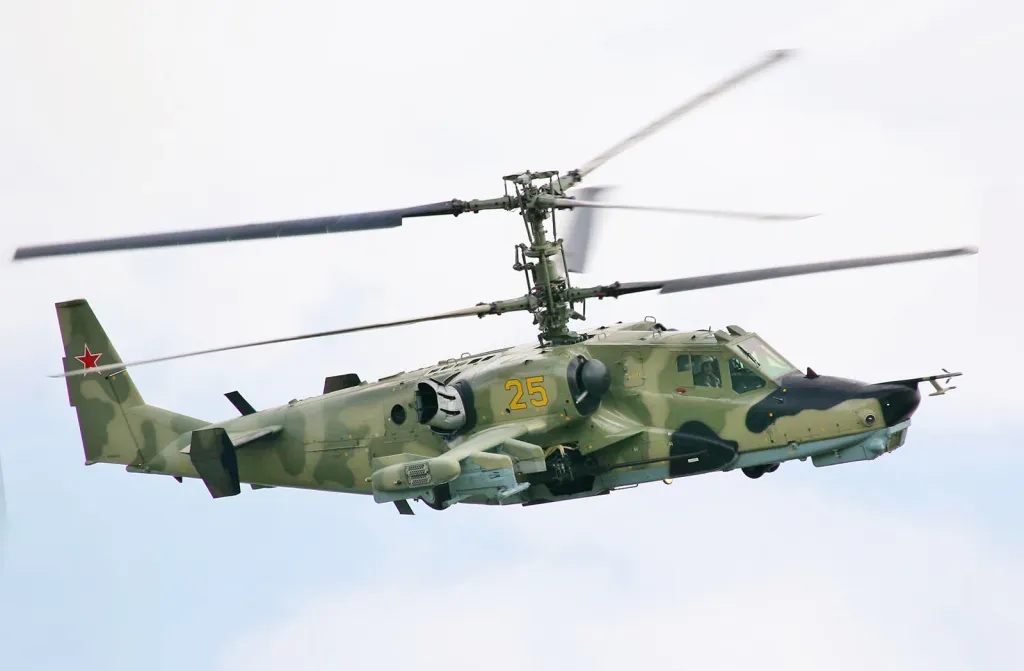
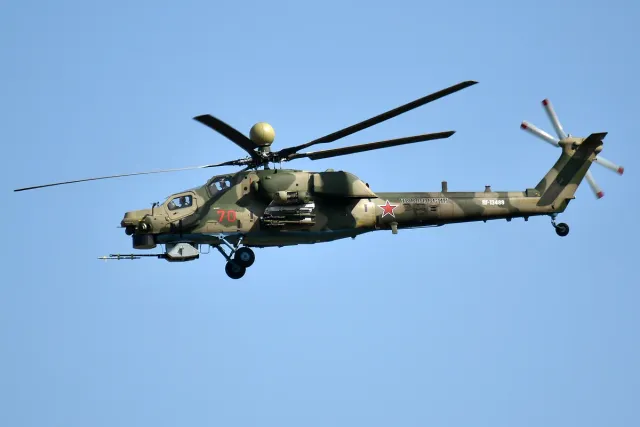
Via Wikipedia, Kamov Ka-50 (shown for identification)
The AH-64E Apache leads the attack helicopter field in 2026, and the gap isn’t close once you separate verified performance from manufacturer claims. The Ka-52 Alligator and Z-10 both look competitive on a spec sheet, coaxial agility here, a lighter airframe there, but neither brings the Apache’s combination of a proven millimeter-wave fire-control radar, a networked sensor suite, and a combat record spanning multiple wars on multiple continents. The Mi-28NM rounds out the field as Russia’s other gunship, sharing the same evidentiary problem as the Ka-52: bold published numbers, thin independent verification. This is a comparison about which helicopter you’d actually want flying cover for your troops, not which one wins an airshow flyby.
Why the Apache still sets the standard
The Apache’s edge isn’t raw speed or a bigger gun, it’s the sensor package. The AN/APG-78 Longbow radar dome sitting above the rotor mast can scan the battlefield, classify more than 100 potential targets, and rank the 16 most dangerous threats in under a second, all without the helicopter breaking cover. Pair that with the Modernized Target Acquisition Designation Sight/Pilot Night Vision Sensor (M-TADS/PNVS) and a crew can positively identify a target from several kilometers out, day or night, in most weather. None of that is a manufacturer claim, it’s documented across U.S. Army testing and two decades of coalition combat operations in Iraq, Afghanistan, and beyond.
The AH-64E variant, the current production standard, adds Level BC/D manned-unmanned teaming, the ability to receive video feeds and even direct control from scout drones, plus improved engines and a strengthened drivetrain over earlier D-model Apaches. It’s not a new helicopter so much as the same proven airframe getting smarter every few years, which is precisely the kind of incremental, well-documented upgrade path the Ka-52 and Z-10 programs can’t point to with the same paper trail.
The Ka-52 Alligator: real agility, unverified everything else
Kamov’s coaxial rotor design is the Ka-52’s genuine calling card. Two contra-rotating rotors cancel torque without a tail rotor, which frees up power for lift and gives the aircraft sharper roll and yaw authority than a conventional single-rotor gunship, useful in the kind of nap-of-the-earth maneuvering attack helicopters are supposed to specialize in. The side-by-side cockpit, unusual for an attack helicopter, is also a real design choice with real crew-coordination tradeoffs, not a marketing gimmick.
Everything past the airframe geometry gets murkier. Russian state sources cite a top speed near 300 km/h and a combat radius that, with external tanks, stretches past 1,100 km, figures that would make the Ka-52 faster and longer-legged than the Apache on paper. Those numbers come from manufacturer and state media claims with no independent flight-test audit, and the aircraft’s actual combat performance in Ukraine tells a rougher story: publicly tracked losses to man-portable air defense systems and small-arms fire have been significant, undercutting the survivability case Kamov makes in its brochures.
Z-10 and Mi-28NM: the also-rans on paper
China’s Z-10 is the lightest and least combat-tested airframe in this comparison. It borrows heavily from Apache-style design logic, tandem cockpit, chin-mounted gun, stub-wing pylons for ATGMs, but its combat exposure is essentially nonexistent in open-source reporting, and its performance figures are entirely state and manufacturer claims. Treat every Z-10 number here as unverified until PLA operations produce independently observable data.
The Mi-28NM, Russia’s other current-production gunship, claims a top speed edge over the Ka-52 and a broadly similar weapons fit built around the 9M120 Ataka/Shturm ATGM family and unguided rocket pods. Like the Ka-52, its published range and speed figures are manufacturer/state claims, and its combat exposure is limited to reported Russian operations that haven’t been independently audited for loss rates or mission effectiness.
The numbers, side by side
| Category | AH-64E Apache | Ka-52 Alligator | Z-10 | Mi-28NM |
|---|---|---|---|---|
| Max speed | ~293 km/h | ~300 km/h (manufacturer claim) | ~300 km/h (manufacturer claim) | ~305 km/h (manufacturer claim) |
| Combat/ferry range | ~480 km combat / ~1,900 km ferry | ~460 km combat / ~1,160 km ferry (claim) | ~800 km ferry (claim) | ~450 km combat / ~1,100 km ferry (claim) |
| Main gun | 30mm M230 chain gun | 30mm 2A42 autocannon | 23mm or 30mm cannon (variant-dependent) | 30mm 2A42 autocannon |
| ATGM / rockets | AGM-114 Hellfire, AIM-92 Stinger, Hydra-70 rockets | Vikhr/Ataka ATGMs, S-8/S-13 rockets | HJ-10/HJ-9 ATGMs, unguided rocket pods | 9M120 Ataka/Shturm ATGMs, S-8/S-13 rockets |
| Protection | Boron-carbide armor, redundant flight controls, IR suppression | Armored cockpit tub, ejection seats (rare for a helicopter) | Composite armor (extent unverified) | Armored cockpit, claimed enhanced survivability suite |
| Origin | United States (Boeing) | Russia (Kamov, manufacturer/state claims) | China (CAIC, manufacturer/state claims) | Russia (Rostvertol, manufacturer/state claims) |
Every figure in the Russian and Chinese columns should carry the same asterisk: sourced from state media, manufacturer brochures, or export pitches, with no independent flight-test audit trail. The Apache’s numbers are backed by U.S. Army acquisition documents, GAO reporting, and years of allied procurement records.
Combat record is the tiebreaker
Spec sheets are where the Ka-52 and Mi-28NM look competitive; combat is where the gap reopens. The Apache has flown in the Gulf War, Kosovo, Iraq, Afghanistan, and multiple other operations across a fleet exceeding 2,600 airframes built and fielded by the U.S. and more than a dozen partner nations. That’s a deep, cross-validated body of real-world performance data. The Ka-52’s most-documented combat exposure, Russian operations in Ukraine, has produced public loss counts to shoulder-fired missiles and drones that Russian sources themselves don’t fully explain away, and it’s difficult to reconcile survivability marketing with observed attrition. The Z-10 has essentially no comparable combat data in open sources.
If you’re weighing these platforms for anything beyond a spec-sheet debate, force comparisons, training scenarios, or just settling an argument, that combat-record asymmetry is the single most important variable, and it’s the one number Russian and Chinese sources can’t spin their way around.
The bottom line
The AH-64E Apache wins this comparison on the criteria that actually matter for an attack helicopter: a verified fire-control radar, mature networked sensors, a weapons suite proven across decades of real strikes, and a combat record no rival can currently match with independently audited data. The Ka-52 has genuine coaxial-rotor agility, the Z-10 has a sensible Apache-inspired layout, and the Mi-28NM has a broadly similar weapons fit to the Ka-52, but all three lean on manufacturer and state claims where the Apache has flight-test paperwork and battle damage assessments.
Run the AH-64E Apache vs. Ka-52 Alligator breakdown yourself on WeaponSpecs, browse the full helicopter class to see where the Z-10 and Mi-28NM stack up, or let the Advisor tool weigh the tradeoffs against your own mission profile. For more heads-up comparisons like this one, check the WeaponSpecs articles.
Systems in this comparison
Every system covered above, with its photo and, where available, a video. Tap a card to open the full spec sheet.
Compare these side by side →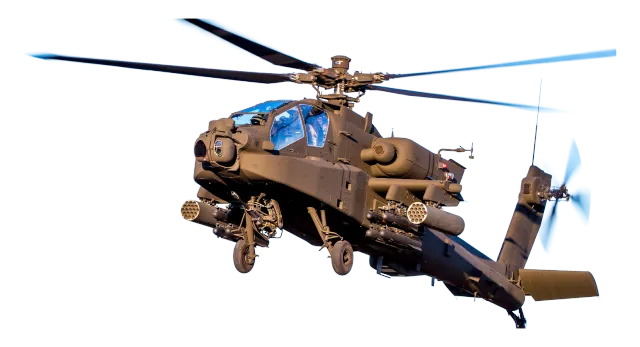
Helicopter
AH-64E Apache Guardian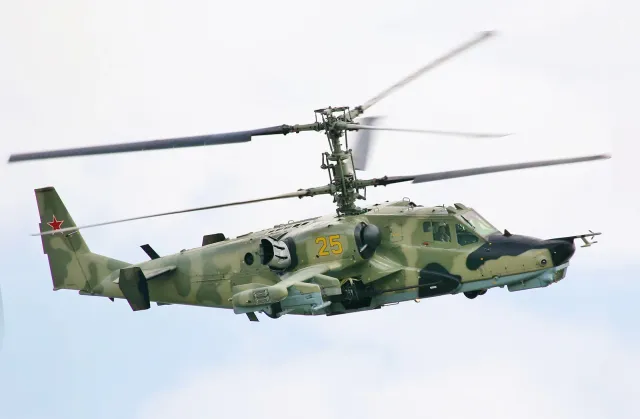
Helicopter
Ka-52 Alligator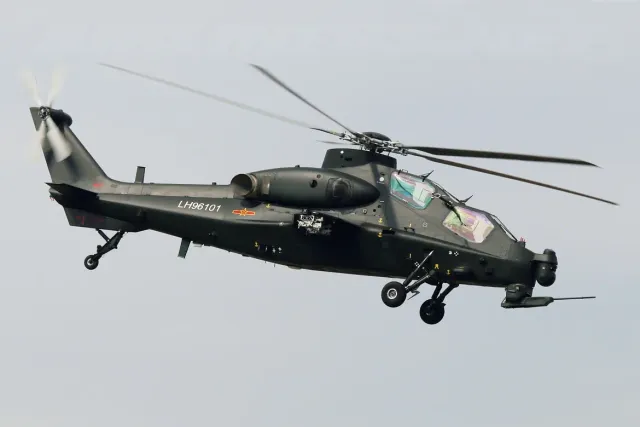
Frequently asked questions
What is the best attack helicopter in 2026? +
The AH-64E Apache leads overall. It combines a mature Longbow fire-control radar, the AGM-114 Hellfire/Joint Air-to-Ground Missile family, a multi-decade combat record across several wars, and the largest fielded fleet of any attack helicopter, advantages no rival currently matches with independently verified data.
Is the Ka-52 better than the Apache? +
Not on the metrics that matter most. The Ka-52's coaxial rotor gives it real agility and a distinctive side-by-side cockpit, but its performance figures are largely Russian manufacturer claims, its combat use in Ukraine has shown heavy losses to man-portable air defenses, and it lacks the Apache's sensor-fusion maturity.
What makes the AH-64E Apache special? +
The Apache's Longbow millimeter-wave radar can track over a hundred targets and prioritize threats in seconds, its Modernized Target Acquisition Designation Sight gives crews long-range positive ID, and Link 16-style networking lets it share targeting data with drones and ground units in real time.
How much does an attack helicopter cost? +
A new-build AH-64E runs roughly $35-45 million per unit under recent U.S. Foreign Military Sales cases, publicly disclosed by the Pentagon. Russian and Chinese unit costs for the Ka-52 and Z-10 are not independently audited, with estimates from state and industry sources ranging from $16-20 million.
Which attack helicopter has the longest range? +
On paper, the Mi-28NM and Ka-52 claim ferry ranges beyond 1,100 km with external tanks, edging out the Apache's roughly 480 km combat range. But those Russian figures are manufacturer claims under ideal conditions, not independently verified combat radius.
Related reading