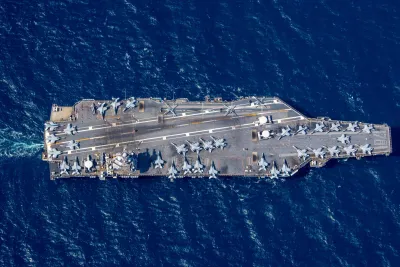
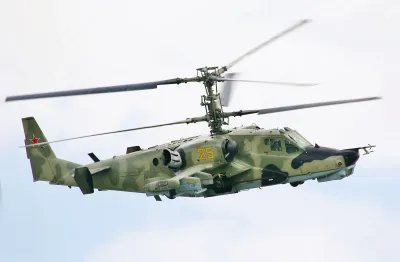
Anti-Ship Missiles: Harpoon vs Exocet vs Oniks vs Atmaca
Anti-ship missiles compared: Harpoon and Exocet sea-skimmers vs Oniks supersonic threat vs Atmaca, and why terminal defense keeps getting harder.
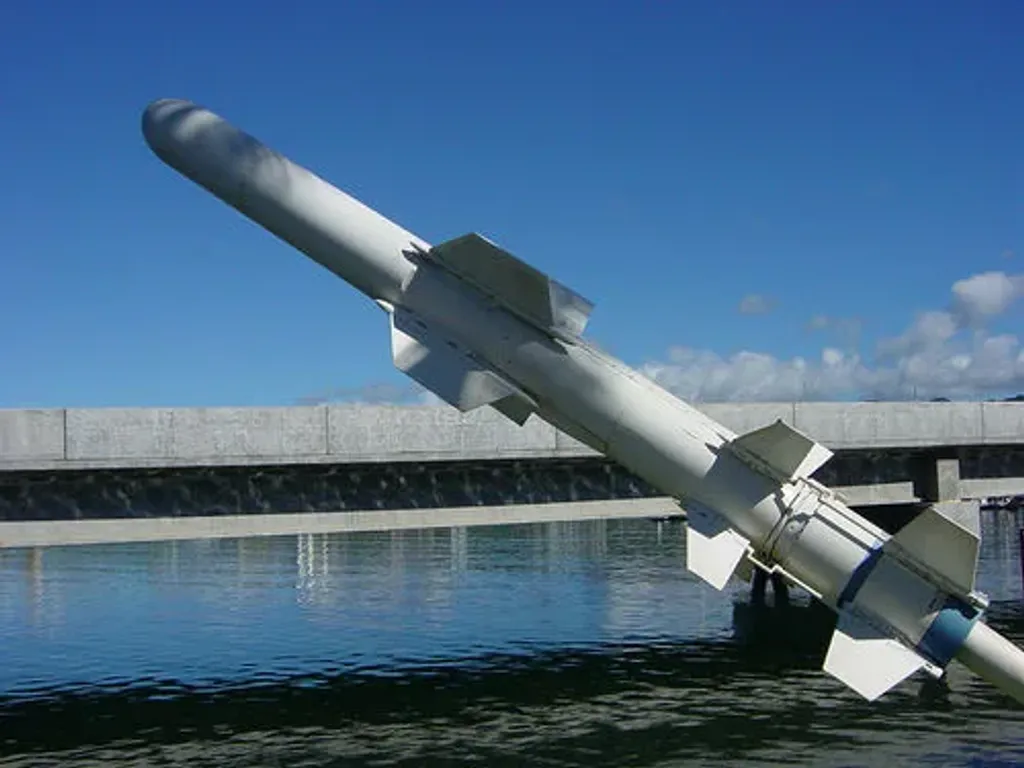
Via Wikipedia, Harpoon (missile) (shown for identification)
The anti-ship missile is the great equalizer of naval warfare, a weapon that lets a corvette, a submarine, or a truck-mounted coastal battery threaten a warship worth a hundred times more. That asymmetry is precisely why the anti-ship missile market keeps expanding rather than consolidating around one design philosophy. The core split runs between subsonic sea-skimmers like Harpoon and Exocet, which rely on low radar signature and sheer numbers to overwhelm defenses, and supersonic threats like Russia’s Oniks, which compress a defender’s reaction time to a handful of seconds by brute force of speed. A newer wave of indigenous programs, Turkey’s Atmaca chief among them, shows that more navies want an anti-ship capability nobody else can embargo. None of that makes any single weapon “unstoppable”; it makes terminal ship defense one of the hardest, least forgiving problems in modern naval engineering.
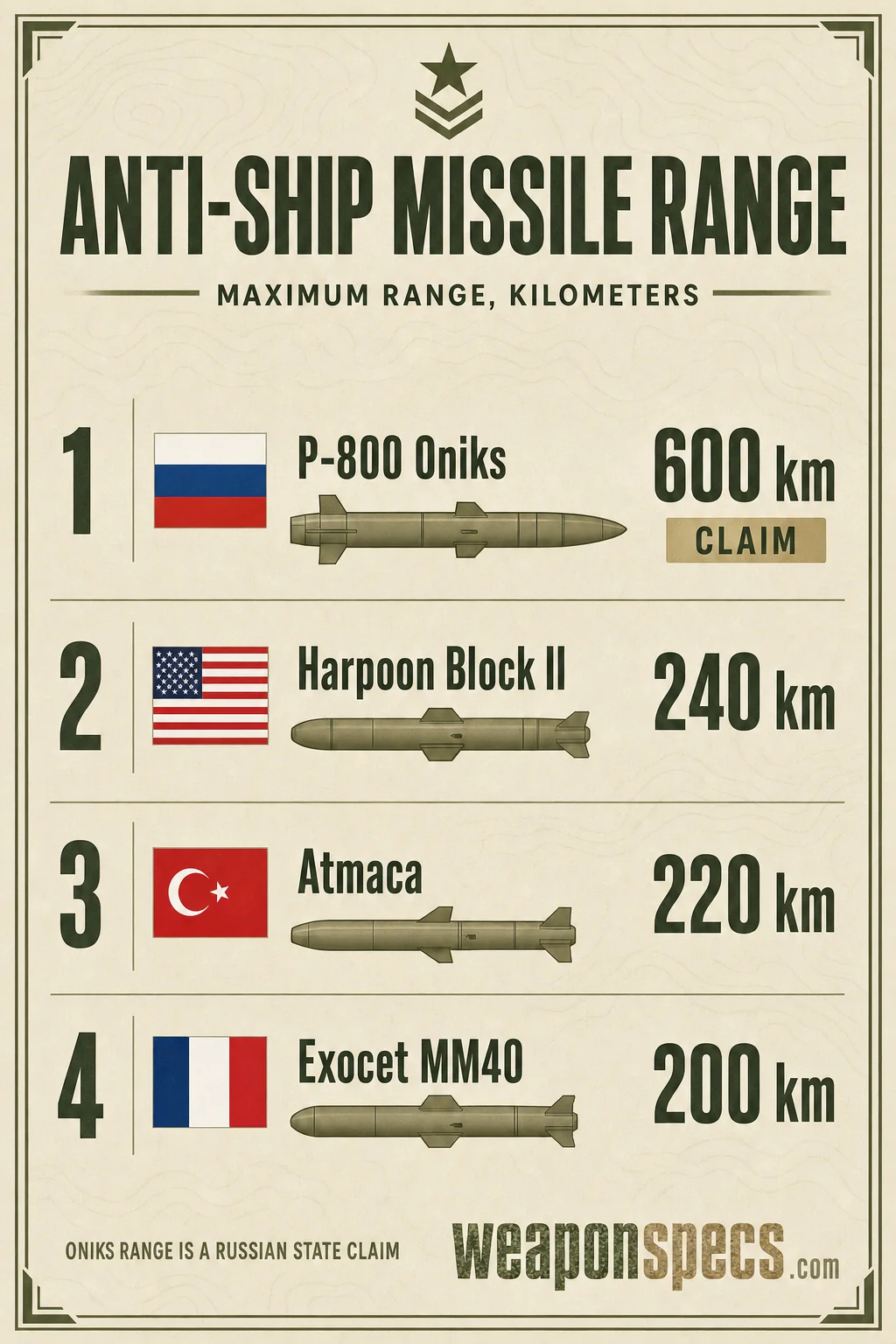
Weapon comparison
| Missile | Speed | Range | Warhead | Launch Platforms | Origin |
|---|---|---|---|---|---|
| Harpoon Block II | Mach 0.85 | ~240 km | 221 kg penetrator blast-fragmentation | Ship, submarine, aircraft | United States |
| Exocet MM40 Block 3 | Mach 0.9 | ~200 km | 165 kg semi-armor-piercing blast | Ship (surface-launched) | France |
| P-800 Oniks | Mach 2.6 (claimed) | ~600 km (claimed) | 250 kg semi-armor-piercing blast | Ship, submarine, coastal (Bastion-P), aircraft | Russia |
| Atmaca | Mach 0.9 | ~220 km | 220 kg blast-fragmentation | Ship, submarine | Turkey |
The subsonic sea-skimmer school: Harpoon and Exocet
Harpoon and Exocet are the two weapons every other anti-ship missile gets measured against, and for good reason, both have decades of combat history and export lists running into the dozens of navies. Harpoon Block II, in service with the U.S. Navy and more than 30 operators, flies a low-altitude sea-skimming profile at roughly Mach 0.85, out to a publicly listed range near 240 km, with GPS/INS mid-course guidance added on the Block II variant for better targeting against ships near coastlines. Its 221 kg penetrator blast-fragmentation warhead is designed to punch through a hull before detonating, rather than simply blasting the exterior.
Exocet earned its reputation the hard way, Argentine Exocets sank HMS Sheffield in the 1982 Falklands War, cementing the sea-skimmer’s reputation as a genuine capital-ship killer rather than a theoretical threat. The current ship-launched MM40 Block 3 variant adds a turbojet for extended range to roughly 200 km and retains a similar low-altitude flight profile with active radar homing for terminal guidance. Neither missile wins on paper speed. What they win on is a long, ruthlessly practiced doctrine: get low, stay hidden from radar until the last possible moment, and rely on numbers and mid-course updates to close the gap rather than raw velocity.
The supersonic argument: Oniks
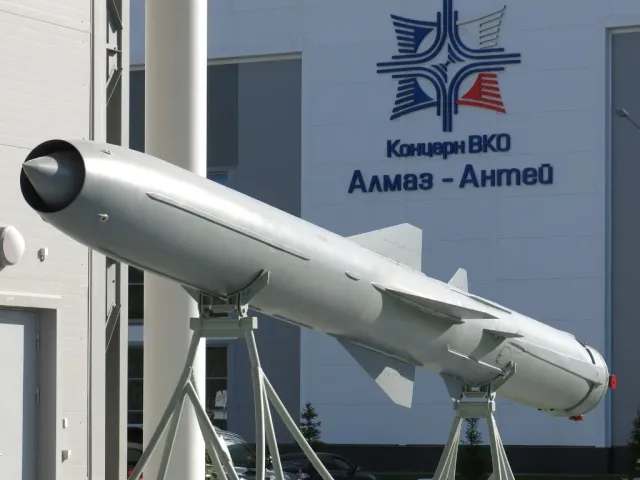
Russia’s P-800 Oniks flips the subsonic playbook entirely. State figures put its speed at Mach 2.6 and its range at roughly 600 km, both figures worth treating as the manufacturer’s ceiling rather than an independently verified floor, since Russian defense industry does not publish test telemetry the way NATO ranges typically do. Oniks pairs a ramjet-plus-booster propulsion system with a 250 kg semi-armor-piercing warhead, and it’s flexible across launch platforms: surface ships, submarines, aircraft, and the truck-mounted Bastion-P coastal defense system that has fired Oniks against targets from occupied Crimea since 2022.
The tactical logic of going supersonic is straightforward, cut the intercept window down to single-digit seconds and a ship’s close-in weapon system has far less time to acquire, track, and destroy the incoming missile. The tradeoff is size and cost: at roughly 3,000 kg combat weight versus Harpoon’s 691 kg, Oniks is a substantially larger, more expensive round to build and to fit onto smaller hulls, which is part of why subsonic sea-skimmers remain the more widely exported option globally even as supersonic threats dominate the newer headlines.
The new entrant: Atmaca
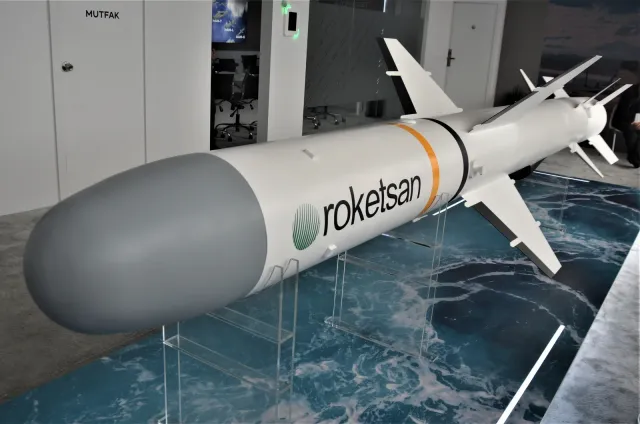
Turkey’s Atmaca sits closer to the Harpoon/Exocet school on paper, subsonic, sea-skimming, roughly 220 km range, active radar terminal seeker, but its significance isn’t in beating either missile’s spec sheet. It’s a supply-chain story. Atmaca was developed specifically to replace imported Harpoon missiles aboard Turkish Navy frigates, corvettes, and submarines, giving Ankara an anti-ship capability that isn’t subject to a foreign government’s export approval or embargo risk. Roketsan’s program, operational since 2021, is a template other mid-tier naval powers are watching closely: a credible domestic sea-skimmer removes a strategic dependency without requiring a technological leap to supersonic speeds.
The terminal defense problem
Every one of these missiles, subsonic or supersonic, is built around the same core insight: a ship’s radar horizon is short, and a missile flying low enough stays under it until it’s already close. That’s the terminal defense challenge in one sentence, by the time a sea-skimmer pops above the radar horizon, a warship may have single-digit seconds to detect, classify, engage, and destroy it before impact, and a supersonic arrival like Oniks compresses that window even further. Layered defense, long-range SAMs, close-in weapon systems, chaff and decoys, electronic warfare, exists precisely because no single layer is reliable alone against a low-flying, radar-homing missile arriving with almost no warning. Cost only sharpens the pressure on defenders: a Harpoon runs on the order of $1.2 million per round by rough export estimates, while a single ship-defense interceptor can cost multiples of that, meaning the economics of anti-ship warfare generally favor the attacker firing a saturation volley over the defender trying to intercept every inbound round.
To see how a specific matchup breaks down spec-for-spec, the Harpoon Block II vs. Exocet MM40 comparison is a good starting point, and our broader missile systems section covers the full range of anti-ship, land-attack, and air-defense designs these weapons sit alongside.
The bottom line
There is no universal “best” anti-ship missile, only a best fit for a given navy’s budget, threat environment, and platform mix. Harpoon and Exocet remain the combat-proven, widely exported baseline; Oniks demonstrates what raw supersonic speed buys a defender’s reaction time, at the cost of size and price; Atmaca shows that supply-chain independence is now as strategically valuable as another few knots of terminal speed. If you’re trying to work out how a specific missile stacks up against the threat it’s meant to counter, or defend against, our systems advisor walks through the tradeoffs in more depth, and the WeaponSpecs articles covers the rest of the naval and missile landscape in ongoing detail.
Systems in this comparison
Every system covered above, with its photo and, where available, a video. Tap a card to open the full spec sheet.
Compare these side by side →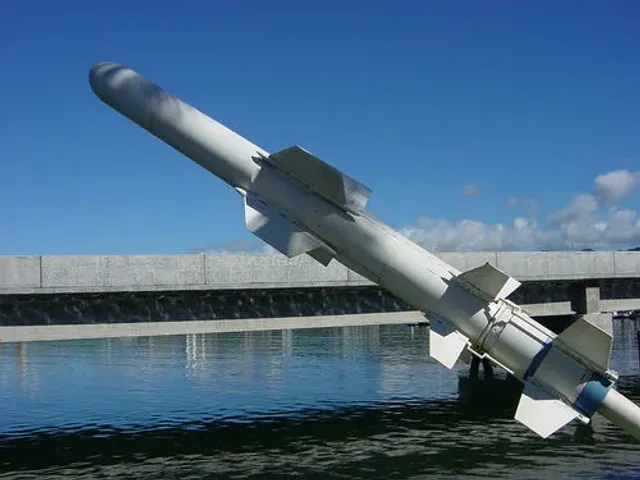

Frequently asked questions
What is the best anti-ship missile? +
There's no single best missile, it depends on the threat picture. Harpoon and Exocet remain combat-proven and widely fielded; Oniks trades numbers for raw supersonic terminal speed; Atmaca gives Turkey supply-chain independence. Best is a fleet-defense question, not a spec-sheet one.
Are supersonic anti-ship missiles better than subsonic? +
Not automatically. Supersonic missiles like Oniks compress a defender's reaction time, but they're larger, costlier, and harder to conceal on smaller platforms. Subsonic sea-skimmers are cheaper, more numerous, and rely on saturation and low radar signature rather than speed alone.
What is a sea-skimming missile? +
A sea-skimmer flies at very low altitude, often under 15 meters, over the ocean surface for most or all of its flight. Staying below a ship's radar horizon delays detection until the missile is dangerously close, shrinking the defender's engagement window regardless of the missile's speed.
How far can an anti-ship missile reach? +
Publicly listed ranges run from roughly 200 km for Exocet MM40 Block 3 and Atmaca, to 240 km for Harpoon Block II, up to a state-claimed 600 km for Russia's Oniks. Real engagement ranges depend on targeting data, launch platform altitude, and whether over-the-horizon cueing is available.
How do ships defend against anti-ship missiles? +
Layered defense: early radar/EW detection, long-range surface-to-air missiles, close-in weapon systems for terminal intercept, decoys and chaff, and electronic jamming. No single layer is reliable alone against a low-flying, radar-homing missile arriving in the final seconds of warning time.
Related reading