M2A3 Bradley vs BMP-3 vs Puma: Three IFV Philosophies
Russia's BMP-3 carries a 100mm gun-launcher at just 18.7 tonnes, while Germany's heavier Puma trades weight for a 43-tonne armored shell.
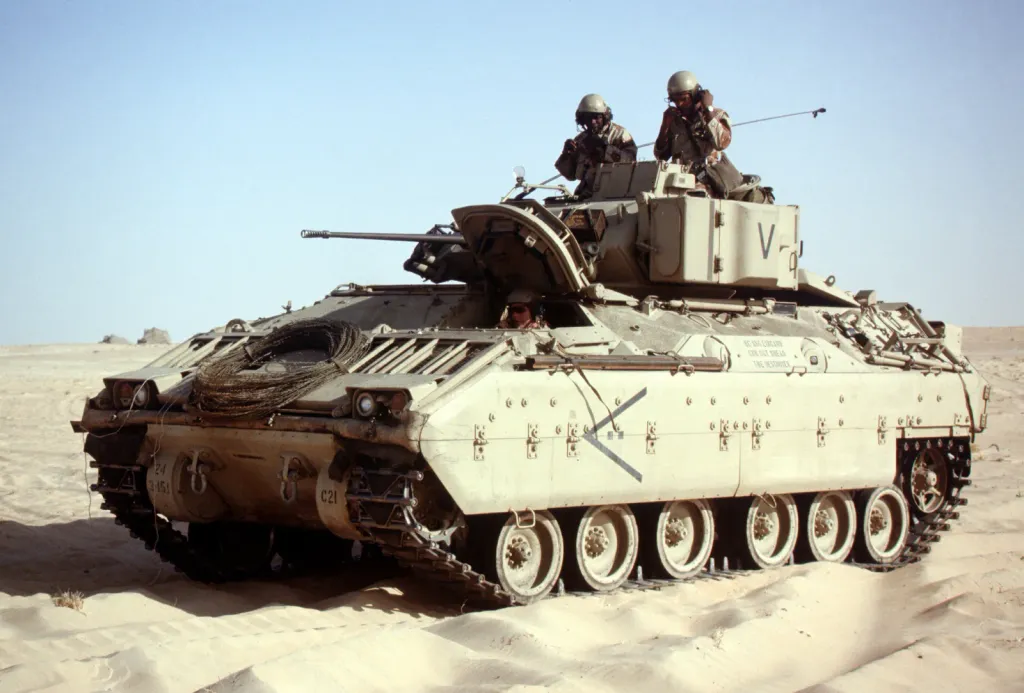
Via Wikipedia, M2 Bradley (shown for identification)
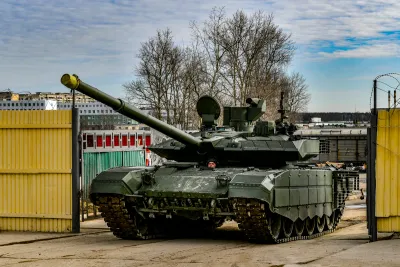
The BMP-3 is the lightest of these three infantry fighting vehicles by a wide margin, 18,700 kg against the Puma’s 43,000 kg, yet it carries by far the largest gun: a 100 mm 2A70 gun-launcher that can also fire a guided anti-tank missile through the same barrel. That’s not a contradiction, it’s the point. These three vehicles were not built to the same brief. The Bradley, the BMP-3, and the Puma answer the same battlefield question, how do you move infantry into contact while giving them enough firepower and protection to survive getting there, with three genuinely different national design philosophies. None of them is simply “better” than the others once you account for what each one is actually trying to do.
What do the three vehicles actually carry?
| System | Country | Combat weight | Troop capacity | Main armament |
|---|---|---|---|---|
| M2A3 Bradley | United States | 27,600 kg | 6 | 25 mm M242 Bushmaster chain gun |
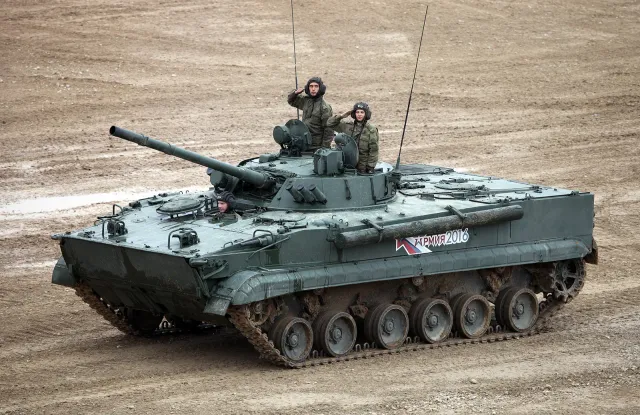
| BMP-3 | Russia | 18,700 kg | 7 | 100 mm 2A70 gun-launcher |
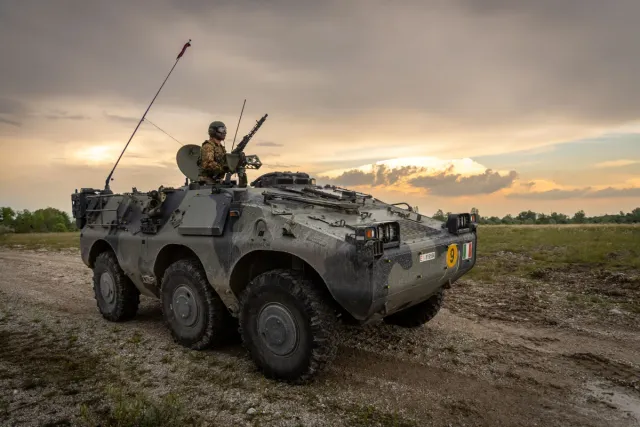
| Puma | Germany | 43,000 kg | 6 | 30 mm MK 30-2/ABM autocannon |
The weight spread here is the single biggest number in the whole comparison. Puma outweighs BMP-3 by more than 24 tonnes while carrying roughly the same number of troops and a noticeably smaller gun. That gap is the clearest signal of how differently these three programs valued protection versus firepower versus deployability.
Why does the BMP-3 carry such a disproportionately large gun?
The 100 mm 2A70 is unusual among IFV armament, most Western designs top out around 25 to 40 mm autocannons because the doctrine assumes tanks and anti-tank missile teams handle the heavy work. The Soviet and Russian tradition took a different bet: put a genuinely large-caliber, dual-purpose weapon on the IFV itself, one that can fire conventional rounds against infantry and light vehicles or launch a guided missile through the barrel against armor. Paired with a coaxial 30 mm autocannon (not part of this weight-and-armament comparison but standard on the BMP-3), the vehicle is meant to fight more independently than a Western IFV would.
That firepower has to come from somewhere on a chassis that weighs less than half of the Puma’s. The honest read is that it comes largely out of armor thickness and protection margin. A 100 mm gun-launcher on an 18.7-tonne hull is a genuine capability, but it is also a genuine tradeoff, not a free upgrade over vehicles that carry smaller guns and more weight in steel and composite armor.
Why is the Puma built so much heavier than the other two?
The Puma’s 43,000 kg comes almost entirely from its modular armor concept. Rather than fixing one armor level at the factory, the Puma is designed to accept different protection packages depending on the mission, lighter for air transport and rapid deployment, heavier for sustained peer-conflict combat where the vehicle needs to survive autocannon fire, mines, and modern anti-tank weapons. That flexibility is valuable, but it isn’t free. Carrying the option for heavier armor means carrying more structural weight even in configurations where the full package isn’t fitted.
The tradeoff shows up in the gun choice too. The Puma’s 30 mm MK 30-2/ABM autocannon is a capable, modern weapon, but it’s still smaller than the BMP-3’s 100 mm gun-launcher. That’s deliberate. NATO doctrine, and German armor doctrine specifically, expects the Puma to operate alongside main battle tanks and dedicated anti-tank guided missile systems. The IFV’s job is to protect and support the infantry it carries, not to substitute for a tank. A smaller gun on a heavily armored hull is consistent with that division of labor.
Where does the Bradley fit between these two extremes?
The M2A3 sits in the middle on weight, 27,600 kg, well above the BMP-3 and well below the Puma, but it carries the smallest-caliber main gun of the three at 25 mm. Some of that reflects generational timing rather than pure philosophy. The Bradley’s core design dates to the 1980s, a full design generation before the Puma entered service, and it has been extensively upgraded since (improved armor packages, updated fire control, the M2A3 designation itself reflects multiple rounds of modernization) without a clean-sheet redesign. The original Bradley concept assumed a battlefield where the vehicle’s 25 mm Bushmaster handled infantry and light vehicles while TOW missiles, also carried on the vehicle, handled armor, a split-role approach distinct from both the BMP-3’s single big gun and the Puma’s tank-plus-IFV team doctrine.
The result is a vehicle that doesn’t max out any single axis, not the lightest, not the heaviest, not the biggest gun, but one that has accumulated decades of combat use and upgrade cycles that neither the BMP-3 nor the Puma can claim in the same way.
How much should you trust the BMP-3’s published numbers?
Less than the other two, and that distinction matters here specifically because the BMP-3’s whole case rests on an unusual weight-to-firepower ratio. Its 18,700 kg combat weight and 100 mm gun-launcher capability come mainly from Russian manufacturer and state defense-industry sources. There is limited independent, audited verification of how that armor actually performs under modern anti-armor threats, and no significant combat record that outside analysts have been able to check against the claims. The Bradley’s specifications run through U.S. Army acquisition documentation and have been tested in actual combat in Iraq and, in Ukrainian service, since 2023. The Puma’s come from German industry and Bundeswehr channels with standard NATO-level disclosure practices. None of these figures should be treated as beyond question, manufacturers and governments all have reasons to present their own hardware favorably, but the BMP-3 carries the largest gap between what’s claimed and what’s been independently checked.
So which one wins?
None of them, and that’s the actual finding here, not a hedge. The Bradley, BMP-3, and Puma were built to different doctrinal assumptions about what an IFV’s job is. The BMP-3 assumes the IFV should carry heavy, independent firepower and accepts a lighter armor budget to do it. The Puma assumes the IFV should be built around configurable, serious protection and leaves the heavy killing to tanks and missile teams. The Bradley splits the difference with an older but combat-proven design that pairs a modest gun with a separate missile system. Comparing the three on a single “best IFV” axis misses what the spec sheet is actually telling you: three militaries answered the same tactical problem with three different bets about where weight should go.
If you want to run the Bradley and BMP-3 head-to-head with the full spec set, the Bradley vs BMP-3 comparison tool lays out both platforms side by side. For the wider IFV field, including the Puma and other Western and Russian designs, browse the IFV class page, or run your own mission priorities through the Advisor if you’re trying to figure out which design philosophy actually fits your requirement. More head-to-head breakdowns like this one live on the WeaponSpecs articles page.
Systems in this comparison
Every system covered above, with its photo and, where available, a video. Tap a card to open the full spec sheet.
Compare these side by side →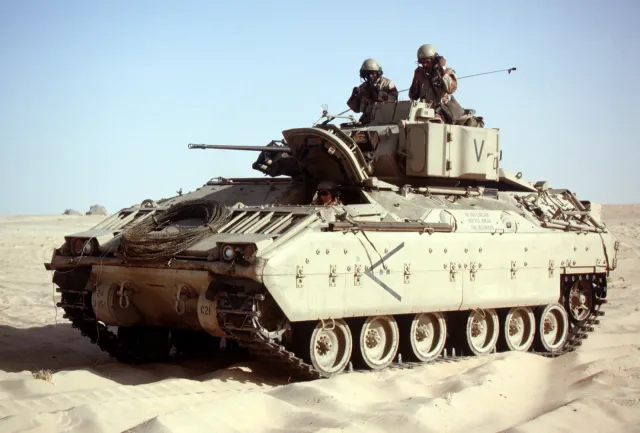
Frequently asked questions
Which of the three has the biggest gun, and why? +
The BMP-3, by a wide margin. Its 100 mm 2A70 gun-launcher dwarfs the Bradley's 25 mm chain gun and the Puma's 30 mm autocannon, and it can also fire a guided anti-tank missile through the same barrel. That's a Soviet and Russian design habit going back decades: push as much firepower onto the vehicle as the hull will carry, even at the expense of armor. It is not evidence the BMP-3 is the strongest IFV overall, just the most heavily armed one.
Is the BMP-3 actually a better IFV because it's lighter and better armed? +
Not by default. Weight in an IFV mostly buys armor, and the BMP-3 is lighter than the Puma by more than 24 tonnes. That difference has to come from somewhere, and the honest read is thinner protection, not some free engineering win. A bigger gun on a thinner hull is a tradeoff, not an upgrade.
Why is the Puma so much heavier than the Bradley and BMP-3? +
Modular armor. The Puma is built to accept different armor packages depending on the threat level, from air-transportable configurations up to a heavier kit rated for peer-conflict combat. That flexibility adds mass, 43,000 kg in this comparison, well above the Bradley's 27,600 kg and more than double the BMP-3's 18,700 kg. NATO doctrine also expects the Puma to fight alongside tanks and dedicated anti-tank missiles, so its 30 mm autocannon doesn't need to do the tank's job.
How many troops does each vehicle carry, and does that track with the armament differences? +
The Bradley and Puma both carry 6 dismounts, the BMP-3 carries 7. The gap isn't large, and troop capacity here says less about design philosophy than the gun and armor choices do. All three are built around a roughly squad-sized dismount element, which is the baseline IFV requirement across all three traditions.
How reliable are the BMP-3's published figures compared to the Bradley and Puma? +
Treat the BMP-3 numbers with more caution. Its combat weight, armor performance, and gun-launcher missile capability are sourced largely from Russian manufacturer and state claims, with limited independent verification and no significant combat record that's been audited by outside observers. The Bradley's figures run through decades of U.S. Army documentation and combat use in Iraq. The Puma's come from German industry and Bundeswehr sources with NATO-standard disclosure norms. None of the three should be read as gospel, but the BMP-3 carries the widest gap between what's claimed and what's been checked.
Related reading